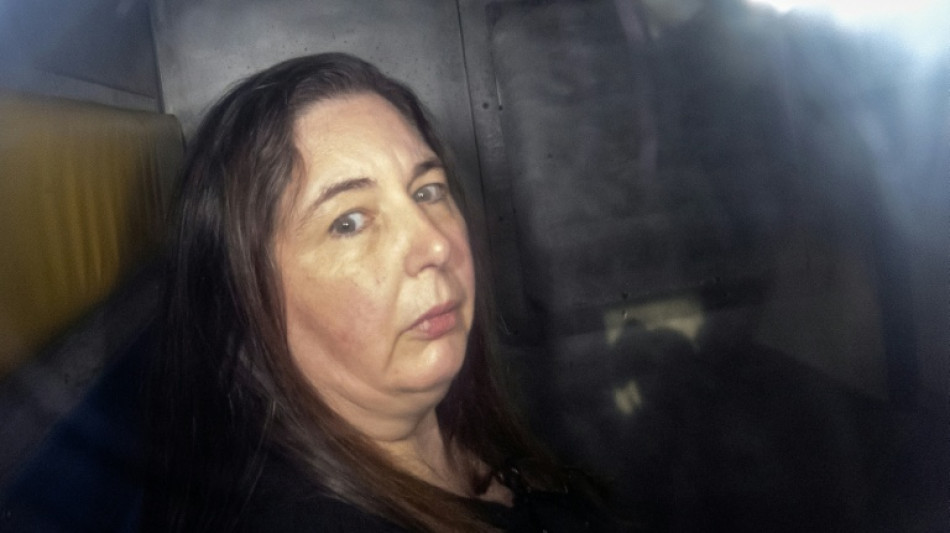
Judge throws out Australian mushroom killer's appeal, imposes harsher sentence / Photo: © AFP/File

Australian mushroom killer Erin Patterson failed to overturn a slew of convictions on Friday, and a judge instead imposed a heavier prison sentence for three "cold and calculated" poisoning murders.
Patterson was last year found guilty of murdering her husband's parents and aunt in 2023, deliberately lacing their beef Wellington lunch with lethal death cap mushrooms.
The strange nature of the "mushroom murders" fuelled intense global interest, with Patterson's 11-week trial drawing more publicity than almost any other Australian case in recent memory.
Patterson maintained her triple murder convictions were a "miscarriage of justice", urging the Court of Appeal in Victoria state to either set her free or have the case heard again.
But the court not only threw out her bid to have the convictions quashed, it found her "carefully planned and deliberate" killings deserved an even harsher sentence.
"This offending was extraordinarily cold and calculated," judge Stephen McLeish said as he dismissed Patterson's appeal.
"It stands to be denounced in the strongest terms."
The 52-year-old was originally sentenced to life in prison but was eligible to apply for parole after 33 years.
Highlighting Patterson's "shocking criminality", McLeish said she should spend life in prison with no prospect of parole.
Patterson did not front the trial in person, watching proceedings via video link from a maximum security prison on the outskirts of Melbourne.
- 'Betrayal' -
Patterson hosted four people for lunch at her home in rural Victoria in July 2023, serving up a hearty meal of beef wrapped in pastry and smothered in mushrooms.
Her lunch guests that afternoon were Don and Gail Patterson, the parents of her long-estranged husband, Simon.
She also welcomed Simon's maternal aunt, Heather Wilkinson, and her husband, Ian, a well-known pastor at the local Baptist church.
Don, Gail and Heather died of organ failure within a week, while Ian fell gravely ill but survived.
Patterson was convicted of three murders and a further count of attempted murder, a jury concluding she deliberately laced the meal with toxic death cap mushrooms.
Death cap mushrooms are easily mistaken for other edible varieties and reportedly possess a sweet taste that belies their potent toxicity.
Patterson maintained the dish was accidentally contaminated with the world's most lethal fungus.
At an appeal hearing earlier this year, her lawyers argued the trial was marred by a litany of irregularities.
This included the fact that members of the jury had stayed in the same hotel as a witness for the police -- as well as members of the prosecution.
Patterson's lawyers said this represented a fundamental failure of the legal process "in perhaps one of the most high-profile criminal trials this state has ever had".
They also criticised an "oppressive" cross-examination and unfair decisions on the admission of evidence.
Prosecutors, meanwhile, argued that the non-parole period of 33 years imposed by the judge was "manifestly inadequate".
Patterson's crimes involved "betrayal" and represented "worst-case offending", they told an appeal hearing earlier this year.
"Indeed, our submission is that for this offending the respondent should be sentenced to life without parole," Director of Public Prosecutions Brendan Kissane said at the time.
Patterson's trial drew podcasters, film crews and true crime fans to a courthouse in the rural town of Morwell, a sedate hamlet better known for its prize-winning roses.
Audiences around the globe followed every twist of what many now simply call the "mushroom murders".
Although the case highlighted various tensions within Patterson's family, the motive of the killings remains a mystery.
S.Jordan--TFWP