The Fort Worth Press - Isaias drenches southern US as weakened post-tropical cyclone

USD -
AED 3.672504
AFN 65.000368
ALL 81.757752
AMD 361.930403
ANG 1.790365
AOA 918.000367
ARS 1517.834304
AUD 1.435544
AWG 1.8
AZN 1.70397
BAM 1.745081
BBD 2.014187
BDT 123.310283
BGN 1.683441
BHD 0.377783
BIF 2992.192728
BMD 1
BND 1.280571
BOB 11.844107
BRL 4.990804
BSD 1.000045
BTN 96.679902
BWP 13.757752
BYN 3.042248
BYR 19600
BZD 2.011332
CAD 1.426204
CDF 2310.000362
CHF 0.829664
CLF 0.024742
CLP 976.970396
CNY 6.69215
CNH 6.687704
COP 3195.29
CRC 456.301584
CUC 1
CUP 24.001785
CVE 98.750394
CZK 21.763304
DJF 178.086103
DKK 6.672604
DOP 60.611198
DZD 134.724069
EGP 52.403301
ERN 15
ETB 162.480749
EUR 0.892504
FJD 2.24725
FKP 0.755993
GBP 0.755201
GEL 2.590391
GGP 0.755993
GHS 11.77039
GIP 0.755993
GMD 73.503851
GNF 8797.680125
GTQ 7.644716
GYD 209.141639
HKD 7.848504
HNL 26.843631
HRK 6.725604
HTG 130.956948
HUF 325.760388
IDR 17891.4
ILS 3.06346
IMP 0.755993
INR 96.775504
IQD 1515.056882
IRR 1779470.000352
ISK 122.150386
JEP 0.755993
JMD 158.724069
JOD 0.70904
JPY 158.28504
KES 129.698862
KGS 87.450384
KHR 4060.673656
KMF 440.00035
KPW 900.000318
KRW 1340.440383
KWD 0.31096
KYD 0.833371
KZT 454.436761
LAK 22426.053982
LBP 89555.476244
LKR 330.885568
LRD 171.010484
LSL 16.545706
LTL 2.95274
LVL 0.60489
LYD 6.430515
MAD 9.833504
MDL 17.93085
MGA 4459.513718
MKD 54.940888
MMK 2100.103005
MNT 3599.666808
MOP 8.083426
MRU 39.963417
MUR 47.460378
MVR 15.450378
MWK 1734.106625
MXN 18.414104
MYR 4.085504
MZN 63.910377
NAD 16.545706
NGN 1329.000344
NIO 36.80571
NOK 9.561404
NPR 154.687486
NZD 1.783644
OMR 0.384742
PAB 1.000045
PEN 3.429668
PGK 4.534464
PHP 62.745038
PKR 276.931162
PLN 3.916904
PYG 5688.155253
QAR 3.640374
RON 4.766038
RSD 104.733437
RUB 85.159581
RWF 1474.102164
SAR 3.751874
SBD 8.078071
SCR 14.675038
SDG 601.503676
SEK 9.999204
SGD 1.279404
SHP 0.755572
SLE 24.670371
SLL 20969.491881
SOS 571.492304
SRD 37.692504
STD 20697.981008
STN 21.860361
SVC 8.75039
SYP 13002.000254
SZL 16.542494
THB 33.553038
TJS 9.200535
TMT 3.51
TND 3.009508
TOP 2.40776
TRY 49.221304
TTD 6.793665
TWD 31.961404
TZS 2640.285523
UAH 44.916529
UGX 4088.733456
UYU 40.164333
UZS 11900.959179
VES 875.701604
VND 25899.5
VUV 120.010419
WST 2.78551
XAF 585.444314
XAG 0.016442
XAU 0.000238418806
XCD 2.70255
XCG 1.802364
XDR 0.707052
XOF 585.444314
XPF 106.410886
YER 236.203589
ZAR 16.52005
ZMK 9001.203584
ZMW 19.875976
ZWL 321.999592
SSP 5757.531856
MXV 2.08033
  • RIO

    -0.3300

    97.04

    -0.34%

  • CMSC

    -0.0400

    20.67

    -0.19%

  • RELX

    0.0000

    33.41

    0%

  • RBGPF

    0.0000

    67.95

    0%

  • BCE

    -0.0700

    21.99

    -0.32%

  • BCC

    -0.0300

    75.66

    -0.04%

  • GSK

    0.8600

    51.08

    +1.68%

  • JRI

    -0.0300

    11.52

    -0.26%

  • NGG

    -0.1200

    76.68

    -0.16%

  • CMSD

    0.0900

    20.54

    +0.44%

  • BTI

    -0.0800

    55.75

    -0.14%

  • AZN

    2.0200

    168.1

    +1.2%

  • BP

    -1.4200

    43.16

    -3.29%

  • RYCEF

    0.4600

    19.7

    +2.34%

  • VOD

    0.0700

    17.02

    +0.41%

Isaias drenches southern US as weakened post-tropical cyclone
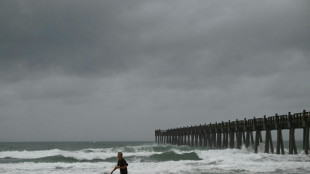
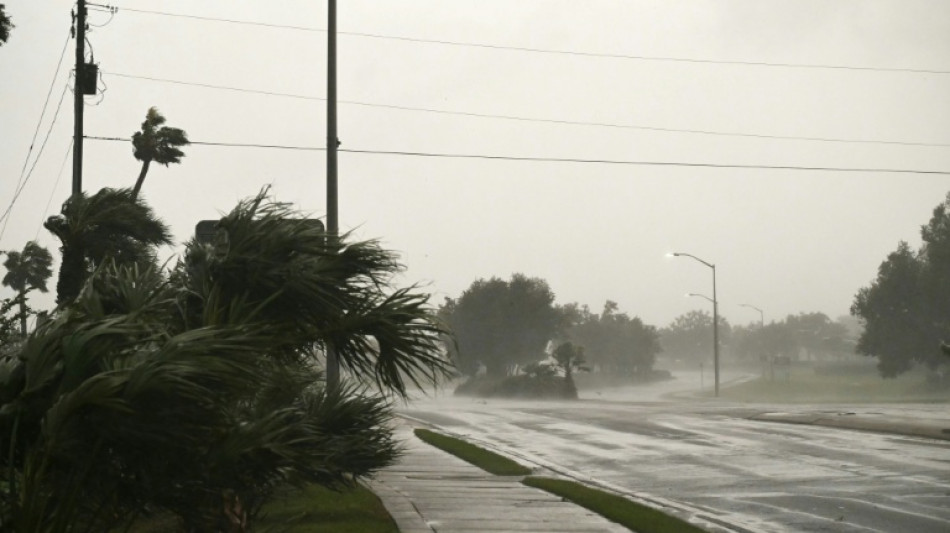
Isaias drenches southern US as weakened post-tropical cyclone / Photo: © AFP

Isaias drenches southern US as weakened post-tropical cyclone

The southeastern United States faced a high risk of flooding on Saturday as Isaias, weakened from a hurricane to a post-tropical cyclone, advanced northward from its landfall on Florida's Gulf Coast.

Text size:

More than 800,000 US customers were without electricity Saturday morning along its path through Florida, Alabama and Georgia, according to the PowerOutage.com tracker.

Isaias roared ashore late Friday as a Category 2 hurricane near the resort community of Destin, Florida, packing sustained winds of 105 miles (165 kilometers) per hour, before weakening overnight, the National Hurricane Center (NHC) said.

It was the first hurricane of an Atlantic season tamed by a historic El Nino weather phenomenon, and the first hurricane since 2024 to hit the US mainland.

Officials have reported two deaths related to the storm, both from trees falling on homes -- one near Pensacola in Florida and another in Birmingham, Alabama.

AFP reporters travelling from Pensacola to nearby Destin saw relatively minor damage, with electricity workers repairing power lines along mostly clear roads. Streets were largely deserted in the coastal communities after mandatory evacuations ahead of the storm.

"Although the center of the storm has moved out of Florida, the threat of flooding remains," Florida Governor Ron DeSantis told a press briefing Saturday morning.

He said that weather conditions fortunately had prevented the storm from making landfall as a major Category 3.

"We had assets in place that assumed the storm might strengthen rather than weaken, and I think that's the way you want to do it. You want to be overprepared," he said.

- Flood risks -

A major flood threat remained from the storm as it headed northward and inland. The NHC warned that some areas in the southeast could see upwards of 10 inches (25 centimeters) of rain.

"Considerable flash flooding and landslides are also possible across the Southern Appalachians," it warned in a briefing.

The threat was particularly worrying in the mountains of North Carolina, where communities are still recovering from Hurricane Helene of 2024.

That storm made landfall in the same Florida region as Isaias, but remained at tropical storm strength as it moved northward, dumping record amounts of rainfall into the mountains and leading to deadly flooding.

Isaias's late arrival this season is largely due to an El Nino of historic strength.

El Nino, the warm phase of the El Nino-Southern Oscillation (ENSO), creates strong vertical wind shear over the Atlantic that tends to tear storms apart.

"We have been seeing basically nearly record strong shear throughout the Atlantic Basin this year, and that is consistent with what we'd expect to see with a strong El Nino event," Michael Fischer, of the University of Miami's Rosenstiel School of Marine, Atmospheric, and Earth Science, told AFP.

In the Pacific, it has the opposite effect, weakening shear and allowing storms to grow. The Pacific has already produced several hurricanes this year, some of which hit maximum Category 5 strength.

L.Coleman--TFWP