Nepal flood survivors return to ruins to salvage memories / Photo: © AFP

Days after a wall of water and debris ripped through Nepal, Shanti Lamichhane sat on a fruit crate in the dirt where her village once stood, staring at what remained of her home.
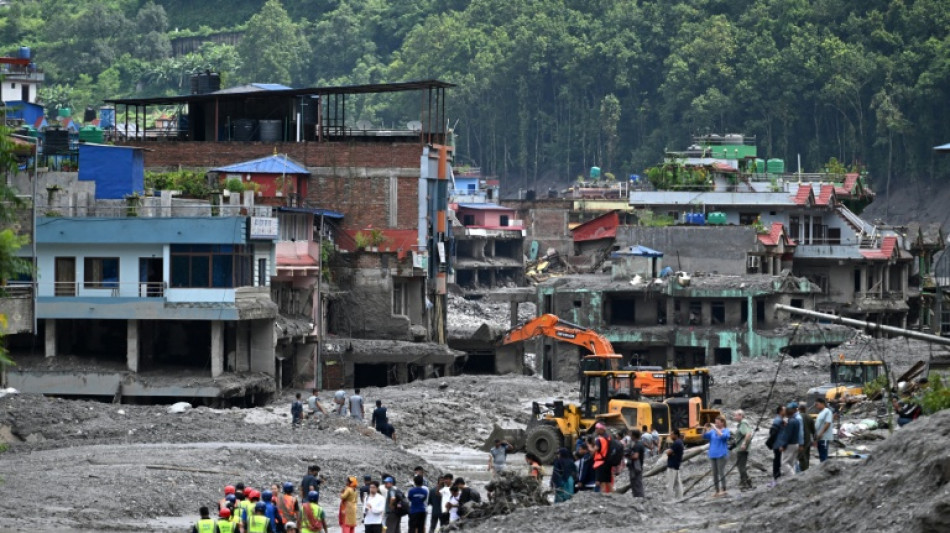
Across Nepal's flood disaster zone, survivors are returning to villages reduced to mud and debris, searching for belongings, documents and fragments of lives swept away in minutes.
Lamichhane said she was waiting for bulldozers to finish clearing the path so she could return.
"I want to retrieve a few things, but it is not just about that," she told AFP. "All my memories are there too."
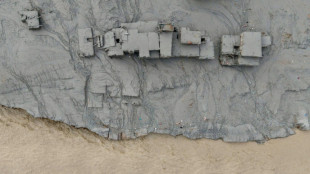
The village of Dhunge, once home to roughly 150 families, now lies in ruins, reduced to a swampy expanse with an ominous rotting stench -- one of dozens of settlements obliterated by the Himalayan floods.
The US Geological Survey said the disaster on Wednesday morning on the China-Nepal border was caused by a glacial collapse, sending an icy torrent downstream driving boulders with its sheer force, cutting a swathe through Nepal from north to south.
As of Sunday morning, figures from Nepal and China put the total number of missing close to 3,000, with 691 bodies recovered.
Forced to flee for their lives without time to take anything with them, many survivors are now returning to salvage whatever might remain -- or simply to see what became of what they once called home.
- 'Stench' -
Hari Prasad Rimal returned to his home in the village of Devighat, hoping to recover treasured belongings -- not least some jewellery and cash. He brought back a photograph of his daughter.
"It was pasted on a chest that was floating," said Rimal, 44. "There was nothing else I could retrieve, but that photo also means a lot."
Rimal's warehouse business, a few kilometres upstream, remained inaccessible, he said. Drone images taken by a volunteer showed only mud and debris where it had stood.
"It is gone, but I should not complain perhaps," he said. "At least, everyone in my family survived."
In Dhunge, Navraj Upretti waded through knee-high sludge towards his home, flanked by two rescuers carrying shovels by his side.
"I have some important documents I really need," he implored.
After an hour-long search, documents did emerge from beneath the silt -- but they belonged to a neighbour and were duly returned.
Upretti, 40, said he had less than a minute to escape when the floods struck.
"The house was inundated, I had managed to get barely 100 metres away," said Upretti, who ran a restaurant in the area. That was completely destroyed.
Santosh Adhikari was in Kathmandu when the deluge swept away his home in Dhunge. He returned three days later to find the house buried.
"There was nothing," he said.
Workers clearing silt from the flood-struck region say they occasionally come across personal belongings, including gold jewellery.
"But the debris is still knee-high and there is a stench in many places," said Ayushman Kuinkel, a rescuer from the Nepal Scouts youth group.
"One knows that there are also likely bodies under it."
C.Rojas--TFWP