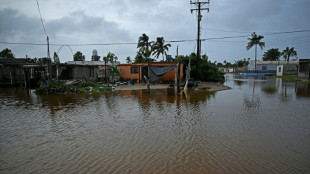
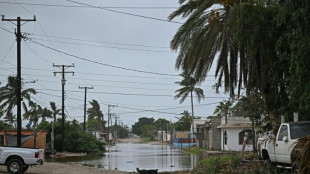
6.5-magnitude quake shakes Mexico City and beach resort / Photo: © AFP

A 6.5-magnitude earthquake rattled Mexico's capital and a tourist hotspot on the Pacific coast on Friday, killing at least one person but causing no serious damage.
The US Geological Survey said the quake struck shortly before 8:00 am near Acapulco, a major port and beach resort.
It was felt around 400 kilometers (250 miles) away to the north in Mexico City, where alarms sent people rushing into the street for safety, disturbing the peace of a holiday weekend.
A 60-year-old man died of his injuries after falling while evacuating his second-floor apartment in the capital, local authorities said.
Twelve others were injured, city Mayor Clara Brugada wrote on social media.
President Claudia Sheinbaum was forced to evacuate the presidential palace during her regular morning press conference.
Mexico's National Seismological Service said that the earthquake's epicenter was situated 14 kilometers southwest of the town of San Marcos in the state of Guerrero.
Sheinbaum said there were no immediate reports of major damage.
Mexico, which is situated between five tectonic plates, is one of the world's most seismically active countries.
Karen Gomez, a 47-year-old office worker living on the 13th floor of an apartment building in Mexico City's southwestern Alvaro Obregon borough, told AFP she was roused from her sleep by a street siren.
"I woke up in terror. My cellphone alert said it was a powerful earthquake."
Norma Ortega, a 57-year-old kindergarten director, living in a 10th-floor apartment, said she could feel her building shake.
In Acapulco, Ricardo, a tourist from the central Mexican state of Morelos, fled his hotel shirtless after sirens sounded.
The center of Mexico City is built on the muddy subsoil of what was once the bed of a lake, making it particularly vulnerable to earthquakes.
- Loudspeakers on lampposts -
The quakes most strongly felt usually originate off Guerrero state on the Pacific coast.
In 2017, also on September 19, a 7.1-magnitude quake killed 369 people, also mostly in Mexico City.
Early warning systems, including smartphone apps, have been developed to warn citizens strong quakes and urge them to reach safety.
Mexico City has also installed loudspeakers on lampposts to broadcast the alerts.
W.Lane--TFWP