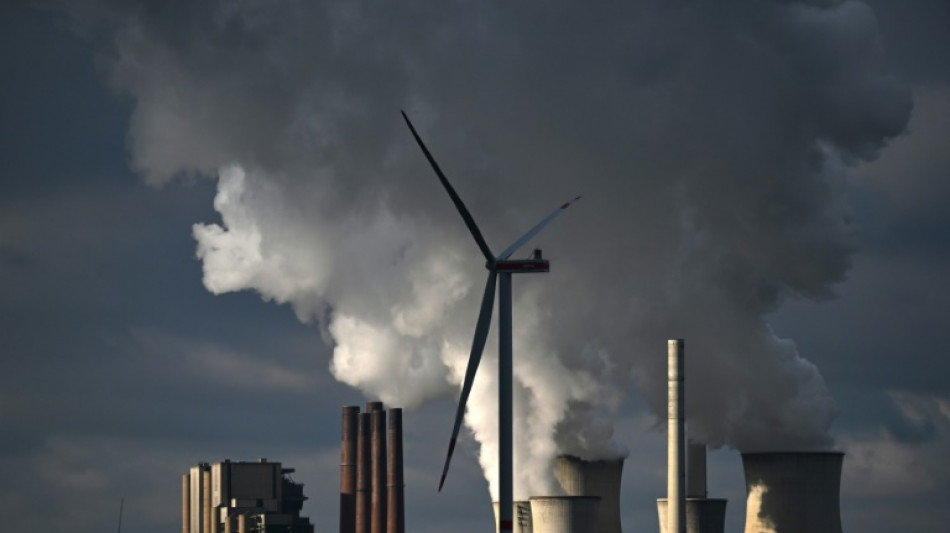
World's major courts take growing role in climate fight / Photo: © AFP/File

The world's top court is poised to tell governments what their legal obligations are to tackle global warming, and possibly outline consequences for polluters that cause climate harm to vulnerable countries.
Wednesday's highly anticipated advisory opinion by the International Court of Justice comes in the wake of landmark international decisions that experts say together have the potential to significantly shape climate action.
- How has climate litigation evolved? -
Andrew Raine, deputy director of the UN Environment Programme's law division, said frustration over the pace of climate action had spurred people, organisations and countries to turn to the courts.
"When political systems fall short, the law is increasingly seen as a tool for driving ambition and enforcing commitments that have been made," he told AFP.
These have been bolstered by increasingly precise and detailed climate science, including from the UN's IPCC climate expert panel.
Almost 3,000 climate cases have been filed up to the end of 2024, in nearly 60 countries, according to the Grantham Research Institute, using data compiled by the Sabin Center for Climate Change Law.
While not all have been successful -- and some have tried to slow climate progress -- there have been notable cases in recent years that have pushed states to do more.
Urgenda, an environmental organisation in the Netherlands, notched a win at the Dutch Supreme Court in 2019, with justices ordering the government to reduce its greenhouse gas emissions by 25 percent by the end of the following year.
And in 2021, the German Constitutional Court found that the government's failure to sufficiently cut planet-heating pollution placed an unacceptable burden on future generations.
Raine said that litigation was increasingly crossing borders, with 24 cases brought before international or regional courts, tribunals or other bodies.
"This marks a turning point and it reflects the transboundary and shared nature of the climate crisis," he said.
- Why have recent cases been deemed historic? -
Two in particular have been hailed as watershed moments that will help shape how courts, governments and businesses understand and act on their climate responsibilities.
Last year, an advisory opinion by the International Tribunal for the Law of the Sea said carbon emissions can be considered a marine pollutant and that countries have a legal duty to take measures to reduce their effects on oceans.
The tribunal made clear that the work of defining countries' obligations is not limited to the Paris climate agreement or the UN body that runs climate change negotiations.
Major polluters have argued that the UN framework is sufficient and against courts taking climate decisions.
Another major advisory opinion was issued this month, with the Inter-American Court of Human Rights reaffirming the right to a healthy climate system and acknowledging the rights of nature.
But perhaps the court's most profound statement was to place protection against irreversible climate harms on the same level as international prohibitions on genocide and torture, said Cesar Rodriguez-Garavito, Professor of Law and Director of the Climate Law Accelerator at New York University.
The court said "massive and serious harm to the climate system through emissions, through deforestation and so on, is absolutely forbidden by international law," he said.
In his view this made it the strongest statement yet by any international court on states' duty to avoid causing severe ecological destruction.
All eyes are now on the ICJ.
- What could be the impact? -
Vanuatu, one of many low-lying islands threatened by sea level rise, has asked the ICJ to give its opinion on states' obligations to reduce emissions.
But the potentially more controversial request is what -- if any -- legal consequences there might be for major polluters who cause severe climate damages.
"These are questions of global justice," said Rodriguez-Garavito, potentially touching on contentious issues of "reparations for climate harms" to those least responsible for emissions.
While advisory opinions like the ICJ are not legally enforceable, Raine said they carry significant weight.
"They clarify how international law applies to the climate crisis, and that has ripple effects across national courts, legislative processes and public debates," he said.
"It doesn't force states to act, but it shows them where the law stands and where they should be headed."
N.Patterson--TFWP