The Fort Worth Press - El Nino not responsible for East Africa floods: scientists

USD -
AED 3.672504
AFN 64.503991
ALL 81.720038
AMD 360.406323
ANG 1.790403
AOA 918.000367
ARS 1568.130552
AUD 1.4997
AWG 1.8025
AZN 1.70397
BAM 1.781807
BBD 2.01075
BDT 124.174373
BGN 1.77347
BHD 0.376714
BIF 3006.969435
BMD 1
BND 1.287933
BOB 11.65581
BRL 5.949504
BSD 0.998315
BTN 92.467544
BWP 14.234045
BYN 2.99713
BYR 19600
BZD 2.007835
CAD 1.43465
CDF 2280.000362
CHF 0.840443
CLF 0.025921
CLP 1017.646791
CNY 6.67775
CNH 6.682804
COP 3427.686421
CRC 446.863754
CUC 1
CUP 23.960279
CVE 100.455519
CZK 22.299704
DJF 177.779802
DKK 6.814905
DOP 60.22867
DZD 136.148135
EGP 53.415023
ERN 15
ETB 163.858971
EUR 0.91135
FJD 2.29155
FKP 0.763139
GBP 0.764526
GEL 2.603861
GGP 0.763139
GHS 11.755113
GIP 0.763139
GMD 74.000355
GNF 8850.726552
GTQ 7.630848
GYD 208.864392
HKD 7.83895
HNL 26.834601
HRK 6.831965
HTG 130.916048
HUF 340.290388
IDR 18292.95
ILS 3.34105
IMP 0.763139
INR 92.680504
IQD 1513.506127
IRR 1937364.503816
ISK 125.110386
JEP 0.763139
JMD 158.14695
JOD 0.70904
JPY 158.55504
KES 129.831914
KGS 87.450384
KHR 4073.247392
KMF 449.00035
KPW 900.00035
KRW 1345.905039
KWD 0.31178
KYD 0.831959
KZT 455.400173
LAK 22505.352344
LBP 89404.637179
LKR 332.009293
LRD 167.220881
LSL 17.451373
LTL 2.95274
LVL 0.60489
LYD 6.459254
MAD 9.983601
MDL 18.299094
MGA 4524.210814
MKD 56.078896
MMK 2100.158384
MNT 3607.934465
MOP 8.060128
MRU 40.693299
MUR 46.780378
MVR 15.403739
MWK 1731.152918
MXN 19.15845
MYR 4.113039
MZN 63.903729
NAD 17.451373
NGN 1355.000344
NIO 36.742131
NOK 9.76155
NPR 147.947889
NZD 1.828655
OMR 0.381679
PAB 0.998315
PEN 3.426958
PGK 4.494147
PHP 64.018038
PKR 275.965381
PLN 4.06445
PYG 6295.267162
QAR 3.649342
RON 4.877804
RSD 107.165308
RUB 81.477338
RWF 1474.878149
SAR 3.751806
SBD 8.124013
SCR 13.994038
SDG 601.503676
SEK 10.228904
SGD 1.289404
SHP 0.764263
SLE 22.850371
SLL 20969.503664
SOS 570.582608
SRD 37.363504
STD 20697.981008
STN 22.320412
SVC 8.735025
SYP 13002.000337
SZL 17.447274
THB 34.045038
TJS 9.179702
TMT 3.5
TND 3.023915
TOP 2.40776
TRY 50.538804
TTD 6.776295
TWD 32.969604
TZS 2663.052886
UAH 44.835512
UGX 4218.102309
UYU 40.595818
UZS 11951.897235
VES 917.61775
VND 25801.5
VUV 121.520976
WST 2.823319
XAF 597.806686
XAG 0.024398
XAU 0.00028370404
XCD 2.70255
XCG 1.799299
XDR 0.707052
XOF 597.806686
XPF 108.650298
YER 236.603589
ZAR 17.61858
ZMK 9001.203584
ZMW 20.555733
ZWL 321.999592
SSP 5776.450358
MXV 2.147601
  • RIO

    -0.3300

    97.04

    -0.34%

  • CMSC

    -0.0400

    20.67

    -0.19%

  • RELX

    0.0000

    33.41

    0%

  • RBGPF

    0.0000

    67.95

    0%

  • BCE

    -0.0700

    21.99

    -0.32%

  • BCC

    -0.0300

    75.66

    -0.04%

  • GSK

    0.8600

    51.08

    +1.68%

  • JRI

    -0.0300

    11.52

    -0.26%

  • NGG

    -0.1200

    76.68

    -0.16%

  • CMSD

    0.0900

    20.54

    +0.44%

  • BTI

    -0.0800

    55.75

    -0.14%

  • AZN

    2.0200

    168.1

    +1.2%

  • BP

    -1.4200

    43.16

    -3.29%

  • RYCEF

    0.4600

    19.7

    +2.34%

  • VOD

    0.0700

    17.02

    +0.41%

El Nino not responsible for East Africa floods: scientists
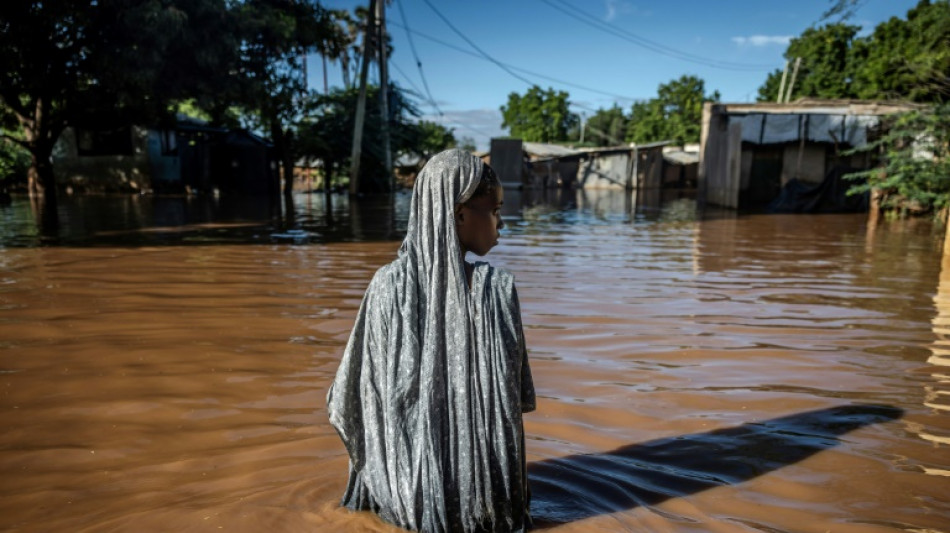
El Nino not responsible for East Africa floods: scientists / Photo: © AFP

El Nino not responsible for East Africa floods: scientists

The El Nino weather pattern did not have "any influence" on widespread flooding that killed hundreds in East Africa this year, an expert group of scientists said Friday.

Text size:

Torrential rainfall in Kenya, Tanzania and neighbouring nations killed more than 500 people, displacing hundreds of thousands as the deluge swept away homes and swamped roads during the March to May monsoon season.

The region was hit by floods late last year as well, with researchers saying that the Indian Ocean Dipole (IOD) -- a climate system defined by the difference in sea surface temperature between western and eastern areas of the ocean -- contributed to the heavy rainfall.

This year's rains were believed to have been exacerbated by El Nino -- a climate phenomenon typically associated with increased heat that leads to drought in some parts of the world and heavy downpours elsewhere.

But a study published by the World Weather Attribution (WWA) group on Friday found that "researchers did not find any evidence that El Nino or the Indian Ocean Dipole had any influence" on this year's extreme rainfall.

The network of scientists has developed peer-reviewed methods for quickly establishing the potential role of global warming in specific extreme weather events.

Scientists examined weather data and climate models to compare how rainfall patterns have changed between now and the pre-industrial era as they sought to measure the impact of climate change on the monsoon.

"The extreme rainfall that led to destructive floods in Kenya, Tanzania and other parts of East Africa is becoming more intense, with climate change as one of the drivers," researchers said.

"The best estimate is that climate change made the event twice as likely and five percent more intense," they said, adding a caveat that the findings also had to take "a large mathematical uncertainty" into account.

The study covered the "maximum 30-day rainfall" during this year's monsoon season, with researchers pointing out that "heavy rainfall will continue to increase in the region with further warming".

- Improve infrastructure -

The study urged governments in the region to improve infrastructure and protect ecosystems to save lives and help citizens cope with the heightened risk of climate disasters, especially in densely populated urban areas.

East Africa and the Horn of Africa are among the regions most vulnerable to climate change -- even though the continent's contribution to global carbon emissions is a fraction of the total.

Over 300 people died in rains and floods in Ethiopia, Kenya and Somalia late last year, just as the region was trying to recover from its worst drought in four decades that left millions of people hungry.

A WWA study on last year's floods in East Africa called for the urgent phasing out of fossil fuels and reduction of emissions globally.

M.Delgado--TFWP