New Ypsilon and Ypsilon hf

Lancia’s revival begins with an all‑new Ypsilon supermini. Built on Stellantis’s CMP platform, it comes as a battery‑electric or 48‑volt mild‑hybrid. The electric Ypsilon uses a 51 kWh battery and a front‑mounted motor rated at 115 kW (156 hp), delivering up to 403 km of WLTP range and more than 500 km in urban use. DC fast charging takes the battery from 20 to 80 percent in 24 minutes, or adds 100 km of range in 10 minutes, while consumption is rated at 14.3–14.6 kWh/100 km. The mild‑hybrid pairs a 1.2‑litre three‑cylinder with a 48‑V system to produce 100 hp and achieve 0–100 km/h in 9 seconds.
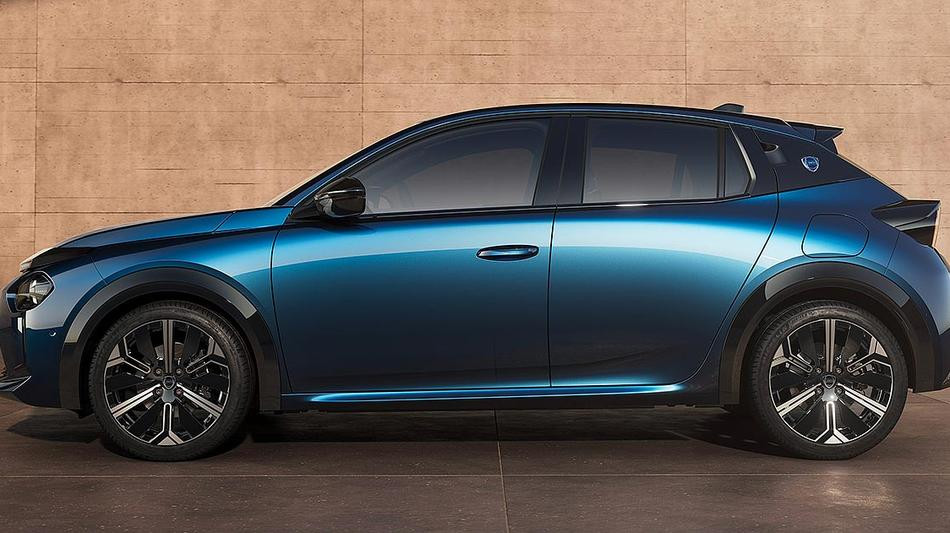
The cabin is co‑created with furniture maker Cassina, combining sustainable textiles with a minimalist design. Lancia’s SALA (Sound Air Light Augmentation) interface manages lighting, climate and media across dual displays. Half of the surfaces passengers touch are made from recycled or eco‑friendly materials. Outside, the Ypsilon wears a reinterpretation of Lancia’s grille, round Stratos‑inspired rear lights and clean lines.
In 2025 Lancia unveiled the performance‑oriented Ypsilon HF. It features a 54 kWh battery and a 207 kW motor, producing 280 hp. With a Torsen limited‑slip differential, strengthened chassis (67 % more rigidity at the front, 153 % at the rear anti‑roll bar) and 18‑inch wheels, the Ypsilon HF accelerates from 0 to 100 km/h in 5.6 seconds and reaches 180 km/h. Range is around 370 km, and a 10‑minute DC charge adds 100 km. An Alcon braking system with 355 mm discs provides strong stopping power. Stellantis suggests a price around €35–40,000 and deliveries starting later in 2025.
The Ypsilon reintroduces the HF badge, evoking Lancia’s rally glory. It marks the first of three new models: a compact crossover named Gamma is due in 2026 and the sporty Delta hatchback will follow in 2028.