RBGPF
-1.2500


Net sales increase 46%, while gross profit materially outpaces top-line growth, Company materially closer to cash-flow breakeven.
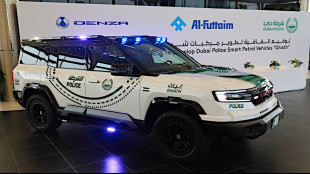
In line with Dubai’s vision to lead in security, sustainability and smart mobility, Dubai Police, in partnership with Al-Futtaim, the exclusive distributor of BYD in the UAE, has launched the second generation of its ‘Ghiath’ smart patrol vehicles.The launch ceremony was attended by Lieutenant General Abdulla Khalifa Al Marri, Commander-in-Chief of Dubai Police, Stella Li, Executive Vice President of BYD Company, Omar Al Futtaim, Vice Chairman and Chief Executive Officer of Al-Futtaim, Major General Hareb Al Shamsi, Deputy Commander-in-Chief for Criminal Affairs, Major General Saif Muhair Al Mazrouei, Assistant Commander-in-Chief for Operations Affairs, Major General Rashid Al Falasi, Director of the General Department of Transport and Rescue, along with senior officers and representatives from both organisations.The launch coincided with the signing of a Memorandum of Understanding between Dubai Police and Al-Futtaim, the exclusive distributor of BYD in the UAE. The agreement was signed by Major General Saif Muhair Al Mazrouei on behalf of Dubai Police and Yousuf AlRaeesi, Director of Government Affairs at Al-Futtaim, on behalf of the company. The partnership aims to develop the second generation of ‘Ghiath’ smart patrol vehicles using the plug in hybrid DENZA B8, combining advanced security technologies, high performance and environmental sustainability. The new patrols will support police operations with more advanced smart vehicles that improve response times, enhance field operations and meet the evolving demands of future policing.Lieutenant General Abdulla Khalifa Al Marri said Dubai Police remains committed to maintaining its position among the world’s leading police organisations by equipping its operations with the latest technologies and advanced equipment to enhance community safety and security. He noted that the partnership with Al-Futtaim and BYD represents an important step in developing the second generation of ‘Ghiath’ smart patrols and expanding Dubai Police’s fleet with highly advanced vehicles designed to deliver optimal performance across policing and security operations.

Tire retailers set aside their rivalry for a greater cause. Priority Tire is proud to support Blood Cancer United with every set of Cosmo tires sold. Tire retailers set aside their rivalry for a greater cause. Priority Tire is proud to support Blood Cancer United with every set of Cosmo tires sold.
California's new tire efficiency regulation has the potential to save hundreds of dollars in fuel, but the key question is whether the rule's actual benefits match its predicted results.

CEO Shares Letter to Shareholders, inviting them to attend the townhall; Management to discuss Nasdaq bid price compliance, 35% May gross margin, Meyer Distributing, $36M+ revenue run-rate target, direct investments, insider alignment, NEXUS traction, Terravis Energy, and the Company's 2026 execution plan.The live event will provide shareholders an opportunity to hear directly from CEO Steven Rossi and ask questions about Worksport's business momentum and long-term value creation strategy.

DETROIT, MI / ACCESS Newswire / June 22, 2026 / Leggett Dynamics today launched its Mid-Class Massage System (MCM), a breakthrough non-electronic innovation that makes premium massage more accessible beyond the luxury vehicle segment. Now in production with a global OEM, MCM was also shortlisted for the 2026 Auto Tech Partnership Award for industry-leading innovation and collaboration.
Company announces three major operating inflections: preliminary May record breaking gross margin of approximately 35% (up 660 Basis Points), a new Meyer Distributing relationship, and a $36M+ 12-month revenue opportunity supported by accelerating B2C and B2B growth.The announcement follows last week's premium-priced direct investment and highlights the distribution scale, margin expansion, and revenue drivers that management believes lead the Company's path toward near-term operational cash-flow positivity.
Major Investor Completes a Direct Investment Priced at $1.20 per Share - a Premium of More Than 100% to Recent Trading LevelsThe Investor Has Also Expressed Interest in Evaluating Up to $10 Million in Potential Additional Financing as Worksport Advances Its 2026 Growth Plan

Reduces Complexity & Cost, Improves Performance, Supports Next-Gen Architectures
Appointment Adds Institutional Capital Markets and AI Infrastructure Expertise as EVTV Pursues Off-grid Power-Backed Hyperscale Data Center Development and AI Compute Expansion Following the Historic SpaceX IPO
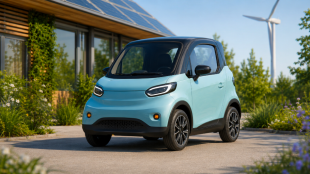
In early May 2026, the French start‑up IPOP Automobiles unveiled a prototype of its mini electric car at the National Automobile Museum in Mulhouse. Nicknamed IPOP, the vehicle breaks with conventions: instead of a central motor, each wheel houses its own electric motor. The company promises that nearly all components are manufactured in France, with battery cells from China being the only exception.Visually, the IPOP resembles a hybrid of a beach buggy and a golf cart. It can be configured as a two‑ or four‑seat vehicle, with open or enclosed bodywork, and with either two‑ or four‑wheel drive. Inventor Christophe Winkelmuller believes that wheel‑hub motors are the next big leap in vehicle electrification, comparable to the battery revolution of the past decade. By eliminating bulky drivetrains, the wheel motors are intended to save space and increase efficiency.
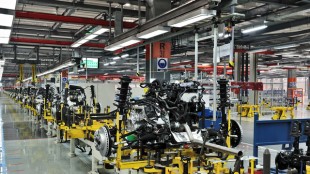
ACCELERATES INNOVATION & GROWTH IN COMFORT, MOTION & SOFTWARE INTEGRATED SYSTEMS

Founder & CEO continues to acquire equity, reflecting his confidence in the Company's progress toward achieving operational cash-flow positivity and his belief that the Company's current market valuation, trading significantly below book-value. does not fully reflect its underlying business, or growth potential.
Q1 net sales reached $3.3 million with gross margin of 26%; Company enters Q2 with SOLIS and COR shipping, COR certified, NEXUS launched, Tri-State distribution added, and operational cash-flow targeted within 2026.
Worksport will host its Q1 2026 earnings conference call on May 13, 2026, at 4:30 p.m. ET, followed immediately by the Company's inaugural investor townhall with CEO commentary, business updates, and shareholder Q&A.
New CFO brings public-company reporting, manufacturing finance, technical accounting, governance, and cash-flow planning experience in-house as Worksport scales toward its 2026 growth targets.
Worksport CEO Steven Rossi will share the Company's growth story with institutional investors in New York City as Worksport continues expanding commercial execution, product availability, and investor visibility. Existing shareholders may also request meetings with Worksport management on May 6 and May 7.
Partnership advances Worksport's 2026 U.S. distribution expansion strategy, accelerating velocity and building recurring revenue from high-volume accounts.

Mobile application offers consolidated access to financial service information, savings history, and reminder notifications.
Proprietary single-side operation addresses key customer pain points; ~strong pre-order demand and early distributor demand support 2026 revenue guidance
Company to engage directly with overlanding consumers and industry participants as part of continued commercial rollout of recently launched power and tonneau solutions
Any Class, Every Repair. Fleets Can Now Centralize Repair Operations Across All Vehicles.
Founder & CEO Acquires 88,214 Shares at $0.8502, Citing Belief in Operational Progress, Margin Expansion and Path to Cash-Flow Positivity
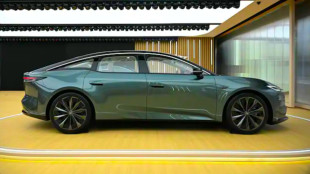
The Toyota bZ7 is shaking up China’s electric luxury car segment. Developed jointly by Toyota and GAC, the five‑meter sedan is built exclusively for the Chinese market and measures roughly 5,130 mm long and 1,965 mm wide, similar to a Tesla Model S. Pricing starts at about 147,800 yuan (approximately US$21,500) and runs up to 199,800 yuan across five trim levels.The bZ7 showcases cutting‑edge technology. Its cockpit features Huawei’s HarmonyOS 5.0 interface on a 15.6‑inch touchscreen, complemented by an 8.8‑inch digital cluster and a 27‑inch head‑up display. Voice control recognizes multiple zones and commands, yet physical buttons remain for key functions. Momenta provides the R6 ADAS suite, combining LiDAR and 26 other sensors to deliver highway and urban navigation on autopilot plus automated parking without subscription fees.Passengers enjoy ventilated, heated and massaging seats, while the front seats use a zero‑gravity design for comfort. Dual‑chamber air suspension and a road‑preview system give a refined ride.
Final safety and compliance approvals complete; certification package supports broader sales across retail, fleet, distributor, and commercial channels
HELOTES, TX / ACCESS Newswire / March 30, 2026 / TurboPass today announced a comprehensive upgrade to its product suite, effective March 30, 2026. The platform upgrade introduces new verification tools designed to give dealerships deeper customer insight, greater flexibility at the point of sale, and continued protection against fraud. This release reflects TurboPass' continued investment in delivering direct-from-source data solutions that align dealerships with the same verification standards lenders use every day.
JACKSONVILLE, FL / ACCESS Newswire / March 28, 2026 / Following the official 2026 season schedule announcement, driver Tommy Pintos is set to commence the second season in the McLaren Trophy America championship. Competing in the No. 11 McLaren Artura Trophy, Pintos will debut a full-season partnership with Priority Tire. The season opens March 28 at Sonoma Raceway in Sonoma, California.
Revenue Increases 90% YoY; Company Highlights Margin Expansion and Commercialization Milestones

The announced end of AC Schnitzer by the close of 2026 is far more than the disappearance of a well-known tuning brand. It is a warning signal with meaning far beyond the BMW enthusiast scene. When a company that for decades stood for sporty BMW refinement, forged wheels, suspension upgrades, exhaust systems and a distinctly German form of engineering passion can no longer operate its manufacturing and tuning business economically in Germany, the issue is no longer just about one brand. It becomes a question about Germany as an automotive business location. AC Schnitzer therefore turns into a symbolic case: one that reflects weakening competitiveness, a cost structure that has become increasingly hard to carry and a growing public impression that politics is reacting too slowly, too cautiously and too late.That is why the topic strikes such a deep emotional nerve. AC Schnitzer was never merely a supplier of aftermarket parts. The company represented an entire culture of refinement, balancing factory-like elegance with a more rebellious edge. For many BMW fans, it was part of the national automotive landscape: Aachen, BMW, motorsport associations, complete vehicle programs, distinctive forged wheels, aerodynamic components, performance kits and memorable special builds. In that sense, the end of AC Schnitzer is not simply a balance-sheet story. It is also the loss of a piece of industrial identity.The reasons behind the closure are revealing because they expose exactly the chain of problems that German industry has been discussing for years. At the core lies a toxic mix of rising development and production costs, slow approval procedures, intensifying international competition and shifting demand. The most striking point is the complaint about the length of the German approval system. If aftermarket parts reach the market many months after foreign competitors have already launched theirs, a specialist niche player loses precisely what matters most: timing, visibility and margins. On top of that come more expensive raw materials, volatile exchange rates, supplier disruptions, tariffs in important export markets, hesitant consumer spending and the gradual decline of the combustion-engine culture that once fueled large parts of the tuning scene. AC Schnitzer is therefore not describing a single isolated problem, but a concentration of structural burdens.
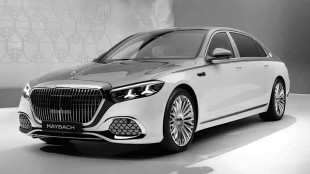
The new Mercedes-Maybach S-Class is far more than a carefully polished update of a familiar ultra-luxury limousine. It arrives at a moment when Mercedes is sharpening the very top of its portfolio, comprehensively modernizing the S-Class and expanding Maybach into a distinct luxury universe that now stretches from chauffeur-driven saloon to electric SUV and exclusive roadster. That is precisely why this model matters. The new Maybach is meant to feel more digital, more individual and more visibly luxurious, while still preserving the essence that made the name so powerful in the first place: serenity, space, comfort and ceremonial presence.Its exterior already makes that ambition unmistakable. The limousine remains an imposing figure at roughly 5.48 meters in length, yet the revised design pushes its presence even further. The grille grows larger, light becomes a central design instrument, Maybach insignia and other elements take on a more theatrical role, and new wheel designs sharpen the visual stance. Even smaller details, such as projected lettering when entering the car or rose-gold accents inside the headlamps, underline the idea that luxury here is not merely owned but staged. Buyers who prefer a darker, more dramatic interpretation still have that option as well. This is not design built around understatement. It is design built around effect.Inside, Mercedes makes its 2026 understanding of luxury even clearer. The new Mercedes-Maybach S-Class adopts the sweeping Superscreen layout, introduces MB.OS to a Maybach model and combines digital sophistication with a deliberate emphasis on tactile richness. The rear compartment remains the true centerpiece. Executive seating, chauffeur-oriented comfort, generous legroom, larger rear displays and a long list of comfort details create the impression of a private lounge on wheels rather than a conventional car cabin. At the same time, Maybach is moving toward a broader definition of exclusivity. Most telling is the availability of a leather-free interior using linen and recycled polyester. It signals that premium craftsmanship is no longer tied exclusively to traditional opulence, but increasingly to material intelligence, sensory quality and curated individuality.
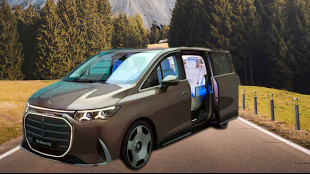
Mercedes is not simply pushing the V-Class into the electric age; it is changing the vehicle’s very character. With the VLE, the familiar people carrier becomes something much closer to a rolling grand limousine. That is the real message behind this reboot. In the future, Mercedes will draw a clearer line between the VLE, positioned roughly on E-Class territory, and the even more luxurious VLS at the top end. This restart is therefore aimed not only at European families or hotel shuttles, but at a global market in which large luxury vans have long since become status objects.The technical leap is just as significant. The VLE is the first model to sit on a dedicated electric van architecture and it brings precisely the ingredients Mercedes wants to associate with its upper-class passenger cars: 800-volt technology, very fast charging, air suspension, rear-axle steering, a much more digital cockpit and an interior that feels more like a lounge than a traditional van. Up to eight seats, a highly flexible rear compartment, generous luggage space and strong towing credentials are all meant to prove that this is not merely a beautifully staged product, but a genuinely usable one. Mercedes wants to dissolve the old compromise: the VLE is supposed to be a business shuttle, a family car, a travel vehicle and a prestige product all at once.That inevitably puts range at the centre of the debate. On paper, the package is convincing: a large battery, a modern EV-first platform, strong aerodynamics, rapid charging and a clear attempt to present long-distance usability as something tangible rather than theoretical. All of that supports the idea that the official WLTP claim is not just marketing theatre. Even so, it would be a mistake to read that figure as an everyday guarantee. A vehicle of this size already weighs roughly three tonnes before passengers or luggage are added, and the heavier versions push total weight significantly higher still. Add several occupants, baggage, winter temperatures, climate control, large wheels and brisk motorway speeds, and the usable range will naturally fall. The VLE does not defeat physics; it simply shows how far current engineering can reduce the traditional drawbacks of large electric vehicles.
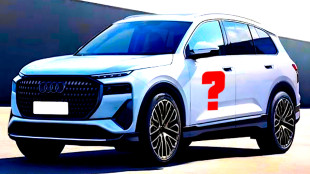
The new Audi Q9 is not arriving at a moment of effortless supremacy. It arrives while Audi is renewing its range, trimming costs and trying to restore the full credibility of its premium promise. A flagship SUV above the Q7 is strategically sensible: more presence, more margin potential and more relevance in a highly profitable class. But that also raises the burden of proof.That burden begins with the facts. Audi has confirmed the Q9, yet there is still no official final price and no published WLTP range. Nor has the production powertrain line-up been fully disclosed in public. So the central question can only be answered provisionally today: the Q9 is not justified by default; its eventual price and its real-world electrified usefulness will have to justify themselves.Range is where the issue becomes especially delicate. If Audi launches the Q9 as an electrified combustion model or a plug-in hybrid, a merely decent figure will not be enough in 2026. Buyers in this class expect more than paper efficiency and a premium screen landscape. They expect genuine everyday usability, calm long-distance comfort, intelligent charging and powertrain logic, and the sense that this is modern mobility done convincingly rather than transitional technology sold expensively.