The Fort Worth Press - Low bar, high hopes: China unveils new climate goals

USD -
AED 3.672502
AFN 66.374624
ALL 82.891062
AMD 382.105484
ANG 1.790055
AOA 916.999807
ARS 1445.826396
AUD 1.509662
AWG 1.80125
AZN 1.695795
BAM 1.678236
BBD 2.018646
BDT 122.628476
BGN 1.677703
BHD 0.377014
BIF 2961.256275
BMD 1
BND 1.297979
BOB 6.925579
BRL 5.310804
BSD 1.002244
BTN 90.032049
BWP 13.315657
BYN 2.90153
BYR 19600
BZD 2.015729
CAD 1.394875
CDF 2230.000049
CHF 0.80302
CLF 0.023394
CLP 917.730085
CNY 7.07165
CNH 7.067097
COP 3796.99
CRC 491.421364
CUC 1
CUP 26.5
CVE 94.616395
CZK 20.76375
DJF 178.481789
DKK 6.40673
DOP 63.686561
DZD 129.897998
EGP 47.520501
ERN 15
ETB 156.280403
EUR 0.857898
FJD 2.261501
FKP 0.750125
GBP 0.749325
GEL 2.700162
GGP 0.750125
GHS 11.416779
GIP 0.750125
GMD 73.000063
GNF 8709.00892
GTQ 7.677291
GYD 209.68946
HKD 7.78475
HNL 26.389336
HRK 6.462901
HTG 131.282447
HUF 328.445496
IDR 16651.7
ILS 3.235525
IMP 0.750125
INR 89.888095
IQD 1312.956662
IRR 42124.999835
ISK 127.820348
JEP 0.750125
JMD 160.623651
JOD 0.708969
JPY 154.622993
KES 129.250164
KGS 87.45021
KHR 4014.227424
KMF 422.000349
KPW 899.992858
KRW 1470.020022
KWD 0.306802
KYD 0.83526
KZT 506.587952
LAK 21742.171042
LBP 89752.828464
LKR 309.374155
LRD 176.902912
LSL 17.013777
LTL 2.95274
LVL 0.60489
LYD 5.447985
MAD 9.247548
MDL 17.048443
MGA 4457.716053
MKD 52.892165
MMK 2099.902882
MNT 3550.784265
MOP 8.035628
MRU 39.710999
MUR 46.070267
MVR 15.409735
MWK 1737.95151
MXN 18.2142
MYR 4.114026
MZN 63.897023
NAD 17.013777
NGN 1450.250279
NIO 36.881624
NOK 10.095799
NPR 144.049872
NZD 1.732802
OMR 0.384503
PAB 1.002325
PEN 3.37046
PGK 4.251065
PHP 58.991026
PKR 283.139992
PLN 3.631841
PYG 6950.492756
QAR 3.663323
RON 4.367199
RSD 100.707975
RUB 76.00652
RWF 1458.303837
SAR 3.753008
SBD 8.223823
SCR 14.340982
SDG 601.504905
SEK 9.41351
SGD 1.29484
SHP 0.750259
SLE 22.999887
SLL 20969.498139
SOS 571.823287
SRD 38.643498
STD 20697.981008
STN 21.023817
SVC 8.769634
SYP 11056.894377
SZL 17.008825
THB 31.89005
TJS 9.210862
TMT 3.5
TND 2.941946
TOP 2.40776
TRY 42.517902
TTD 6.795179
TWD 31.297984
TZS 2449.999928
UAH 42.259148
UGX 3553.316915
UYU 39.265994
UZS 11939.350775
VES 248.585902
VND 26365
VUV 122.113889
WST 2.800321
XAF 562.862377
XAG 0.017154
XAU 0.000237
XCD 2.70255
XCG 1.806356
XDR 0.70002
XOF 562.867207
XPF 102.334841
YER 238.414547
ZAR 16.960985
ZMK 9001.19956
ZMW 23.026725
ZWL 321.999592
  • RBGPF

    0.0000

    78.35

    0%

  • CMSC

    0.0400

    23.48

    +0.17%

  • SCS

    -0.1200

    16.23

    -0.74%

  • BCC

    -2.3000

    74.26

    -3.1%

  • RYCEF

    0.4600

    14.67

    +3.14%

  • CMSD

    -0.0300

    23.32

    -0.13%

  • RELX

    0.3500

    40.54

    +0.86%

  • RIO

    -0.5500

    73.73

    -0.75%

  • GSK

    -0.4000

    48.57

    -0.82%

  • NGG

    -0.5800

    75.91

    -0.76%

  • JRI

    0.0500

    13.75

    +0.36%

  • BCE

    0.0400

    23.22

    +0.17%

  • BTI

    0.5300

    58.04

    +0.91%

  • VOD

    0.0500

    12.64

    +0.4%

  • AZN

    -0.8200

    90.03

    -0.91%

  • BP

    -0.0100

    37.23

    -0.03%

Low bar, high hopes: China unveils new climate goals
Low bar, high hopes: China unveils new climate goals / Photo: © AFP/File

Low bar, high hopes: China unveils new climate goals

China has announced its new climate action plan at a UN climate meeting -- its first ever pledge to include absolute targets for cutting planet-warming gases -- setting a goal of reducing emissions by 7–10 percent by 2035.

Text size:

Here's what to know:

- Why it matters -

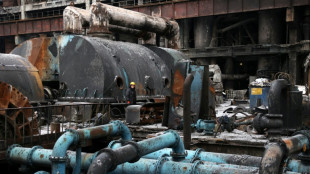
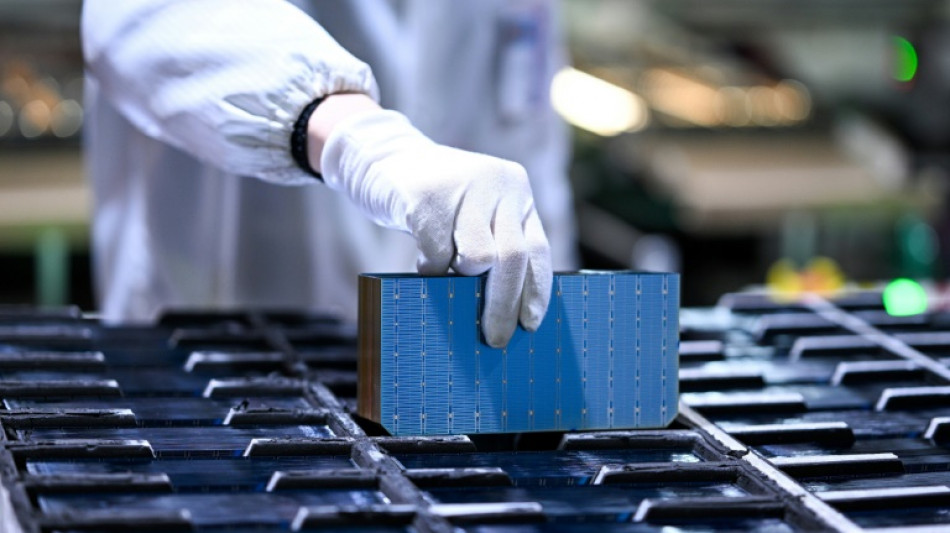
China is the world's second biggest economy, and since 2006, the largest polluter, now accounting for nearly 30 percent of global emissions. Paradoxically, it is also a clean energy powerhouse, rapidly shifting to renewable energy while selling the world its solar panels, batteries and electric cars.

Beijing's trajectory will be crucial to whether the world can limit end-of-century warming to 1.5C, the threshold UN scientists say is needed to avoid the most catastrophic impacts of climate disruption.

Under the Paris Agreement, countries must update their "Nationally Determined Contributions" every five years. With the year's main climate summit in Brazil fast approaching in November, expectations were running high for President Xi Jinping's announcement Wednesday at the United Nations.

China's 2021 pledge was to peak carbon dioxide emissions before 2030 and reach carbon neutrality by 2060. But it lacked near-term numerical targets, frustrating international observers.

The geopolitical context has raised the stakes: the United States has again quit the Paris accord under Donald Trump, who dismisses climate change as a "con job," while a fractious European Union has yet to set a new target.

- What it says -

Under the new plan, China pledges to:

- Cut economy-wide net greenhouse gas emissions by 7–10 percent from peak levels while "striving to do better." China's emissions are believed to have peaked in 2025. Analysts note that to align with 1.5C, Beijing would need to slash emissions by about 30 percent within a decade from 2023 levels.

For context, the United States reached its peak of CO2 emissions in 2007 and reduced them by approximately 14.7 percent a decade later.

- Raise the share of non-fossil fuels in total energy consumption to over 30 percent and expand wind and solar capacity to more than six times 2020 levels, reaching 3,600 gigawatts.

- Increase forest cover to over 24 billion cubic meters.

- Make electric vehicles the "mainstream in the sales of new vehicles."

- Expand the national carbon trading scheme to cover high-emission sectors and establish a "climate adaptive society."

- What experts think -

Observers almost universally say the targets are too modest -- but that China is likely to surpass them thanks to its booming clean technology sector.

"This 2035 target offers little assurance to keep our planet safe, but what's hopeful is that the actual decarbonization of China's economy is likely to exceed its target on paper," said Yao Zhe of Greenpeace East Asia.

Kate Logan and Li Shuo of the Asia Society highlighted the phrase "striving to do better."

"This phrasing at least sends an upward signal that Beijing is potentially open to revising its on-paper commitment based on actual progress," they wrote.

C.Dean--TFWP