The Fort Worth Press - Arctic warming spurs growth of carbon-soaking peatlands

USD -
AED 3.672498
AFN 66.374624
ALL 82.891062
AMD 382.105484
ANG 1.790055
AOA 917.000265
ARS 1446.111798
AUD 1.509457
AWG 1.80125
AZN 1.69945
BAM 1.678236
BBD 2.018646
BDT 122.628476
BGN 1.678398
BHD 0.376991
BIF 2961.256275
BMD 1
BND 1.297979
BOB 6.925579
BRL 5.31099
BSD 1.002244
BTN 90.032049
BWP 13.315657
BYN 2.90153
BYR 19600
BZD 2.015729
CAD 1.394565
CDF 2229.999854
CHF 0.803415
CLF 0.023394
CLP 917.729983
CNY 7.07165
CNH 7.067635
COP 3796.99
CRC 491.421364
CUC 1
CUP 26.5
CVE 94.616395
CZK 20.762402
DJF 178.481789
DKK 6.410465
DOP 63.686561
DZD 130.081006
EGP 47.5783
ERN 15
ETB 156.280403
EUR 0.85828
FJD 2.261962
FKP 0.750125
GBP 0.749325
GEL 2.702059
GGP 0.750125
GHS 11.416779
GIP 0.750125
GMD 73.000012
GNF 8709.00892
GTQ 7.677291
GYD 209.68946
HKD 7.78435
HNL 26.389336
HRK 6.462502
HTG 131.282447
HUF 327.919498
IDR 16652
ILS 3.231155
IMP 0.750125
INR 90.007498
IQD 1312.956662
IRR 42124.999891
ISK 127.879701
JEP 0.750125
JMD 160.623651
JOD 0.709011
JPY 154.910502
KES 129.349486
KGS 87.449585
KHR 4014.227424
KMF 421.999977
KPW 899.992858
KRW 1471.139743
KWD 0.30686
KYD 0.83526
KZT 506.587952
LAK 21742.171042
LBP 89752.828464
LKR 309.374155
LRD 176.902912
LSL 17.013777
LTL 2.95274
LVL 0.60489
LYD 5.447985
MAD 9.247548
MDL 17.048443
MGA 4457.716053
MKD 52.892165
MMK 2099.902882
MNT 3550.784265
MOP 8.035628
MRU 39.710999
MUR 46.070097
MVR 15.409729
MWK 1737.95151
MXN 18.21685
MYR 4.1095
MZN 63.902189
NAD 17.013777
NGN 1450.250119
NIO 36.881624
NOK 10.105016
NPR 144.049872
NZD 1.732875
OMR 0.3845
PAB 1.002325
PEN 3.37046
PGK 4.251065
PHP 58.994993
PKR 283.139992
PLN 3.62913
PYG 6950.492756
QAR 3.663323
RON 4.369801
RSD 100.749025
RUB 75.955865
RWF 1458.303837
SAR 3.752867
SBD 8.223823
SCR 13.590725
SDG 601.501691
SEK 9.412745
SGD 1.295395
SHP 0.750259
SLE 22.999848
SLL 20969.498139
SOS 571.823287
SRD 38.643498
STD 20697.981008
STN 21.023817
SVC 8.769634
SYP 11056.894377
SZL 17.008825
THB 31.864504
TJS 9.210862
TMT 3.5
TND 2.941946
TOP 2.40776
TRY 42.528197
TTD 6.795179
TWD 31.256047
TZS 2439.99956
UAH 42.259148
UGX 3553.316915
UYU 39.265994
UZS 11939.350775
VES 248.585901
VND 26362.5
VUV 122.113889
WST 2.800321
XAF 562.862377
XAG 0.017228
XAU 0.000237
XCD 2.70255
XCG 1.806356
XDR 0.70002
XOF 562.867207
XPF 102.334841
YER 238.399242
ZAR 16.93296
ZMK 9001.196253
ZMW 23.026725
ZWL 321.999592
  • CMSC

    0.0400

    23.48

    +0.17%

  • RIO

    -0.5500

    73.73

    -0.75%

  • GSK

    -0.4000

    48.57

    -0.82%

  • BCC

    -2.3000

    74.26

    -3.1%

  • NGG

    -0.5800

    75.91

    -0.76%

  • CMSD

    -0.0300

    23.32

    -0.13%

  • SCS

    -0.1200

    16.23

    -0.74%

  • BTI

    0.5300

    58.04

    +0.91%

  • RBGPF

    0.0000

    78.35

    0%

  • JRI

    0.0500

    13.75

    +0.36%

  • RYCEF

    0.4600

    14.67

    +3.14%

  • AZN

    -0.8200

    90.03

    -0.91%

  • VOD

    0.0500

    12.64

    +0.4%

  • BP

    -0.0100

    37.23

    -0.03%

  • BCE

    0.0400

    23.22

    +0.17%

  • RELX

    0.3500

    40.54

    +0.86%

Arctic warming spurs growth of carbon-soaking peatlands
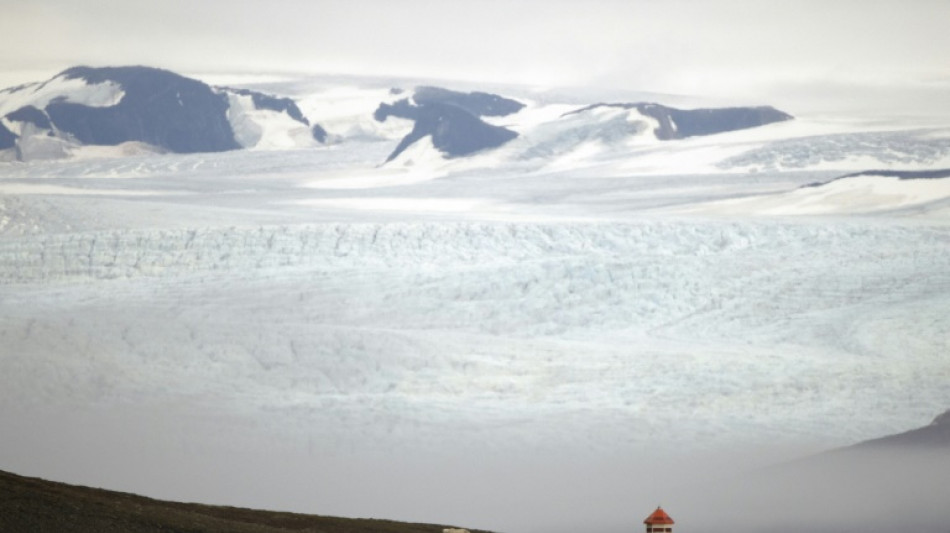
Arctic warming spurs growth of carbon-soaking peatlands / Photo: © AFP/File

Arctic warming spurs growth of carbon-soaking peatlands

Arctic peatlands are expanding as the climate warms, new research showed Thursday, a change that could slow global heating in the near term but have the opposite effect in future.

Text size:

Peatlands are the largest terrestrial store of carbon, locking away twice as much heat-trapping CO2 from the atmosphere in their waterlogged soils as all the world's forests.

These carbon-rich reservoirs, composed of partially decayed organic matter, only cover three percent of Earth's surface, and generally fade out in the far north where harsh weather limits plant growth.

But warmer temperatures caused by climate change have improved growing conditions for plants in the Arctic, and satellite data has shown a general "greening" of this frosty region.

Using drones, satellite imagery and on-the-ground observations, an international team of scientists assessed peatlands in the European and Canadian Arctic to see if they had benefited from warmer climes.

They found strong evidence that peatlands "have likely undergone lateral expansion over the last 40 years" in the Arctic, which is the fastest warming region on Earth.

"The permafrost thaws a little, provides a water source for vegetation, and surface vegetation recovers. In this study, we specifically see a lateral expansion," Michelle Garneau, a professor at the University of Quebec in Montreal, and co-author of the study, told AFP.

The most marked change was observed where summer temperatures have risen the most, such as in the Norwegian archipelago of Svalbard.

"All these new vegetated surfaces that didn't exist three decades ago are currently actively absorbing carbon," Garneau added.

This suggests Arctic peatlands "are an increasingly important natural carbon sink, at least in the near term", said study co-author Karen Anderson, a professor from the University of Exeter, which led the research.

But how they respond to climate change in future is "still highly uncertain", said the study published in the peer-reviewed journal Communications Earth and Environment.

Recent modelling suggests that northern peatlands "may become a carbon source from mid-century" as they dry out and permafrost thaws, the study said.

They are also at risk from wildfires, which release masses of stored up carbon at once.

"If temperatures continue to rise, we are likely to see changes in rainfall, and we are not sure how sustainable new or existing peatlands will be," said Anderson.

More peatlands also means more natural emissions of methane, a potent greenhouse gas far more effective at trapping heat than CO2.

"So while our study gives us some positive news, it does not detract from the urgent need to reduce greenhouse gas emissions and stabilise our climate," said Anderson.

S.Palmer--TFWP