The Fort Worth Press - Nations divided ahead of decisive week for shipping emissions

USD -
AED 3.672498
AFN 65.99991
ALL 81.873378
AMD 378.439802
ANG 1.79008
AOA 917.000148
ARS 1448.487698
AUD 1.429899
AWG 1.8
AZN 1.712449
BAM 1.658498
BBD 2.01317
BDT 122.152876
BGN 1.67937
BHD 0.377029
BIF 2961.725511
BMD 1
BND 1.270543
BOB 6.906845
BRL 5.229803
BSD 0.999546
BTN 90.307481
BWP 13.806116
BYN 2.86383
BYR 19600
BZD 2.010235
CAD 1.36624
CDF 2154.999626
CHF 0.776945
CLF 0.02185
CLP 862.749928
CNY 6.9465
CNH 6.934635
COP 3630.63
CRC 496.408795
CUC 1
CUP 26.5
CVE 93.503553
CZK 20.62655
DJF 177.998262
DKK 6.33157
DOP 62.937775
DZD 129.991046
EGP 46.951301
ERN 15
ETB 155.042675
EUR 0.84772
FJD 2.20415
FKP 0.732491
GBP 0.73095
GEL 2.695043
GGP 0.732491
GHS 10.950041
GIP 0.732491
GMD 73.501068
GNF 8769.058562
GTQ 7.666672
GYD 209.120397
HKD 7.81214
HNL 26.408086
HRK 6.3869
HTG 131.107644
HUF 322.772002
IDR 16766.9
ILS 3.09203
IMP 0.732491
INR 90.26235
IQD 1309.380459
IRR 42125.000158
ISK 122.920095
JEP 0.732491
JMD 156.640605
JOD 0.708964
JPY 155.856028
KES 129.000283
KGS 87.450297
KHR 4033.037668
KMF 417.999918
KPW 899.987247
KRW 1449.489768
KWD 0.30732
KYD 0.83298
KZT 501.119346
LAK 21499.832523
LBP 89508.041026
LKR 309.380459
LRD 185.911623
LSL 16.009531
LTL 2.95274
LVL 0.60489
LYD 6.319217
MAD 9.168716
MDL 16.926717
MGA 4429.877932
MKD 52.274308
MMK 2100.119929
MNT 3568.429082
MOP 8.04357
MRU 39.901294
MUR 45.889749
MVR 15.449674
MWK 1733.257012
MXN 17.286645
MYR 3.932499
MZN 63.749886
NAD 16.009531
NGN 1390.639711
NIO 36.785781
NOK 9.664365
NPR 144.492309
NZD 1.658525
OMR 0.384522
PAB 0.999521
PEN 3.364907
PGK 4.282347
PHP 59.127012
PKR 279.545138
PLN 3.57944
PYG 6631.277242
QAR 3.634567
RON 4.321031
RSD 99.548006
RUB 77.018176
RWF 1458.783824
SAR 3.750085
SBD 8.058101
SCR 13.790532
SDG 601.496925
SEK 8.91905
SGD 1.27107
SHP 0.750259
SLE 24.47503
SLL 20969.499267
SOS 570.272883
SRD 38.114498
STD 20697.981008
STN 20.775741
SVC 8.746163
SYP 11059.574895
SZL 16.015332
THB 31.573496
TJS 9.340767
TMT 3.51
TND 2.890372
TOP 2.40776
TRY 43.480601
TTD 6.770319
TWD 31.604497
TZS 2584.039658
UAH 43.256279
UGX 3563.251531
UYU 38.49872
UZS 12236.487289
VES 371.640565
VND 26002
VUV 119.537583
WST 2.726316
XAF 556.244594
XAG 0.011336
XAU 0.000202
XCD 2.70255
XCG 1.801384
XDR 0.691072
XOF 556.244594
XPF 101.131218
YER 238.374986
ZAR 15.97435
ZMK 9001.1992
ZMW 19.615608
ZWL 321.999592
  • GSK

    0.7500

    53.22

    +1.41%

  • CMSC

    -0.0200

    23.73

    -0.08%

  • SCS

    0.0200

    16.14

    +0.12%

  • BTI

    0.9150

    61.905

    +1.48%

  • BP

    0.7300

    38.43

    +1.9%

  • NGG

    1.4840

    86.094

    +1.72%

  • RIO

    3.8350

    96.355

    +3.98%

  • RELX

    -5.0800

    30.45

    -16.68%

  • RBGPF

    0.1000

    82.5

    +0.12%

  • RYCEF

    0.3300

    17

    +1.94%

  • BCE

    0.2450

    26.075

    +0.94%

  • AZN

    0.1500

    188.56

    +0.08%

  • VOD

    0.2850

    15.195

    +1.88%

  • BCC

    3.2400

    84.99

    +3.81%

  • CMSD

    -0.0500

    24.03

    -0.21%

  • JRI

    -0.0200

    13.13

    -0.15%

Nations divided ahead of decisive week for shipping emissions
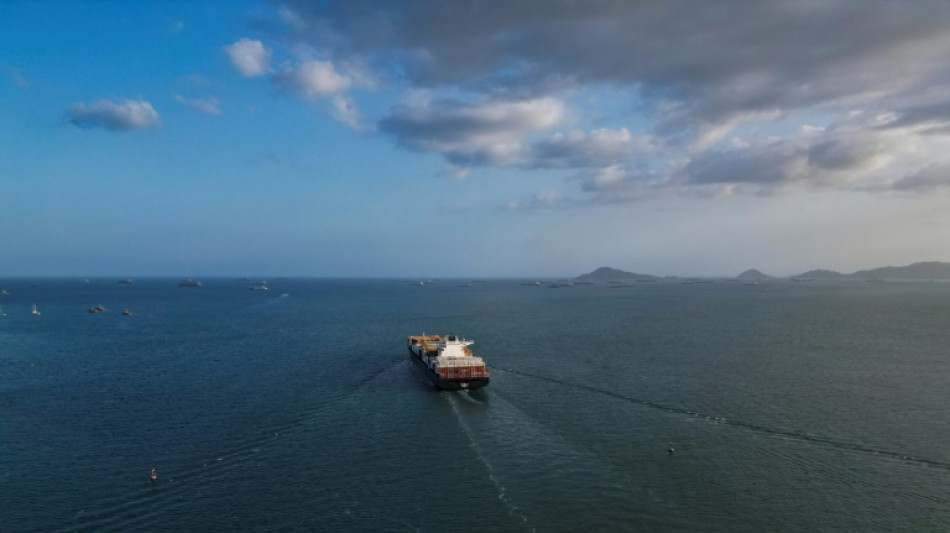
Nations divided ahead of decisive week for shipping emissions / Photo: © AFP

Nations divided ahead of decisive week for shipping emissions

Members of the International Maritime Organization (IMO) are divided over whether to approve a carbon tax on international shipping, ahead of a meeting starting on Monday to finalise emissions-reduction measures.

Text size:

The carbon tax, the most ambitious measure on the table, would make it more expensive for shipping companies to emit greenhouse gases, encouraging them to curtail emissions.

But some member states, including China and Brazil, are proposing other measures, arguing the carbon levy would increase the cost of goods and contribute to food insecurity.

The IMO expects to come to an initial agreement by Friday next week on which mechanism to adopt to help reach carbon neutrality in shipping by 2050.

The stakes are high as shipping accounts for nearly three percent of global greenhouse gas emissions, according to the IMO.

"(It is) difficult to say what will happen next week," Fanny Pointet, sustainable shipping manager at European advocacy group, Transport and Environment, told AFP.

The United States has been notably quiet about the issue, having not commented since President Donald Trump returned to the White House.

The Pacific and Caribbean island states are leading the group pushing for a carbon tax, with support from other countries including the UK.

They argue that funds raised from a levy could be redistributed to nations most vulnerable to climate change to help adapt and mitigate its effects.

"Climate change is a terrifying lived reality for my country," said Albon Ishoda, the Marshall Islands' representative to the IMO.

- 'Terrifying lived reality' -

However, around 15 countries strongly oppose the carbon levy, arguing it would exacerbate inequalities between nations and raise the costs of goods such as palm oil, cereals and corn.

Concerns are also mounting that the European Union, once a supporter of a carbon tax, could water down the measure in favour of a carbon credit system.

Such a system would allow companies or countries to buy and sell credits representing the right to emit a certain amount of carbon dioxide.

According to University College London research, the option of no levy presents the biggest risk to meeting the shipping sector's climate goals.

It could also distort fuel prices and create an uneven playing field, favouring states with strong industrial polices, such as China, researchers said.

"The fastest and cheapest energy transition is brought about by a strong levy," combined with a global fuel standard to reduce the carbon intensity of fuels used by ships, they added.

Challenges also remain with the fuel standard system, particularly the risk of using alternative fuels such as palm oil and soybean oil, which indirectly contribute to emissions through deforestation, Pointet explained.

While Brazil defends the key role of these biofuels, more than 60 environmental protection NGOs have raised objections to their inclusion in the future shipping fuel mix.

Other potential solutions include synthetic hydrogen-based fuels, currently very expensive to produce, or the installation of wind-powered propulsion systems onboard ship.

P.McDonald--TFWP