The Fort Worth Press - 'Sound science' must guide deep-sea mining: top official

USD -
AED 3.672503
AFN 65.999852
ALL 81.873378
AMD 378.43987
ANG 1.79008
AOA 917.000491
ARS 1445.0428
AUD 1.425192
AWG 1.8
AZN 1.701926
BAM 1.658498
BBD 2.01317
BDT 122.152876
BGN 1.67937
BHD 0.376919
BIF 2961.725511
BMD 1
BND 1.270543
BOB 6.906845
BRL 5.228904
BSD 0.999546
BTN 90.307481
BWP 13.806116
BYN 2.86383
BYR 19600
BZD 2.010235
CAD 1.36427
CDF 2155.000115
CHF 0.774745
CLF 0.021839
CLP 861.999947
CNY 6.946501
CNH 6.93494
COP 3632.08
CRC 496.408795
CUC 1
CUP 26.5
CVE 93.503553
CZK 20.593989
DJF 177.719935
DKK 6.319765
DOP 62.937775
DZD 129.865503
EGP 47.013897
ERN 15
ETB 155.042675
EUR 0.84615
FJD 2.1993
FKP 0.732491
GBP 0.73007
GEL 2.695024
GGP 0.732491
GHS 10.950041
GIP 0.732491
GMD 73.500677
GNF 8769.058562
GTQ 7.666672
GYD 209.120397
HKD 7.812175
HNL 26.408086
HRK 6.3756
HTG 131.107644
HUF 322.251037
IDR 16758
ILS 3.082015
IMP 0.732491
INR 90.48545
IQD 1309.380459
IRR 42125.000158
ISK 122.69594
JEP 0.732491
JMD 156.640605
JOD 0.708969
JPY 155.718977
KES 128.999825
KGS 87.449964
KHR 4033.037668
KMF 418.00027
KPW 899.987247
KRW 1449.560268
KWD 0.307102
KYD 0.83298
KZT 501.119346
LAK 21499.832523
LBP 89508.041026
LKR 309.380459
LRD 185.911623
LSL 16.009531
LTL 2.95274
LVL 0.60489
LYD 6.319217
MAD 9.168716
MDL 16.926717
MGA 4429.877932
MKD 52.134305
MMK 2100.119929
MNT 3568.429082
MOP 8.04357
MRU 39.901294
MUR 45.889873
MVR 15.449947
MWK 1733.257012
MXN 17.252485
MYR 3.932502
MZN 63.750037
NAD 16.009531
NGN 1387.419629
NIO 36.785781
NOK 9.64092
NPR 144.492309
NZD 1.65348
OMR 0.384493
PAB 0.999521
PEN 3.364907
PGK 4.282347
PHP 59.059528
PKR 279.545138
PLN 3.573615
PYG 6631.277242
QAR 3.634567
RON 4.310899
RSD 99.326542
RUB 76.88768
RWF 1458.783824
SAR 3.750079
SBD 8.058101
SCR 13.733114
SDG 601.509021
SEK 8.90901
SGD 1.269935
SHP 0.750259
SLE 24.474972
SLL 20969.499267
SOS 570.272883
SRD 38.114501
STD 20697.981008
STN 20.775741
SVC 8.746163
SYP 11059.574895
SZL 16.015332
THB 31.656032
TJS 9.340767
TMT 3.51
TND 2.890372
TOP 2.40776
TRY 43.476498
TTD 6.770319
TWD 31.591998
TZS 2584.039876
UAH 43.256279
UGX 3563.251531
UYU 38.49872
UZS 12236.487289
VES 371.640565
VND 26002
VUV 119.537583
WST 2.726316
XAF 556.244594
XAG 0.011829
XAU 0.000202
XCD 2.70255
XCG 1.801384
XDR 0.691072
XOF 556.244594
XPF 101.131218
YER 238.375017
ZAR 15.966098
ZMK 9001.213126
ZMW 19.615608
ZWL 321.999592
  • BCC

    2.8250

    84.575

    +3.34%

  • GSK

    0.5100

    52.98

    +0.96%

  • AZN

    -1.7350

    186.675

    -0.93%

  • CMSD

    -0.0950

    23.985

    -0.4%

  • SCS

    0.0200

    16.14

    +0.12%

  • JRI

    -0.0200

    13.13

    -0.15%

  • BTI

    1.0020

    61.992

    +1.62%

  • RIO

    2.8600

    95.38

    +3%

  • RYCEF

    0.3300

    17

    +1.94%

  • BCE

    0.3320

    26.162

    +1.27%

  • BP

    0.5350

    38.235

    +1.4%

  • RELX

    -5.3420

    30.188

    -17.7%

  • RBGPF

    0.1000

    82.5

    +0.12%

  • CMSC

    -0.0950

    23.655

    -0.4%

  • VOD

    0.2550

    15.165

    +1.68%

  • NGG

    1.5970

    86.207

    +1.85%

'Sound science' must guide deep-sea mining: top official
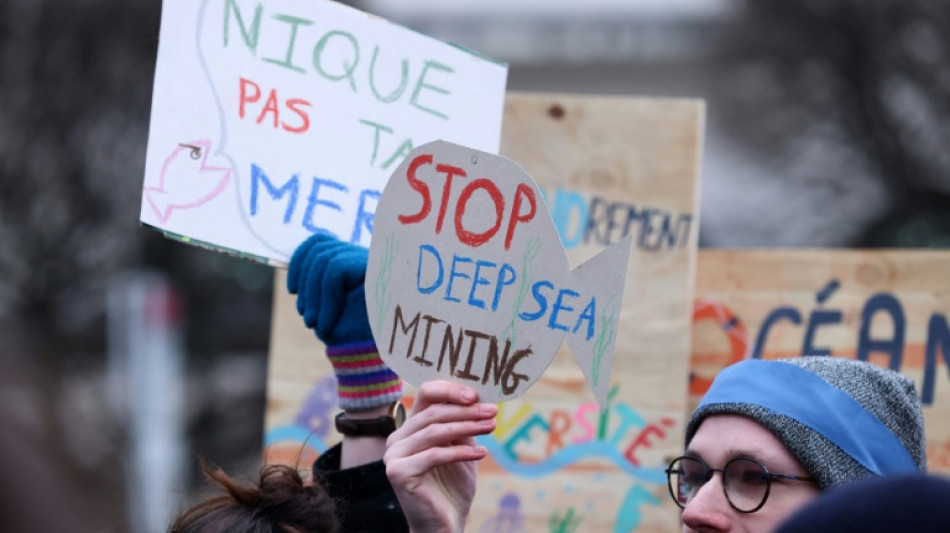
'Sound science' must guide deep-sea mining: top official / Photo: © AFP/File

'Sound science' must guide deep-sea mining: top official

Rules on deep-sea mining in international waters must be driven by "sound science" and built on consensus, the head of the body charged with regulating the divisive practice said Thursday.

Text size:

Deep-sea mining in international waters involves taking minerals like nickel, cobalt and copper -- crucial for renewable energy technology -- from the sea floor.

But researchers and environmentalists have long warned it risks destroying habitats and species that are little understood, and could upset delicate processes in the ocean that affect climate change.

The seabed in international waters is governed by the International Seabed Authority (ISA), an independent body established under the UN Convention on the Law of the Sea.

The ISA's Council, which for now only grants exploration contracts, has been drawing up commercial exploitation rules for more than a decade. And they aim to adopt a mining code this year to govern the extraction of seabed resources in international waters.

The issue is highly contentious, with some member states keen to begin mining soon, while others want a moratorium or even an outright ban on seabed exploitation.

ISA Secretary-General Leticia Carvalho said any mining code developed this year must be driven by "transparency, environmental responsibility and equitable benefit-sharing".

"Sound science must underpin all decisions related to the deep seabed," she told an ocean meeting in Tokyo by video link.

The world paid little attention when the ISA, created in 1994, quietly began negotiating the mining code.

But the calendar has taken on urgency.

- Thorny questions -

Since July 2023, due to a legal clause invoked by the tiny Pacific island nation of Nauru, any country can apply for a mining contract in the name of a company it sponsors.

Nauru Ocean Resources Inc. (NORI), a subsidiary of Canada's The Metals Company (TMC), wants to begin mining polymetallic nodules in the Pacific as soon as 2026.

It plans to file an exploitation application by June this year, making the need for a code governing mining all the more pressing.

Thorny issues have yet to be resolved, including environmental rules and how to share profits from seabed resources dubbed a "common heritage of mankind."

An oceanographer by training, Carvalho can only guide member states as they decide whether and how to draft a code.

She said she would focus on "ensuring that decisions are grounded in science and built on consensus".

Warnings about the impact of mining gained strength with the discovery last year that oxygen was being released on the ocean floor not just by living organisms, but by polymetallic nodules that would be targeted by companies.

The findings have been rejected by the TMC, even though it helped fund the research, and follow-up work is ongoing.

Mining proponents point to the growing need for minerals to drive the renewable energy transition, and the problems associated with on-land exploitation -- including environmental degradation and rights abuses.

L.Davila--TFWP