The Fort Worth Press - Nearly half of tropical coral species face extinction: report

USD -
AED 3.67315
AFN 62.506465
ALL 82.894362
AMD 377.319892
ANG 1.790083
AOA 916.999838
ARS 1397.492201
AUD 1.43539
AWG 1.8
AZN 1.706959
BAM 1.687977
BBD 2.01456
BDT 122.73608
BGN 1.709309
BHD 0.377686
BIF 2965
BMD 1
BND 1.279846
BOB 6.926967
BRL 5.274202
BSD 1.000203
BTN 93.723217
BWP 13.705842
BYN 2.961192
BYR 19600
BZD 2.011712
CAD 1.37534
CDF 2272.999858
CHF 0.790945
CLF 0.02313
CLP 913.29907
CNY 6.880498
CNH 6.89499
COP 3716.01
CRC 466.057627
CUC 1
CUP 26.5
CVE 95.249557
CZK 21.095012
DJF 178.123395
DKK 6.447315
DOP 59.874988
DZD 132.648986
EGP 52.710602
ERN 15
ETB 157.374985
EUR 0.86294
FJD 2.221803
FKP 0.74705
GBP 0.746455
GEL 2.715015
GGP 0.74705
GHS 10.904967
GIP 0.74705
GMD 72.999411
GNF 8780.000368
GTQ 7.659677
GYD 209.341164
HKD 7.82715
HNL 26.520334
HRK 6.526387
HTG 131.152069
HUF 336.373049
IDR 16905
ILS 3.12205
IMP 0.74705
INR 93.873601
IQD 1310
IRR 1315050.00032
ISK 124.100338
JEP 0.74705
JMD 157.845451
JOD 0.709061
JPY 158.708501
KES 129.579875
KGS 87.4485
KHR 4014.999755
KMF 424.999851
KPW 899.971148
KRW 1495.809924
KWD 0.30655
KYD 0.833571
KZT 482.866057
LAK 21549.999711
LBP 89549.999964
LKR 314.407654
LRD 183.602094
LSL 16.849753
LTL 2.95274
LVL 0.60489
LYD 6.395002
MAD 9.362042
MDL 17.4948
MGA 4165.000385
MKD 53.139493
MMK 2099.628947
MNT 3568.971376
MOP 8.061125
MRU 40.110204
MUR 49.201173
MVR 15.449742
MWK 1737.000359
MXN 17.82445
MYR 3.956496
MZN 63.908035
NAD 16.820218
NGN 1379.980262
NIO 36.720106
NOK 9.678604
NPR 149.95361
NZD 1.71658
OMR 0.384457
PAB 1.000203
PEN 3.473011
PGK 4.3055
PHP 59.882496
PKR 279.250376
PLN 3.684555
PYG 6526.476592
QAR 3.644026
RON 4.396699
RSD 101.351033
RUB 80.49721
RWF 1460
SAR 3.753687
SBD 8.051718
SCR 14.949356
SDG 600.999933
SEK 9.31975
SGD 1.278815
SHP 0.750259
SLE 24.549964
SLL 20969.510825
SOS 571.498886
SRD 37.340262
STD 20697.981008
STN 21.63
SVC 8.752314
SYP 110.977546
SZL 16.850211
THB 32.656995
TJS 9.597587
TMT 3.5
TND 2.905035
TOP 2.40776
TRY 44.34696
TTD 6.795811
TWD 31.9333
TZS 2570.000173
UAH 43.928935
UGX 3745.690083
UYU 40.762429
UZS 12205.000204
VES 456.504355
VND 26357
VUV 119.458227
WST 2.748874
XAF 566.134155
XAG 0.014354
XAU 0.000227
XCD 2.70255
XCG 1.802694
XDR 0.704159
XOF 568.496327
XPF 103.397606
YER 238.649931
ZAR 17.008897
ZMK 9001.200612
ZMW 18.929544
ZWL 321.999592
  • RBGPF

    -13.5000

    69

    -19.57%

  • RYCEF

    -0.4500

    15.6

    -2.88%

  • CMSC

    0.0100

    22.89

    +0.04%

  • BCC

    1.6600

    73.54

    +2.26%

  • NGG

    0.4200

    82.48

    +0.51%

  • VOD

    0.1750

    14.655

    +1.19%

  • RELX

    -1.2200

    32.59

    -3.74%

  • RIO

    0.4550

    86.295

    +0.53%

  • BCE

    0.1250

    25.885

    +0.48%

  • GSK

    0.8900

    52.88

    +1.68%

  • JRI

    0.1400

    11.82

    +1.18%

  • BTI

    0.0850

    58.005

    +0.15%

  • CMSD

    0.0000

    22.74

    0%

  • AZN

    1.3800

    185.45

    +0.74%

  • BP

    1.0750

    44.645

    +2.41%

Nearly half of tropical coral species face extinction: report
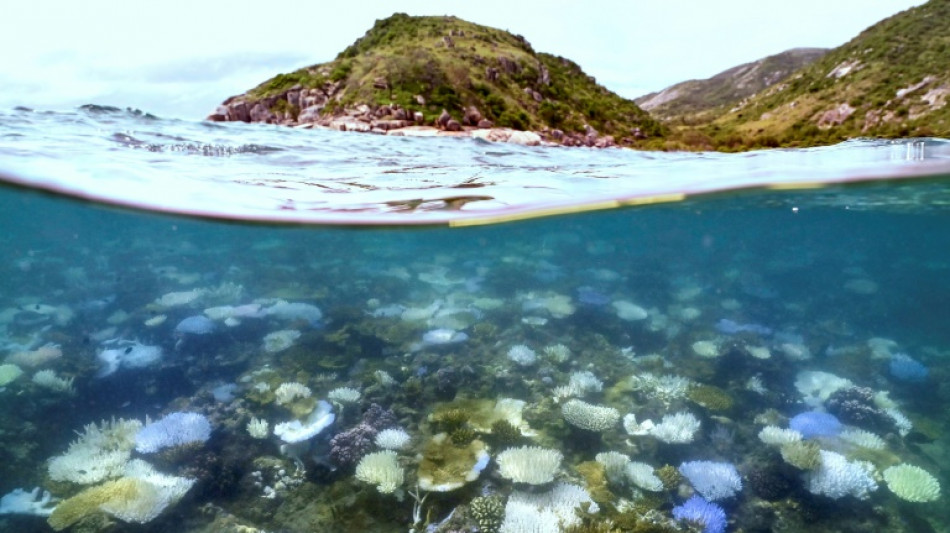
Nearly half of tropical coral species face extinction: report / Photo: © AFP/File

Nearly half of tropical coral species face extinction: report

Almost half of all warm-water species of coral are threatened with extinction -- and climate change is the chief culprit, a new report said on Wednesday.

Text size:

The updated risk assessment from the International Union for Conservation of Nature (IUCN) was announced at the COP29 climate summit in Azerbaijan, which is being skipped by the leaders of many top polluting nations.

Oceans have absorbed around 90 percent of the excess heat in the atmosphere due to the release of carbon dioxide and other greenhouse gases.

Rising ocean temperatures have spurred mass bleaching events at coral reefs across the world, threatening crucial ecosystems for marine life as well as the livelihoods of people who rely on them.

The updated assessment of the IUCN's Red List of Threatened Species looked at reef-building corals, which live in warm, shallow waters in tropical areas.

Its analysis found that 892 reef-building coral species are now considered threatened, representing 44 percent of the total.

This marked a significant increase from the last assessment in 2008, when a third of all species was listed as threatened.

The organisation is still assessing the extinction risk for cold-water coral, which lives in deeper, darker ocean waters, making it difficult to study.

The IUCN called on negotiators at the COP29 conference to act quickly to reduce planet-heating fossil fuel emissions.

"Healthy ecosystems like coral reefs are essential for human livelihoods -- providing food, stabilising coastlines, and storing carbon," IUCN chief Grethel Aguilar said in a statement.

"Climate change remains the leading threat to reef-building corals and is devastating the natural systems we depend on."

As well as global warming, pollution, disease, unsustainable fishing and agricultural runoff also threaten the world's coral.

Most reef-building coral is found across the Indo-Pacific region, such as Australia's Great Barrier Reef which suffered one its worst-ever bleaching events this year.

The IUCN's updated assessment included results from a study about reef-building coral in the Atlantic Ocean, which was published in the PLOS One journal on Wednesday.

That study found that almost one in three -- or 23 out of 85 -- species of Atlantic coral is critically endangered, more than previously thought.

Staghorn coral and elkhorn coral were given as examples of two critically endangered species in the Caribbean that have been hit hard by warming waters, pollution -- and hurricanes.

"Without relevant decisions from those with the power to change this trajectory, we will see the further loss of reefs, and progressive disappearance of coral species at larger and larger scales," warned IUCN coral specialist David Obura.

L.Coleman--TFWP