Drought forces Big Tech to rethink thirsty LatAm data centers / Photo: © AFP/File

A prolonged drought in much of South America has forced tech giants like Google and Amazon to rework their plans for water-guzzling data centers.
Data centers housing huge servers are springing up around the world to store the flood of data sucked up from billions of smartphones, tablets and other connected devices.
While the centers' massive energy consumption has drawn global scrutiny, the huge amounts of water they use in their cooling systems has received far less attention -- until now.
Cooling equipment represents about 40 percent of a data center's structure.
"There are billions of transistors in a circuit in high-frequency processors. That generates a lot of heat," explained Eduardo Vera, coordinator of the Center for Mathematical Modeling at the University of Chile.
Google's plans for two new data centers in Chile and Uruguay have thrust the issue of water consumption into the spotlight.
The company is planning to build its biggest data center in Latin America in the Santiago suburb of Cerrillos.
The initial plans for the $200 million project included a cooling system that would consume a staggering seven billion liters (1.85 billion gallons) of water per year, equivalent to the annual consumption of the suburb's 80,000 inhabitants.
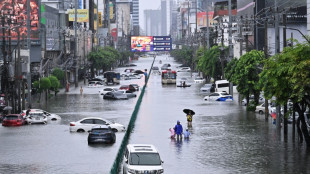
But a more-than-decade-long drought in Chile has dampened local enthusiasm for the mega-project.
In January, an environment court ordered Google to revise its planning application to cut back water consumption.
Last month, the company -- whose first Latin America data center in Quilicura in northern Santiago soaks up about one billion liters of water per year, the equivalent of 285 Olympic swimming pools -- unveiled a newer much less water-intensive cooling model for the Cerrillos center.
Google said the new facility would use air cooling technology, reducing its water use to a minimum.
"They fought us (...) but finally they changed the cooling system and we set a precedent," Tania Rodriguez, from the non-governmental Community Socio-Environmental Movement for Water and Territory, told AFP.
- Becoming 'climate-conscious' -
A month before Google announced the changes to its Chile plans, environmentalists in Uruguay had won a similar victory.
When the company in 2019 first announced its $850 million investment in a center around 30 kilometers (20 miles) from the capital Montevideo, it predicted it would use a cool 2.7 billion liters of water a year.
But after a record drought in 2023 brought the country's drinking water supply to the brink, the company went back to the drawing board and opted for more expensive air cooling technology.
Asked about the changes, the California company told AFP it was adopting "a climate-conscious approach" to "minimize climate impact and use natural resources responsibly."
- Betting on data -
Chile's government has set its sights on attracting billions of dollars of investment in the country's data center industry, touting its stability and strong internet connectivity as assets.
President Gabriel Boric in June announced plans to more than double Chile's current park of data centers from 22 to 50.
Science and technology minister Aisen Etcheverry told AFP their water consumption would be "practically zero."
Will Hewes, head of water sustainability for Amazon Web Services (AWS), which plans to open two data centers in Santiago, told AFP the firm aimed to make all its data centers "water-positive" by 2030, meaning it would conserve or put back more water than it uses.
At existing data centers like Chile's Quilicura, however, the water will continue to flow in one direction -- from the ground to the data center.
"Because data centers operate 24/7, it's very difficult for them to change their cooling system once they are already built," said local environmental activist Rodrigo Vallejos.
M.McCoy--TFWP