The Fort Worth Press - Wildfires caused major CO2 emissions last year: annual study

USD -
AED 3.672498
AFN 64.000326
ALL 82.68029
AMD 367.135014
ANG 1.790403
AOA 916.999809
ARS 1477.225982
AUD 1.448845
AWG 1.8
AZN 1.702453
BAM 1.715275
BBD 2.014515
BDT 123.02835
BGN 1.69088
BHD 0.377119
BIF 2970.641759
BMD 1
BND 1.294218
BOB 6.912067
BRL 5.176399
BSD 1.000241
BTN 93.880701
BWP 13.593527
BYN 2.900919
BYR 19600
BZD 2.011585
CAD 1.418275
CDF 2270.000387
CHF 0.808603
CLF 0.023386
CLP 920.39016
CNY 6.80385
CNH 6.80532
COP 3436.33
CRC 454.120897
CUC 1
CUP 26.5
CVE 96.704174
CZK 21.28265
DJF 178.120998
DKK 6.55597
DOP 58.769103
DZD 133.313032
EGP 49.508698
ERN 15
ETB 161.263403
EUR 0.877098
FJD 2.266103
FKP 0.756718
GBP 0.75655
GEL 2.645009
GGP 0.756718
GHS 11.278044
GIP 0.756718
GMD 73.000078
GNF 8764.059725
GTQ 7.63095
GYD 209.335368
HKD 7.84221
HNL 26.762262
HRK 6.609701
HTG 130.728584
HUF 310.600502
IDR 17859
ILS 2.997769
IMP 0.756718
INR 94.36415
IQD 1310.26771
IRR 1375050.000106
ISK 126.301278
JEP 0.756718
JMD 157.530312
JOD 0.708976
JPY 161.650502
KES 129.509862
KGS 87.449975
KHR 4014.99704
KMF 433.999764
KPW 900.00035
KRW 1536.095377
KWD 0.30962
KYD 0.833556
KZT 485.307724
LAK 21954.438817
LBP 89573.137575
LKR 336.229088
LRD 182.200101
LSL 16.441492
LTL 2.95274
LVL 0.60489
LYD 6.420634
MAD 9.379032
MDL 17.734997
MGA 4230.669724
MKD 54.081445
MMK 2099.450161
MNT 3580.242389
MOP 8.08004
MRU 39.918437
MUR 47.710173
MVR 15.450036
MWK 1734.46298
MXN 17.515645
MYR 4.089304
MZN 63.89854
NAD 16.441492
NGN 1378.749823
NIO 36.808525
NOK 9.913875
NPR 150.211581
NZD 1.770015
OMR 0.384494
PAB 1.000285
PEN 3.41073
PGK 4.389446
PHP 61.307995
PKR 278.373232
PLN 3.76004
PYG 6104.908659
QAR 3.645931
RON 4.597099
RSD 102.978994
RUB 77.741848
RWF 1464.86285
SAR 3.756188
SBD 8.051953
SCR 14.043416
SDG 600.000332
SEK 9.71586
SGD 1.29417
SHP 0.746601
SLE 24.795264
SLL 20969.503664
SOS 571.66663
SRD 37.319991
STD 20697.981008
STN 21.486987
SVC 8.751743
SYP 110.532098
SZL 16.431845
THB 33.380139
TJS 9.257398
TMT 3.5
TND 2.96472
TOP 2.40776
TRY 46.592504
TTD 6.797662
TWD 31.889202
TZS 2622.693046
UAH 44.895745
UGX 3671.108656
UYU 40.151731
UZS 12014.822286
VES 620.752985
VND 26300
VUV 119.950905
WST 2.785497
XAF 575.287334
XAG 0.017191
XAU 0.000247
XCD 2.70255
XCG 1.802627
XDR 0.716453
XOF 575.284811
XPF 104.593392
YER 238.625007
ZAR 16.461103
ZMK 9001.19602
ZMW 18.017813
ZWL 321.999592
  • RYCEF

    0.7000

    18.7

    +3.74%

  • CMSC

    -0.0860

    21.96

    -0.39%

  • RELX

    0.1600

    31.08

    +0.51%

  • RIO

    -0.4850

    94.625

    -0.51%

  • BP

    -0.3600

    37.36

    -0.96%

  • NGG

    -0.1200

    83.3

    -0.14%

  • AZN

    2.9200

    188.6

    +1.55%

  • GSK

    0.6900

    52.58

    +1.31%

  • RBGPF

    0.0000

    61.3

    0%

  • BTI

    0.3150

    62.795

    +0.5%

  • VOD

    -0.0350

    13.825

    -0.25%

  • CMSD

    -0.1000

    21.83

    -0.46%

  • BCE

    -0.2100

    22.99

    -0.91%

  • JRI

    0.1700

    12.75

    +1.33%

  • BCC

    0.0400

    79.8

    +0.05%

Wildfires caused major CO2 emissions last year: annual study
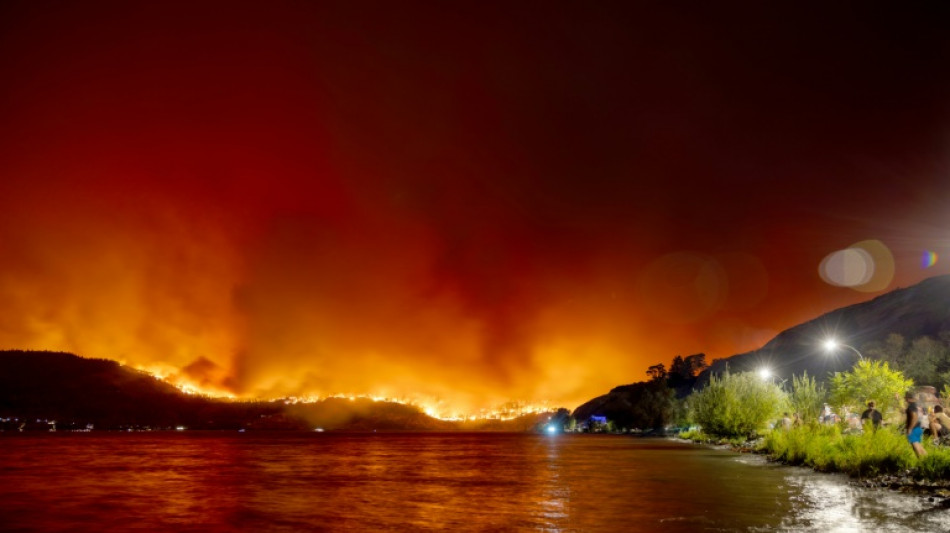
Wildfires caused major CO2 emissions last year: annual study / Photo: © AFP/File

Wildfires caused major CO2 emissions last year: annual study

Wildfires made more frequent and intense by climate change released significant quantities of CO2 into the air in 2023-2024, said a first-of-its-kind annual study published Wednesday.

Text size:

Fires in natural areas caused 8.6 billion tonnes of CO2 emissions worldwide between March 2023 and February 2024 -- 16 percent above average.

Only a relatively calm fires season in the African savannah prevented the 2023-2024 season from breaking a fresh record for CO2 emissions at the global level.

These were among the conclusions in a new study, "State of Wildfires", published in the journal Earth System Science Data.

It was carried out by the University of East Anglia and other institutions based in Britain and aims to be updated on an annual basis.

Emissions from fires in Canada's boreal forests were more than nine times greater than the average over the past two decades. They contributed to almost a quarter of global emissions.

In Canada alone, the fires forced the evacuations of 232,000 people and eight firefighters lost their lives.

Other areas that also suffered included the Amazon (Brazil, Bolivia, Peru, Venezuela), Hawaii and Greece.

"Last year, fires killed people, destroyed homes and infrastructure, caused mass evacuations, threatened livelihoods and damaged vital ecosystems," said Matthew Jones of the University of East Anglia and lead author of the study.

"These fires are becoming more frequent and intense with climate warming, and both society and the environment are suffering the consequences."

The authors of the report concluded that climate change has made weather conditions favouring the fires more likely.

They found that human influence has increased by at least a factor of 20 the probability of weather conditions conducive to fires in the western Amazon.

If humanity continues to produce large amounts of greenhouse gas, major fires -- like those that took place last year -- will become more likely.

But nothing is set in stone.

"The risk can be minimised. It is not too late," said Jones during a presentation of the report to media.

"A low-carbon future offers a lot of respite from the risks we face in the future."

Over the past two decades as human activity has warmed the planet, the frequency and intensity of extreme wildfires has more than doubled worldwide, according to a study published in June in Nature Ecology & Evolution.

T.Harrison--TFWP