Warming world dampening winter sports in Canada / Photo: © AFP

Christmas was without snow, then temperatures seesawed throughout January in much of Canada, as the increasing effects of climate change drastically dampen the country's winter sports season.
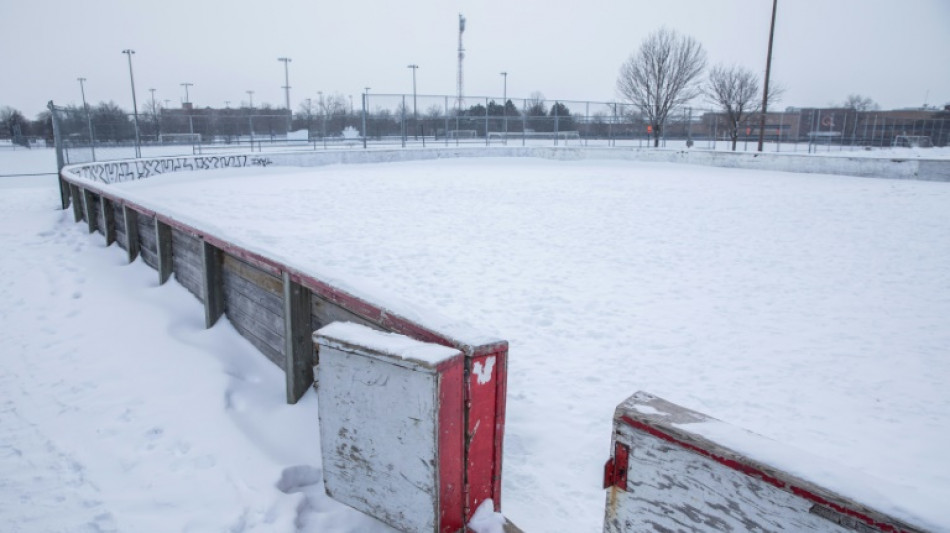
January is historically the coldest month of the year, but at Ignace-Bourget Park in Montreal, hockey nets had yet to be installed mid-month.
Instead, workers took advantage of a rare day when temperatures plunged below freezing to apply a thin layer of water to thicken new ice.
"I've been working for the city of Montreal for 20 years, and it's really unusual to have ice rinks opening so late," Martin Letendre, wearing a fluorescent orange coat and crampons on his boots, told AFP.
With his team, he works day and night to ready rinks for skating. But weeks after the Christmas holidays, most of the city's approximately 250 outdoor ice rinks remained closed to the public.
"Normally, we aim to open them before Christmas, on December 21 or 22, but this year unfortunately, it is later," he laments.
The mercury must drop to -4 degrees Celsius (25 degrees Fahrenheit) or below and hold steady for three consecutive days to achieve a proper thickness of around fifteen centimeters (six inches), Letendre explains.
"This year, it's been even longer before the cold set in," Charles-Antoine Rondeau told AFP when reporters visited Jarry Park and found its three ice rinks closed.
"It's unfortunate, it upsets our traditions a little," explained the teacher, nostalgic for skating outings he went on with his family when he was a child.
"When we see that, we inevitably say that it has a link with global warming, and it's worrying because we can already see the difference now," said Juliette Rougerie, who went jogging because she was unable to go for her usual skate.
- 'People can relate' -
Canada, due to its geographical location, is warming faster than the rest of the planet and has been confronted in recent years with extreme weather events whose intensity and frequency have increased due to climate change.
In addition to a record-breaking forest fire season last summer, the ice road network connecting remote northern communities was also slow to open this year.
In the capital Ottawa, a mild winter last year prevented the opening of the Rideau Canal skating rink, the largest in the world.
"We're always gonna have winter," said Concordia University doctoral student Mitchell Dickau, who published a study in 2020 on global warming's impact on outdoor ice rinks. "But we're gonna see the ice-skating season change drastically for sure."
"In the 2010s, we saw the skating season was about 55 days each year. If we bring our (CO2) emissions to net zero and limit warming to two degrees (Celsius), we're still gonna see an 11 to 15 day drop in the skating season," he said.
"But if we continue on and don't do anything to abate our CO2 emissions, we could see the season decline to as little as 11 days by the end of the century."
According to the researcher, this year started off as "definitely an anomaly."
"The length of the outdoor skating season... is an indicator of climate change that people can relate to a bit better than degrees of warming," he commented. "People can see how skating seasons will have changed in their lifetime."
To get around this problem, outdoor ice rinks on chilled concrete slabs are becoming more popular, some covered to reduce snow build-up or protect from rain, as alternatives to natural ice. But these refrigeration systems don't come cheap, starting at several thousand dollars.
Dickau noted that the shortened outdoor skating season is not unique to Montreal. "We're seeing the season decline everywhere where there is skating across Canada," he said.
H.Carroll--TFWP