The Fort Worth Press - Warmest Arctic summer caused by accelerating climate change

USD -
AED 3.672501
AFN 63.999705
ALL 82.887148
AMD 366.961185
ANG 1.790403
AOA 917.494452
ARS 1477.244299
AUD 1.453372
AWG 1.8
AZN 1.698266
BAM 1.719513
BBD 2.010673
BDT 122.690487
BGN 1.69088
BHD 0.376397
BIF 2974.792134
BMD 1
BND 1.295148
BOB 6.89258
BRL 5.1936
BSD 0.998341
BTN 94.112631
BWP 13.622705
BYN 2.840941
BYR 19600
BZD 2.007699
CAD 1.420331
CDF 2270.000338
CHF 0.810425
CLF 0.023381
CLP 920.203673
CNY 6.80385
CNH 6.806125
COP 3447.55
CRC 454.351489
CUC 1
CUP 26.5
CVE 97.350134
CZK 21.361004
DJF 177.776214
DKK 6.57916
DOP 58.826376
DZD 133.474044
EGP 49.509297
ERN 15
ETB 157.452947
EUR 0.88017
FJD 2.266097
FKP 0.75995
GBP 0.758335
GEL 2.64042
GGP 0.75995
GHS 11.218905
GIP 0.75995
GMD 72.499403
GNF 8747.409959
GTQ 7.610005
GYD 208.702762
HKD 7.841755
HNL 26.71295
HRK 6.631704
HTG 130.476672
HUF 312.283503
IDR 17977
ILS 2.982925
IMP 0.75995
INR 94.64075
IQD 1307.718026
IRR 1375050.000298
ISK 126.749777
JEP 0.75995
JMD 157.33372
JOD 0.708975
JPY 161.752966
KES 129.540426
KGS 87.450219
KHR 4020.149139
KMF 434.000204
KPW 900.00035
KRW 1548.144996
KWD 0.30965
KYD 0.831896
KZT 483.810797
LAK 22188.003203
LBP 89397.304146
LKR 336.454108
LRD 181.540044
LSL 16.531463
LTL 2.95274
LVL 0.60489
LYD 6.410995
MAD 9.4155
MDL 17.719258
MGA 4256.067999
MKD 54.278104
MMK 2099.534862
MNT 3583.823146
MOP 8.062139
MRU 39.651054
MUR 48.18998
MVR 15.44993
MWK 1731.111883
MXN 17.54735
MYR 4.103297
MZN 63.900395
NAD 16.531463
NGN 1376.119714
NIO 36.733491
NOK 9.898099
NPR 150.695297
NZD 1.77508
OMR 0.384501
PAB 0.99749
PEN 3.422
PGK 4.380744
PHP 61.331003
PKR 277.832264
PLN 3.772902
PYG 6100.388479
QAR 3.645026
RON 4.606406
RSD 103.315984
RUB 75.198373
RWF 1466.964054
SAR 3.748015
SBD 8.051953
SCR 13.241262
SDG 600.00038
SEK 9.756555
SGD 1.2969
SHP 0.746601
SLE 24.797551
SLL 20969.503664
SOS 570.490909
SRD 37.319468
STD 20697.981008
STN 21.55618
SVC 8.735131
SYP 110.532098
SZL 16.530795
THB 33.456023
TJS 9.221714
TMT 3.5
TND 2.937503
TOP 2.40776
TRY 46.616201
TTD 6.780108
TWD 31.839499
TZS 2618.936013
UAH 44.889771
UGX 3690.695456
UYU 40.019342
UZS 11982.22316
VES 620.752985
VND 26314.5
VUV 119.820737
WST 2.777776
XAF 577.139891
XAG 0.017787
XAU 0.00025
XCD 2.70255
XCG 1.799113
XDR 0.717821
XOF 577.180517
XPF 104.849947
YER 238.624989
ZAR 16.550903
ZMK 9001.197201
ZMW 18.019596
ZWL 321.999592
  • CMSC

    -0.0190

    22.046

    -0.09%

  • NGG

    0.5900

    83.42

    +0.71%

  • CMSD

    -0.0900

    21.93

    -0.41%

  • GSK

    0.8000

    51.89

    +1.54%

  • RIO

    1.0800

    95.11

    +1.14%

  • RBGPF

    0.0000

    61.3

    0%

  • AZN

    2.6600

    185.68

    +1.43%

  • BCE

    0.0000

    23.2

    0%

  • VOD

    0.0500

    13.86

    +0.36%

  • RYCEF

    0.7000

    18.7

    +3.74%

  • RELX

    -0.2300

    30.92

    -0.74%

  • JRI

    0.0100

    12.58

    +0.08%

  • BCC

    2.1000

    79.76

    +2.63%

  • BTI

    1.0900

    62.48

    +1.74%

  • BP

    -0.1400

    37.72

    -0.37%

Warmest Arctic summer caused by accelerating climate change
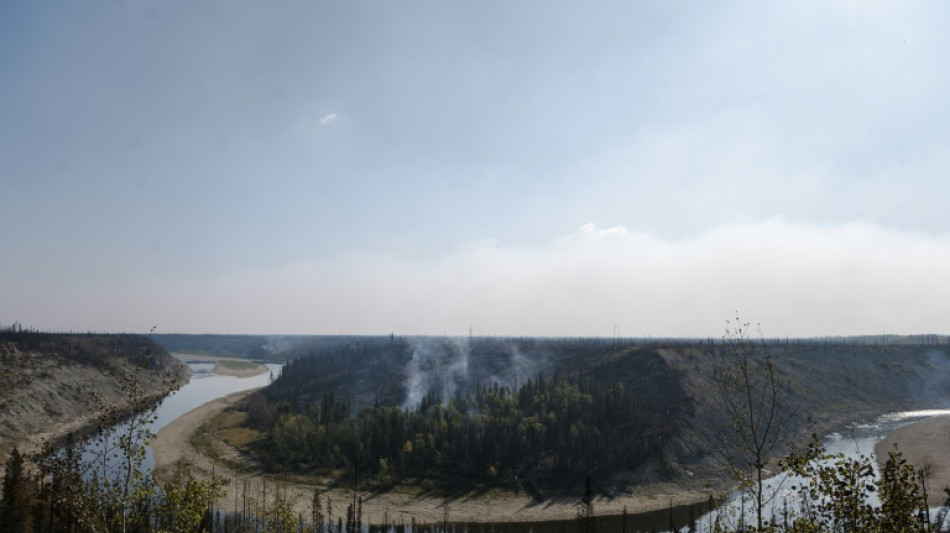
Warmest Arctic summer caused by accelerating climate change / Photo: © AFP/File

Warmest Arctic summer caused by accelerating climate change

Summer surface air temperatures in 2023 were the warmest ever observed in the Arctic as a result of accelerating human-caused climate change, an official report card published Tuesday said.

Text size:

The average temperature from the months of July-September was 43 degrees Fahrenheit (6.4 Celsius), the highest since record-keeping began in 1900.

"The overriding message from this year’s report card is that the time for action is now," National Oceanic and Atmospheric Administration administrator Rick Spinrad said in a statement.

"We as a nation and global community must dramatically reduce greenhouse gas emissions that are driving these changes."

Average summer temperatures have been rising 0.31 F (0.17 C) per decade.

Overall, it was the Arctic's sixth warmest year, at 20 degrees Fahrenheit (-7 C).

Now in its 18th year, the NOAA Arctic Report Card is the work of 82 authors across 13 countries.

Observations from this year's report emphasize an ongoing trend line of warming sea and air temperatures, decreasing snow cover, diminishing sea ice, and continued melting of the Greenland Ice Sheet.

But the year also brought high impact events that had the "clear signature" of climate change, for example the Canadian Arctic experienced its worst wildfire season on record, causing the evacuation of 20,000 people from the town of Yellowknife in August.

Also in August, a glacial lake near Juneau, Alaska burst through its dam, causing massive flooding and property damage along the Mendenhall River, as a result of two decades of glacial thinning.

The long term warming trend has a variety of uneven impacts across ecosystems and food webs that people rely upon.

For example, sockeye salmon reached a record-high abundance in Bristol Bay, Alaska in the years 2021 and 2022.

The species, a staple of commercial fisheries, has thrived under warmer waters, which allow juveniles to grow faster in lakes and increase their odds of survival when they reach the ocean.

On the other hand, chinook and chum salmon have drastically declined following heat waves that negatively impact their growth rates, contributing to smaller adults.

Another chapter of the report examines subsea permafrost, a field that is relatively little known, even among scientists -- though potentially an important source of greenhouse gas emissions.

As the world emerged from the last ice age, rising ocean waters in the Arctic covered permafrost, transforming it into subsea permafrost over thousands of years.

"An estimated 2.5 million km2 of subsea permafrost remains today, but it continues to thaw due to the original ocean inundation event and more recent, rapid Arctic warming," the report said.

J.P.Estrada--TFWP