Hong Kong halts trading, closes schools post-typhoon / Photo: © AFP

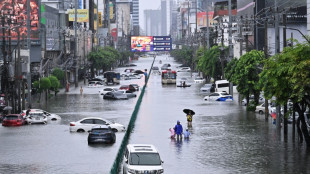
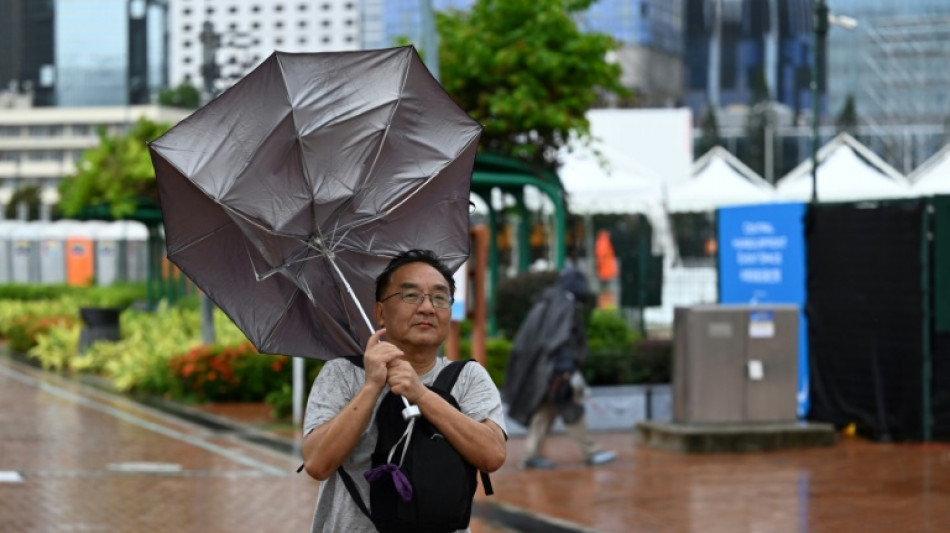
Asian finance hub Hong Kong halted trading at its stock exchange on Monday and closed schools, after Typhoon Koinu generated torrential rainfall overnight.
Koinu -- which caused one death in Taiwan last week -- had weakened into a severe tropical storm by Monday, said the Hong Kong Observatory, as it moved toward the coastal areas of China's Guangdong province.
The storm caused non-stop rain overnight, leading the agency to issue a "black" rainstorm warning signal -- its highest -- for about six hours before it was downgraded at 10:30 am (0230 GMT).
More than 150 millimetres of rain were recorded over most parts of the territory since midnight Monday, and rainfall exceeded 300 millimetres over some parts of urban Hong Kong island, data showed.
"Heavy rain will bring flash floods... People should stay away from watercourses," the observatory said, adding that residents living near rivers be alert in case they need to evacuate.
The city's third-highest storm warning signal -- "T8" -- was to remain in place until 11:40 am local time.
Due to the storm warning, trading at the city's stock exchange was suspended in the morning session, but was expected to resume at 2:00 pm.
Schools and daycare centres, ordered to shut when authorities issued the T8 signal a day earlier, remained closed Monday.
This was the second time in a month the city has issued the black rain warning.
In early September, Hong Kong experienced its highest rainfall in nearly 140 years, flooding subway stations and malls, and causing landslides.
- Transport disruptions -
While no major damage was initially reported, the hoisting of the second-highest typhoon warning on Sunday evening caused issues at Hong Kong's international airport, where hundreds of arriving passengers were stranded without bus, subway or taxi services.
"A large number of arriving passengers had to wait for a relatively long time because the AirPort Express -- a main transport link between the airport and the city -- was suspended due to safety reasons," said an airport representative Monday.
After the storm was downgraded just before midnight, "12 train rides provided more than 18,000 seats for the passengers who waited an average of three hours", the official said.
In China's Guangdong province -- where Koinu is expected to sweep past en route to Hainan island -- the cities of Zhuhai and Jiangmen issued a Level III emergency response, according to the Xinhua news agency Sunday.
That meant more than 35,500 fishing boats had to return to port, while dozens of coastal scenic areas were temporarily closed.
Before moving to Hong Kong, Koinu had grazed nearby Taiwan, bringing torrential rain and record-breaking winds to its outlying Orchid Island.
The storm left at least one dead in Taiwan, knocking out power to hundreds of thousands of homes.
Southern China is frequently hit during the summer and autumn seasons by typhoons that form in the warm oceans east of the Philippines and then travel west.
But climate change has made tropical storms more unpredictable while increasing their intensity -- bringing more rain and stronger gusts that lead to flash floods and coastal damage, experts say.
H.Carroll--TFWP