The Fort Worth Press - Drought caused 'historic' global hydropower drop in early 2023

USD -
AED 3.6725
AFN 63.498714
ALL 82.898186
AMD 377.20221
ANG 1.790083
AOA 917.000143
ARS 1376.63099
AUD 1.440029
AWG 1.80225
AZN 1.702556
BAM 1.686202
BBD 2.015182
BDT 122.789623
BGN 1.709309
BHD 0.377574
BIF 2970
BMD 1
BND 1.279061
BOB 6.913944
BRL 5.238103
BSD 1.000522
BTN 94.115213
BWP 13.635619
BYN 2.965482
BYR 19600
BZD 2.012485
CAD 1.381501
CDF 2280.000526
CHF 0.791505
CLF 0.023228
CLP 917.189797
CNY 6.901501
CNH 6.903795
COP 3701.45
CRC 465.236584
CUC 1
CUP 26.5
CVE 95.625012
CZK 21.156905
DJF 177.719503
DKK 6.46211
DOP 60.374986
DZD 132.724008
EGP 52.534297
ERN 15
ETB 157.326049
EUR 0.86476
FJD 2.228204
FKP 0.747226
GBP 0.748305
GEL 2.695017
GGP 0.747226
GHS 10.949746
GIP 0.747226
GMD 73.533829
GNF 8780.000182
GTQ 7.657854
GYD 209.347342
HKD 7.818985
HNL 26.519756
HRK 6.5177
HTG 131.207187
HUF 334.957498
IDR 17041.4
ILS 3.11585
IMP 0.747226
INR 94.58805
IQD 1310
IRR 1313149.999855
ISK 123.839714
JEP 0.747226
JMD 157.605908
JOD 0.708983
JPY 159.350503
KES 129.749764
KGS 87.449198
KHR 4012.999761
KMF 426.999612
KPW 900.014346
KRW 1503.620076
KWD 0.30659
KYD 0.833829
KZT 482.773486
LAK 21585.000353
LBP 89549.999638
LKR 314.680461
LRD 183.649893
LSL 16.940125
LTL 2.95274
LVL 0.60489
LYD 6.374979
MAD 9.327502
MDL 17.495667
MGA 4170.000264
MKD 53.305946
MMK 2100.167588
MNT 3569.46809
MOP 8.057787
MRU 40.129725
MUR 46.459723
MVR 15.450396
MWK 1737.000057
MXN 17.77755
MYR 3.964495
MZN 63.901438
NAD 16.930012
NGN 1385.459778
NIO 36.719792
NOK 9.687115
NPR 150.586937
NZD 1.72225
OMR 0.384467
PAB 1.000578
PEN 3.460501
PGK 4.309497
PHP 60.060035
PKR 279.049985
PLN 3.69755
PYG 6510.184287
QAR 3.644006
RON 4.406198
RSD 101.569038
RUB 81.000744
RWF 1460
SAR 3.751679
SBD 8.042037
SCR 13.699685
SDG 600.999739
SEK 9.3519
SGD 1.281051
SHP 0.750259
SLE 24.549731
SLL 20969.510825
SOS 571.000463
SRD 37.340503
STD 20697.981008
STN 21.4
SVC 8.755292
SYP 110.948257
SZL 16.8977
THB 32.779488
TJS 9.58109
TMT 3.5
TND 2.937501
TOP 2.40776
TRY 44.359899
TTD 6.803525
TWD 31.950899
TZS 2570.059035
UAH 43.92958
UGX 3702.186911
UYU 40.504889
UZS 12199.999601
VES 462.09036
VND 26350
VUV 119.508072
WST 2.738201
XAF 565.560619
XAG 0.014069
XAU 0.000222
XCD 2.70255
XCG 1.803352
XDR 0.702492
XOF 563.50327
XPF 103.450387
YER 238.649487
ZAR 16.98853
ZMK 9001.203419
ZMW 18.736367
ZWL 321.999592
  • RBGPF

    -13.5000

    69

    -19.57%

  • NGG

    1.9600

    84.29

    +2.33%

  • RYCEF

    0.3000

    15.9

    +1.89%

  • BCE

    -0.3400

    25.49

    -1.33%

  • BCC

    1.0800

    74.65

    +1.45%

  • RELX

    0.0100

    32.47

    +0.03%

  • RIO

    0.7700

    87.54

    +0.88%

  • BP

    0.6200

    45.41

    +1.37%

  • BTI

    0.6900

    58.45

    +1.18%

  • CMSC

    0.0400

    22.91

    +0.17%

  • CMSD

    0.0500

    22.68

    +0.22%

  • JRI

    0.2400

    12.1

    +1.98%

  • GSK

    1.7500

    54.7

    +3.2%

  • VOD

    0.0600

    14.72

    +0.41%

  • AZN

    1.3600

    187.14

    +0.73%

Drought caused 'historic' global hydropower drop in early 2023
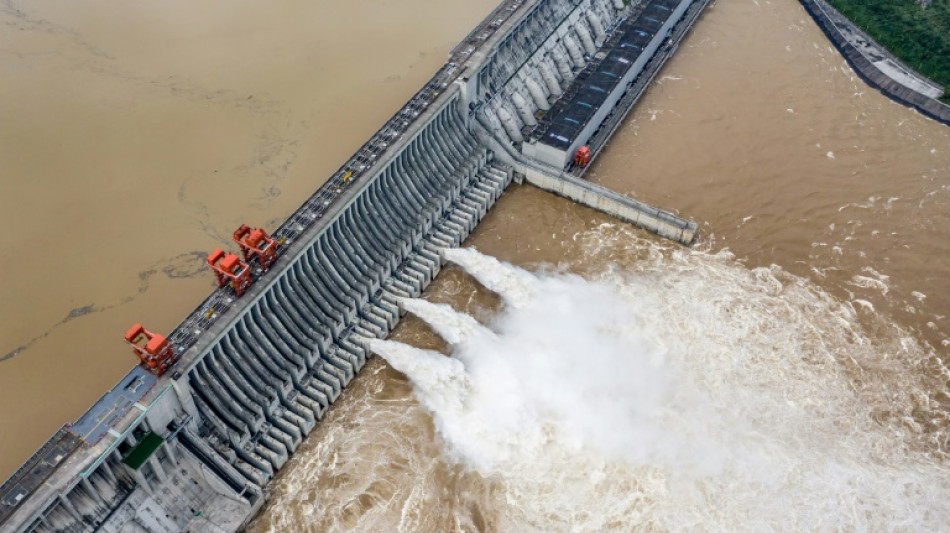
Drought caused 'historic' global hydropower drop in early 2023 / Photo: © AFP/File

Drought caused 'historic' global hydropower drop in early 2023

Dry conditions, particularly in China, caused a "historic" global drop in hydropower generation in the first half of 2023, a new analysis shows, highlighting the effects of climate change.

Text size:

The research by renewable energy think tank Ember argues the drop is a "warning shot that hydro output could negatively affect the speed of the electricity transition".

The group said global hydropower generation fell 8.5 percent in the year to June, more than any full-year decline over the last two decades.

Three-quarters of that decline was the result of falls in China, which baked through record temperatures earlier this year.

Between winter 2022 and spring 2023, most areas of southwest China experienced significantly less precipitation and higher temperatures than in a normal year, according to Beijing's ministry of emergency management.

The fall in hydropower output meant global carbon emissions rose very slightly in the first half of 2023, despite a 12-percent increase in solar and wind power worldwide.

Lower growth in electricity demand helped keep the rise in emissions smaller than it might otherwise have been, Ember said in the report released Thursday.

China, however, saw its emissions rise nearly eight percent as it compensated for the loss of hydropower.

But while the extreme heat and drought conditions that caused this year's decline may have been driven by climate change, the think tank warned it remains hard to calculate future effects.

The consequences of "climate change on hydro potential are geographically varied", the group noted.

"Changes in rainfall patterns and intensity as well as increased evaporation will affect hydro output both positively and negatively depending on the region."

Some parts of central Africa, India, central Asia and northern high latitudes could see their potential to generate hydropower increase.

But in southern Europe, the southern United States and elsewhere, it is likely to weaken.

The chief of this year's COP climate meeting has called for a global tripling of renewable energy capacity by 2030.

And the International Energy Agency last month projected fossil fuel demand will peak by 2030.

But wind and solar generation grew more slowly in the first half of this year than in the same period last year, reflecting the fragility of gains in the sector.

"While it is encouraging to see the remarkable growth of wind and solar energy, we can't ignore the stark reality of adverse hydro conditions intensified by climate change," said Malgorzata Wiatros-Motyka, Ember's senior electricity analyst.

"The world is teetering at the peak of power sector emissions, and we now need to unleash the momentum for a rapid decline in fossil fuels by securing a global agreement to triple renewables capacity this decade."

T.Mason--TFWP