The Fort Worth Press - We may be underestimating the climate risk to crops: researchers

USD -
AED 3.672498
AFN 63.500465
ALL 83.283733
AMD 367.003219
ANG 1.790403
AOA 917.000184
ARS 1471.035205
AUD 1.449338
AWG 1.80125
AZN 1.689175
BAM 1.724577
BBD 2.013888
BDT 122.992813
BGN 1.69088
BHD 0.377147
BIF 2984.81535
BMD 1
BND 1.298984
BOB 6.909809
BRL 5.201836
BSD 0.999934
BTN 94.624111
BWP 13.680173
BYN 2.818068
BYR 19600
BZD 2.01104
CAD 1.423225
CDF 2268.99975
CHF 0.81263
CLF 0.023263
CLP 915.590329
CNY 6.790496
CNH 6.81352
COP 3428.35
CRC 455.186766
CUC 1
CUP 26.5
CVE 97.22259
CZK 21.37625
DJF 178.061717
DKK 6.592015
DOP 58.613453
DZD 133.528416
EGP 49.636698
ERN 15
ETB 161.211774
EUR 0.88182
FJD 2.24825
FKP 0.758197
GBP 0.759805
GEL 2.645016
GGP 0.758197
GHS 11.199781
GIP 0.758197
GMD 72.49805
GNF 8761.518452
GTQ 7.627362
GYD 209.162776
HKD 7.840295
HNL 26.755726
HRK 6.640898
HTG 130.744947
HUF 314.087979
IDR 17976
ILS 2.984749
IMP 0.758197
INR 94.412
IQD 1309.878094
IRR 1375049.999798
ISK 126.810208
JEP 0.758197
JMD 157.488647
JOD 0.708978
JPY 161.677495
KES 129.590162
KGS 87.449821
KHR 4017.494974
KMF 430.999856
KPW 900.00035
KRW 1546.34502
KWD 0.30947
KYD 0.833297
KZT 486.623047
LAK 21948.961236
LBP 89556.012134
LKR 337.341005
LRD 182.134827
LSL 16.623945
LTL 2.95274
LVL 0.60489
LYD 6.430933
MAD 9.401479
MDL 17.709096
MGA 4177.101337
MKD 54.353625
MMK 2099.539901
MNT 3580.066416
MOP 8.076099
MRU 39.982188
MUR 48.209966
MVR 15.45971
MWK 1733.881812
MXN 17.6195
MYR 4.137977
MZN 63.902143
NAD 16.623945
NGN 1372.679674
NIO 36.797319
NOK 9.83835
NPR 151.394749
NZD 1.772154
OMR 0.384501
PAB 0.999965
PEN 3.391297
PGK 4.386951
PHP 61.5525
PKR 278.100478
PLN 3.78105
PYG 6099.351442
QAR 3.635217
RON 4.618803
RSD 103.50701
RUB 74.893431
RWF 1468.89467
SAR 3.754889
SBD 8.065041
SCR 13.65272
SDG 600.499082
SEK 9.77475
SGD 1.29826
SHP 0.746601
SLE 24.750204
SLL 20969.503664
SOS 571.478959
SRD 37.482989
STD 20697.981008
STN 21.603509
SVC 8.749173
SYP 110.532098
SZL 16.621989
THB 33.430499
TJS 9.284423
TMT 3.51
TND 2.972467
TOP 2.40776
TRY 46.49775
TTD 6.780184
TWD 31.733017
TZS 2620.502978
UAH 44.88455
UGX 3689.350352
UYU 39.918699
UZS 12024.108178
VES 616.865275
VND 26335
VUV 118.798432
WST 2.761642
XAF 578.424923
XAG 0.016838
XAU 0.000248
XCD 2.70255
XCG 1.802141
XDR 0.716966
XOF 578.417273
XPF 105.162912
YER 238.649503
ZAR 16.61355
ZMK 9001.202706
ZMW 18.024056
ZWL 321.999592
  • BCC

    -0.7400

    71.8

    -1.03%

  • RBGPF

    0.9600

    61.3

    +1.57%

  • RYCEF

    -0.4700

    18.16

    -2.59%

  • CMSD

    -0.1200

    21.96

    -0.55%

  • NGG

    0.6000

    81.57

    +0.74%

  • BCE

    0.3900

    23.04

    +1.69%

  • CMSC

    -0.0500

    22.11

    -0.23%

  • RIO

    -3.7800

    95.58

    -3.95%

  • RELX

    0.3800

    31.21

    +1.22%

  • GSK

    1.3300

    52.07

    +2.55%

  • JRI

    -0.0200

    12.63

    -0.16%

  • VOD

    -0.0700

    14.05

    -0.5%

  • AZN

    4.5900

    181.02

    +2.54%

  • BP

    -0.4500

    39.33

    -1.14%

  • BTI

    1.8400

    60.74

    +3.03%

We may be underestimating the climate risk to crops: researchers
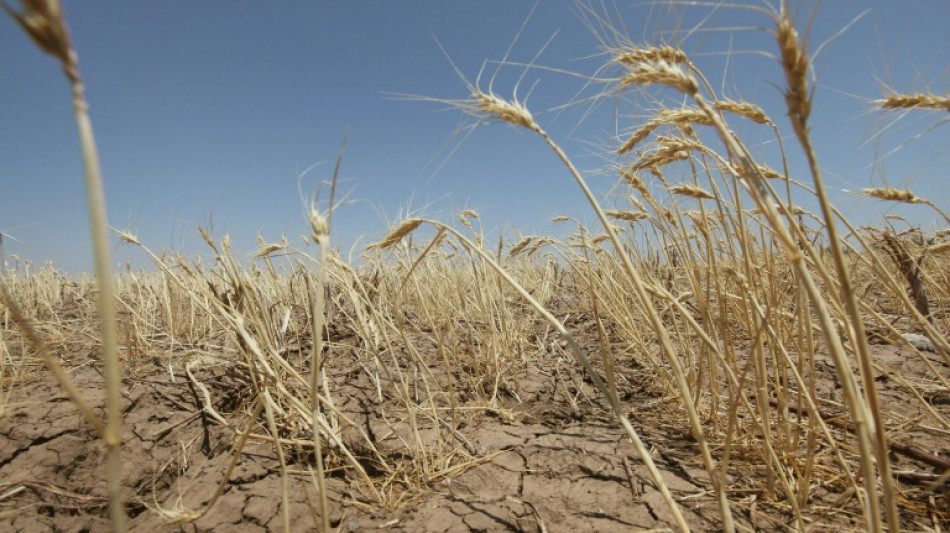
We may be underestimating the climate risk to crops: researchers / Photo: © GETTY IMAGES NORTH AMERICA/AFP

We may be underestimating the climate risk to crops: researchers

The risks of harvest failures in multiple global breadbaskets have been underestimated, according to a study Tuesday that researchers said should be a "wake up call" about the threat climate change poses to our food systems.

Text size:

Food production is both a key source of planet-warming emissions and highly exposed to the effects of climate change, with climate and crop models used to figure out just what the impacts could be as the world warms.

In the new research published in Nature Communications, researchers in the United States and Germany looked at the likelihood that several major food producing regions could simultaneously suffer low yields.

These events can lead to price spikes, food insecurity and even civil unrest, said lead author Kai Kornhuber, a researcher at Columbia University and the German Council on Foreign Relations.

By "increasing the concentration of greenhouse gases, we are entering this uncharted water where we are struggling to really have an accurate idea of what type of extremes we're going to face," he told AFP.

"We show that these types of concurring events are really largely underestimated."

The study looked at observational and climate model data between 1960 and 2014, and then at projections for 2045 to 2099.

Researchers first looked at the impact of the jet stream -- the air currents that drive weather patterns in many of the world's most important crop producing regions.

They found that a "strong meandering" of the jet stream, flowing in big wave shapes, has particularly significant impacts on key agricultural regions in North America, Eastern Europe and East Asia, with a reduction in harvests of up to seven percent.

The researchers also found that this had been linked to simultaneous crop failures in the past.

One example was in 2010, when the fluctuations of the jet stream were linked to both extreme heat in parts of Russia and devastating floods in Pakistan, which both hurt crops, Kornhuber said.

- Risk assessment -

The study also looked at how well computer models assess these risks and found that while they are good at showing the atmospheric movement of the jet stream, they underestimate the magnitude of the extremes this produces on the ground.

Kornhuber said the study should be a "a wake up call in terms of our uncertainties" of the impacts of climate change on the food sector, with more frequent and intense weather extremes and increasingly complicated combinations of extremes.

"We need to be prepared for these types of complex climate risks in the future and the models at the moment seem to not capture this," he said.

On Monday, United Nations' human rights chief Volker Turk warned of a "truly terrifying" dystopian future of hunger and suffering as climate change-driven extremes hit crops, livestock and crucial ecosystems.

He told a UN debate on the right to food that more than 828 million people faced hunger in 2021 and climate change could increase that by 80 million by mid-century, and slammed world leaders for short term thinking.

M.T.Smith--TFWP