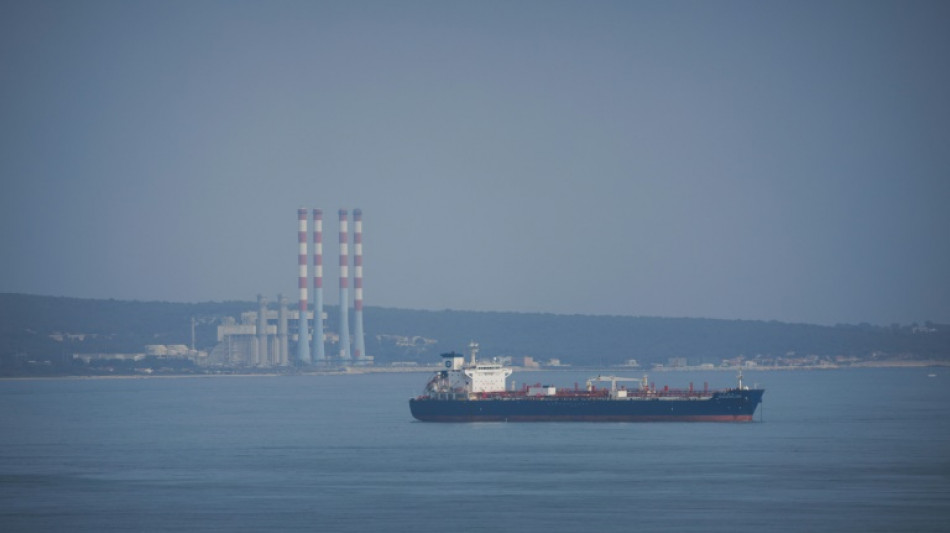
Polluting shipping to face climate reckoning / Photo: © AFP/File

The hefty carbon footprint of global shipping networks that crisscross our oceans and keep the world's economy afloat will come under scrutiny next week, as countries wrestle over measures to slash planet-heating pollution.
Nations are under pressure to agree ambitious emission reduction targets and consider a tax on pollution by the sector at a key meeting of the International Maritime Organization. Currently shipping belches out roughly the same level of greenhouse gases as aviation.
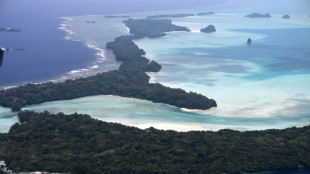
The IMO Marine Environment Protection Commission (MEPC) meeting, held in London from Monday to Friday, is likely to pit climate-vulnerable nations -- particularly Pacific islands -- and some richer countries against big exporters such as China.
"The climate crisis is an existential threat to Pacific small island developing states, and many other countries, but can be seen as less urgent by countries with superior resources," Michael Prehn, the IMO delegate for the Solomon Islands, told AFP.
"This is why the Pacific has been consistently pressing for the highest possible ambition in climate regulation."
- Net-zero -
Shipping, which is responsible for around two percent of global greenhouse gas emissions, is judged to be off course in the fight against climate change.
Efforts to decarbonise so far centre around a 2018 IMO decision that instructed shipping firms to reduce CO2 emissions by 50 percent by 2050, from 2008 levels.
But that target is considered insufficient given the level of global emissions and compared to other industries, including aviation, which is aiming for net zero by the same mid-century deadline.
Nations in support of more ambitious cuts want the IMO to align its goals with the Paris Agreement's global warming limit of 1.5 degrees Celsius above pre-industrial times.
Some 45 countries -- including the European Union, the United States, Britain, Fiji, the Marshall Islands and Norway -- support a net zero target for the sector by 2050.
Most also support an intermediate target for 2030.
But emerging market exporters, particularly Brazil and China, have strongly resisted a change, according to observers at talks that started in late June ahead of the decision-making MEPC meeting.
A briefing note circulated by China, seen by AFP, framed the proposals as "unrealistic" and an effort by developed countries to boost their economic competitiveness by increasing shipping costs.
- A 'no-brainer' -
Ships transport 90 percent of the world's goods, and the sector emits around a billion tonnes of greenhouse gases every year, the equivalent of Germany or Japan.
Nicolas Entrup, director of international relations at marine protection organisation OceanCare, said a goal of absolute zero greenhouse gas emissions from shipping by mid-century, with interim targets, would be "the necessary step forward for humankind".
"It should be a no-brainer to bring the IMO targets in line with those of the Paris Agreement," he said. "We simply can't afford any other less ambitious path."
One immediate way to reduce emissions would be to simply slow boats down so they burn less fuel, he added.
Among the proposals coming from different countries, the EU wants net zero by 2050, with emissions reduced 29 percent by 2030 and 83 percent by 2040.
Countries such as the United States, Canada, and climate vulnerable Marshall Islands and Solomon Islands, want to go even further, with a 96-percent cut by 2040.
Observers say that while some countries are on the fence, the United Arab Emirates -- which will this year host the UN COP28 climate conference -- has swung in support of the goal of net zero by 2050. That has raised hopes of an agreement on the issue.
- Global levy -
But a potential deal on another flagship proposal -- to introduce a global levy on shipping emissions -- is going to be a harder sell.
French President Emmanuel Macron threw his support behind the idea at a recent climate finance summit in Paris, but said it would need backing from China, the United States and other European nations to work.
A source following the preliminary IMO negotiations said support had swelled to 70 countries but that major exporters including Brazil, China and Australia were against it. Brazil has argued it would harm food security and penalise developing countries.
There is also disagreement about where any revenues would be spent. There are debates over whether it should be used solely to decarbonise the sector, or whether some of the money should go to help countries cope with climate impacts.
The sums could be significant.
The Marshall Islands and the Solomon Islands, which have been campaigning for a tax for a decade, are proposing a tariff of $100 per tonne, with money helping vulnerable countries.
According to the World Bank, this could generate over $60 billion a year.
L.Coleman--TFWP