The Fort Worth Press - Dutch refinery to feed airlines' thirst for clean fuel

USD -
AED 3.672498
AFN 66.278316
ALL 82.286767
AMD 381.405623
ANG 1.790403
AOA 916.999793
ARS 1450.706703
AUD 1.513581
AWG 1.8
AZN 1.698045
BAM 1.668053
BBD 2.013416
BDT 122.25212
BGN 1.66911
BHD 0.376892
BIF 2955.517555
BMD 1
BND 1.290672
BOB 6.907492
BRL 5.522098
BSD 0.999672
BTN 90.191513
BWP 13.210404
BYN 2.933001
BYR 19600
BZD 2.010516
CAD 1.378835
CDF 2264.000414
CHF 0.7951
CLF 0.023226
CLP 911.140143
CNY 7.04125
CNH 7.036675
COP 3863.71
CRC 498.08952
CUC 1
CUP 26.5
CVE 94.043045
CZK 20.770014
DJF 178.015071
DKK 6.373899
DOP 62.81557
DZD 129.690059
EGP 47.531396
ERN 15
ETB 155.468002
EUR 0.853102
FJD 2.28425
FKP 0.746872
GBP 0.74752
GEL 2.689727
GGP 0.746872
GHS 11.495998
GIP 0.746872
GMD 73.501894
GNF 8739.594705
GTQ 7.656257
GYD 209.143749
HKD 7.781275
HNL 26.330401
HRK 6.428399
HTG 130.92649
HUF 330.617817
IDR 16751.25
ILS 3.20355
IMP 0.746872
INR 90.15685
IQD 1309.515179
IRR 42125.000016
ISK 125.929659
JEP 0.746872
JMD 159.951556
JOD 0.709052
JPY 155.995027
KES 128.950128
KGS 87.450063
KHR 4003.445658
KMF 420.999734
KPW 899.993999
KRW 1478.805034
KWD 0.306899
KYD 0.83301
KZT 515.774122
LAK 21648.038141
LBP 89518.671881
LKR 309.300332
LRD 176.937412
LSL 16.761238
LTL 2.95274
LVL 0.60489
LYD 5.418406
MAD 9.162342
MDL 16.859064
MGA 4495.599072
MKD 52.499158
MMK 2100.057046
MNT 3547.602841
MOP 8.012145
MRU 39.906011
MUR 46.10406
MVR 15.459757
MWK 1733.41976
MXN 18.005101
MYR 4.0825
MZN 63.910384
NAD 16.761166
NGN 1455.979562
NIO 36.785119
NOK 10.16495
NPR 144.308882
NZD 1.735675
OMR 0.384372
PAB 0.999663
PEN 3.365814
PGK 4.308816
PHP 58.6977
PKR 280.102006
PLN 3.58523
PYG 6673.859367
QAR 3.645474
RON 4.343302
RSD 100.111728
RUB 79.948639
RWF 1455.461927
SAR 3.750853
SBD 8.140117
SCR 13.592982
SDG 601.496241
SEK 9.29012
SGD 1.291295
SHP 0.750259
SLE 24.101968
SLL 20969.503664
SOS 570.329558
SRD 38.678006
STD 20697.981008
STN 20.895879
SVC 8.747159
SYP 11058.365356
SZL 16.766099
THB 31.4145
TJS 9.231602
TMT 3.51
TND 2.921974
TOP 2.40776
TRY 42.809903
TTD 6.783
TWD 31.562501
TZS 2490.000132
UAH 42.222895
UGX 3571.01736
UYU 39.172541
UZS 12055.48851
VES 279.213397
VND 26313
VUV 121.372904
WST 2.784715
XAF 559.461142
XAG 0.015167
XAU 0.000231
XCD 2.70255
XCG 1.801636
XDR 0.695787
XOF 559.458756
XPF 101.714719
YER 238.449719
ZAR 16.75075
ZMK 9001.203721
ZMW 22.742295
ZWL 321.999592
  • SCS

    0.0200

    16.14

    +0.12%

  • RBGPF

    0.0000

    80.22

    0%

  • RELX

    0.0900

    40.65

    +0.22%

  • RYCEF

    0.5400

    15.4

    +3.51%

  • CMSD

    0.0000

    23.28

    0%

  • VOD

    -0.0100

    12.8

    -0.08%

  • NGG

    -0.7700

    76.39

    -1.01%

  • RIO

    0.4400

    77.63

    +0.57%

  • CMSC

    0.0300

    23.29

    +0.13%

  • BCE

    -0.3000

    22.85

    -1.31%

  • GSK

    -0.4200

    48.29

    -0.87%

  • BCC

    1.4100

    77.7

    +1.81%

  • AZN

    0.7500

    90.61

    +0.83%

  • JRI

    0.0000

    13.43

    0%

  • BTI

    -0.1300

    57.04

    -0.23%

  • BP

    -1.1600

    33.31

    -3.48%

Dutch refinery to feed airlines' thirst for clean fuel
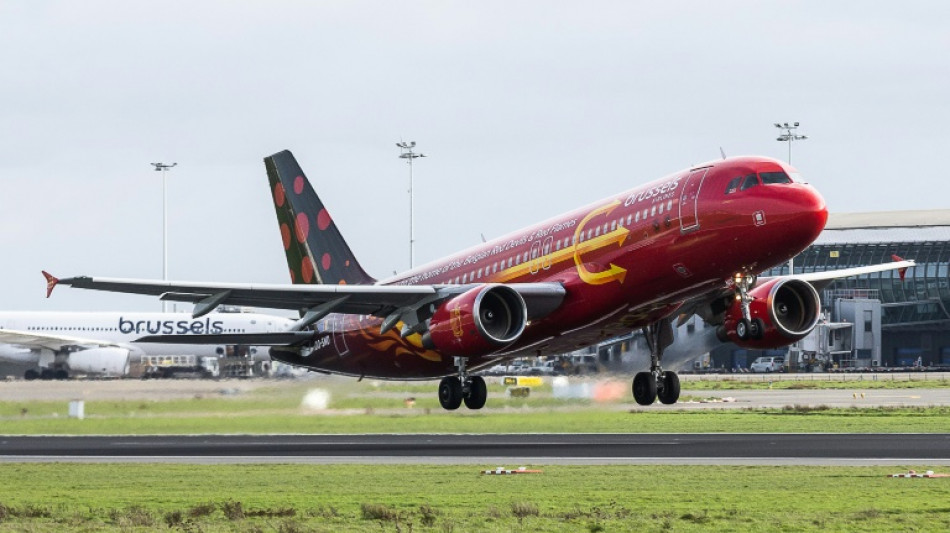
Dutch refinery to feed airlines' thirst for clean fuel / Photo: © BELGA/AFP/File

Dutch refinery to feed airlines' thirst for clean fuel

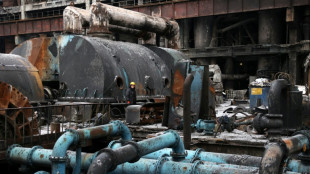
Scaffolding and green pipes envelop a refinery in the port of Rotterdam where Finnish giant Neste is preparing to significantly boost production of sustainable aviation fuel.

Text size:

Switching to non-fossil aviation fuels that produce less net greenhouse gas emissions is key to plans to decarbonise air transport, a significant contributor to global warming.

Neste, the largest global producer of SAF, uses cooking oil and animal fat at this Dutch refinery.

Sustainable aviation fuels are being made from different sources such as municipal waste, leftovers from the agricultural and forestry industry, crops and plants, and even hydrogen.

These technologies are still developing and the end product is more expensive.

But these fuels will help airlines reduce CO2 emissions by up to 80 percent, according to the International Air Transport Association.

Global output of SAF was 250,000 tonnes last year, less than 0.1 percent of the more than 300 million tonnes of aviation fuel used during that period.

"It's a drop in the ocean but a significant drop," said Matti Lehmus, CEO of Neste.

"We'll be growing drastically our production from 100,000 tonnes to 1.5 million tonnes next year," he added.

There clearly is demand.

The European Union plans to impose the use of a minimum amount of sustainable aviation fuel by airlines, rising from two percent in 2025 to six percent in 2030 and at least 63 percent in 2050.

Neste has another site for SAF in Singapore which will start production in April.

"With the production facilities of Neste in Rotterdam and Singapore, we can meet the mandate for EU in 2025," said Jonathan Wood, the company's vice president for renewable aviation.

Vincent Etchebehere, director for sustainable development at Air France, said that "between now and 2030, there will be more demand than supply of SAF".

- 'Need to mature technologies' -

Air France-KLM has reached a deal with Neste for the supply of one million tonnes of sustainable aviation fuel between 2023 and 2030.

It has also lined up 10 year-agreements with US firm DG Fuels for 600,000 tonnes and with TotalEnergies for 800,000 tonnes.

At the Rotterdam site, two giant storage tanks of 15,000 cubic metres are yet to be painted.

They lie near a quay where the fuel will be transported by boat to feed Amsterdam's Schiphol airport and airports in Paris.

The Franco-Dutch group has already taken steps to cut its carbon footprint, using 15 percent of the global SAF output last year -- or 0.6 percent of its fuel needs.

Neste's Lehmus said there was a great need to "mature the technologies" to make sustainable aviation fuel from diverse sources such as algae, nitrocellulose and synthetic fuels.

Air France CEO Anne Rigail said the prices of sustainable aviation fuel were as important as their production.

Sustainable fuel costs 3,500 euros ($3,800) a tonne globally but only $2,000 in the United States thanks to government subsidies. In France, it costs 5,000 euros a tonne.

"We need backing and we really think the EU can do more," said Rigail.

P.Navarro--TFWP