The Fort Worth Press - Climate change may have toppled Hittite Empire: study

USD -
AED 3.672499
AFN 66.278316
ALL 82.286767
AMD 381.405623
ANG 1.790403
AOA 916.999736
ARS 1450.742896
AUD 1.513352
AWG 1.8
AZN 1.702094
BAM 1.668053
BBD 2.013416
BDT 122.25212
BGN 1.6696
BHD 0.377054
BIF 2955.517555
BMD 1
BND 1.290672
BOB 6.907492
BRL 5.533596
BSD 0.999672
BTN 90.191513
BWP 13.210404
BYN 2.933001
BYR 19600
BZD 2.010516
CAD 1.37915
CDF 2264.000436
CHF 0.795501
CLF 0.023226
CLP 911.13992
CNY 7.04125
CNH 7.036005
COP 3863.71
CRC 498.08952
CUC 1
CUP 26.5
CVE 94.043045
CZK 20.80845
DJF 178.015071
DKK 6.37756
DOP 62.81557
DZD 129.749021
EGP 47.575002
ERN 15
ETB 155.468002
EUR 0.85363
FJD 2.283697
FKP 0.746974
GBP 0.74765
GEL 2.689915
GGP 0.746974
GHS 11.495998
GIP 0.746974
GMD 73.500885
GNF 8739.594705
GTQ 7.656257
GYD 209.143749
HKD 7.78145
HNL 26.330401
HRK 6.432903
HTG 130.92649
HUF 331.005996
IDR 16742
ILS 3.210955
IMP 0.746974
INR 90.190501
IQD 1309.515179
IRR 42124.999649
ISK 125.990656
JEP 0.746974
JMD 159.951556
JOD 0.708954
JPY 156.945008
KES 128.899729
KGS 87.450014
KHR 4003.445658
KMF 421.000269
KPW 899.985447
KRW 1478.597782
KWD 0.30725
KYD 0.83301
KZT 515.774122
LAK 21648.038141
LBP 89518.671881
LKR 309.300332
LRD 176.937412
LSL 16.761238
LTL 2.95274
LVL 0.60489
LYD 5.418406
MAD 9.162342
MDL 16.859064
MGA 4495.599072
MKD 52.54599
MMK 2099.831872
MNT 3551.409668
MOP 8.012145
MRU 39.906011
MUR 46.149851
MVR 15.460243
MWK 1733.41976
MXN 18.023875
MYR 4.075901
MZN 63.909769
NAD 16.761166
NGN 1456.910016
NIO 36.785119
NOK 10.179865
NPR 144.308882
NZD 1.738875
OMR 0.384497
PAB 0.999663
PEN 3.365814
PGK 4.308816
PHP 58.750549
PKR 280.102006
PLN 3.59402
PYG 6673.859367
QAR 3.645474
RON 4.344806
RSD 100.229093
RUB 80.596944
RWF 1455.461927
SAR 3.75088
SBD 8.140117
SCR 14.188889
SDG 601.50685
SEK 9.309575
SGD 1.292115
SHP 0.750259
SLE 24.092332
SLL 20969.503664
SOS 570.329558
SRD 38.677976
STD 20697.981008
STN 20.895879
SVC 8.747159
SYP 11057.107339
SZL 16.766099
THB 31.463026
TJS 9.231602
TMT 3.51
TND 2.921974
TOP 2.40776
TRY 42.809915
TTD 6.783
TWD 31.549018
TZS 2495.000087
UAH 42.222895
UGX 3571.01736
UYU 39.172541
UZS 12055.48851
VES 279.213402
VND 26312
VUV 121.400054
WST 2.789362
XAF 559.461142
XAG 0.015196
XAU 0.000231
XCD 2.70255
XCG 1.801636
XDR 0.695787
XOF 559.458756
XPF 101.714719
YER 238.449862
ZAR 16.76688
ZMK 9001.198714
ZMW 22.742295
ZWL 321.999592
  • SCS

    0.0200

    16.14

    +0.12%

  • RBGPF

    0.0000

    80.22

    0%

  • RYCEF

    0.5400

    15.4

    +3.51%

  • CMSD

    0.0000

    23.28

    0%

  • CMSC

    0.0300

    23.29

    +0.13%

  • BCC

    1.4100

    77.7

    +1.81%

  • RIO

    0.4400

    77.63

    +0.57%

  • JRI

    0.0000

    13.43

    0%

  • VOD

    -0.0100

    12.8

    -0.08%

  • BCE

    -0.3000

    22.85

    -1.31%

  • RELX

    0.0900

    40.65

    +0.22%

  • BTI

    -0.1300

    57.04

    -0.23%

  • NGG

    -0.7700

    76.39

    -1.01%

  • GSK

    -0.4200

    48.29

    -0.87%

  • AZN

    0.7500

    90.61

    +0.83%

  • BP

    -1.1600

    33.31

    -3.48%

Climate change may have toppled Hittite Empire: study
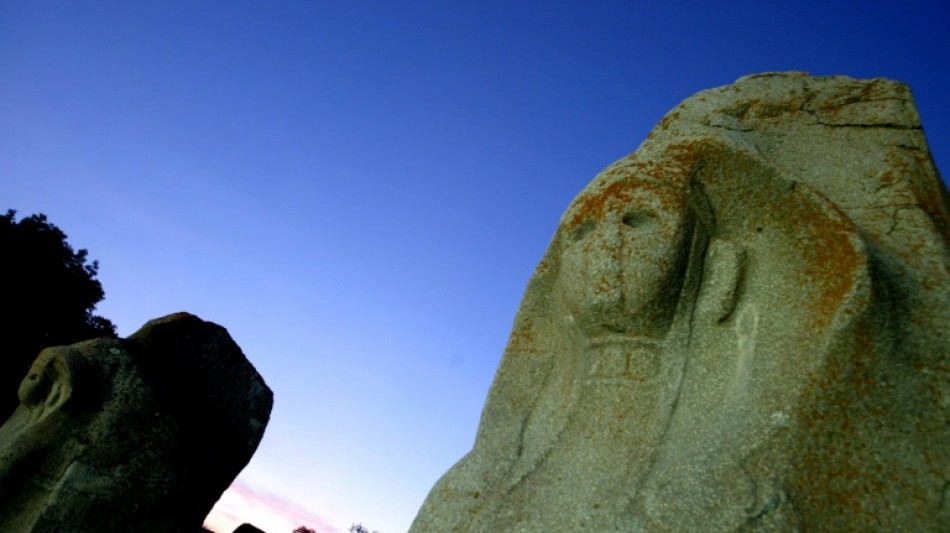
Climate change may have toppled Hittite Empire: study / Photo: © AFP/File

Climate change may have toppled Hittite Empire: study

Three years of extreme drought may have brought about the collapse of the mighty Hittite Empire around 1200 BC, researchers have said, linking the plight of the fallen civilisation to the modern world's climate crisis.

Text size:

The Hittites dominated Anatolia in modern-day Turkey for nearly 500 years, even rivalling the power of the Egyptian Empire for a period.

They were one of several influential ancient civilisations in the Eastern Mediterranean and Near East which were all toppled or severely weakened at around the same time, bringing the curtain down on the Bronze Age.

The Hittites mysteriously abandoned their capital and religious centre Hattusa around 1200 BC, when the royal line died out and written historical documents dried up.

The empire's centuries-old political and cultural structures ended "quite rapidly," Sturt Manning, an archaeologist at Cornell University in the United States and lead author of a new study, told AFP.

There are several theories for what was behind the "Late Bronze Age collapse", including attacks from naval raiders called the "Sea Peoples", epidemics and famines -- as well as a 300-year change to a drier, cooler climate.

But exactly what triggered the demise of these empires has remained unclear.

- 'Existential threat' -

Now, for the Hittites at least, the answer may have come inscribed in the rings of ancient juniper wood.

The juniper comes from one of the world's oldest wooden structures, found at the Phrygian capital of Gordion in central Turkey as part of the excavation of a king's tomb in the 1950s.

By analysing the rings of the juniper wood, the researchers were able to reconstruct climate conditions more than 3,000 years ago.

In semi-arid Central Anatolia, "the major threat to growth for most plants in the region is a lack of water," Manning said.

Narrower tree rings indicate drier years, when a lack of water meant the trees did not grow much.

The rings showed three-straight years -- 1198 BC to 1196 BC -- with "unusually" low growth, suggesting a prolonged and particularly severe drought, according to the study published in the journal Nature on Wednesday.

The researchers suggested that the drought caused severe food shortages, particularly for the land-locked parts of the central Hittite kingdom, which depended on grain and livestock.

The food shortages could have led to political, economic and social unrest, ultimately bringing about the end of the empire.

Manning warned that current global warming means the modern world could face a "multi-year existential threat" similar to the one that affected the Hittites.

Muge Durusu-Tanriover, an archaeologist at Temple University in Philadelphia who was not involved in the study, hailed it as "groundbreaking".

"Now that we know a major climate event might have tipped the Hittite empire beyond its point of no return, there are more questions to ask about climate change, its impact on states and society and, most crucially, what can be learnt from the past during our current climate crisis," she said in a Nature comment piece.

S.Jordan--TFWP