The Fort Worth Press - NASA, Boeing team up to develop lower-emissions aircraft

USD -
AED 3.672499
AFN 66.278316
ALL 82.286767
AMD 381.405623
ANG 1.790403
AOA 916.999736
ARS 1450.742896
AUD 1.513352
AWG 1.8
AZN 1.702094
BAM 1.668053
BBD 2.013416
BDT 122.25212
BGN 1.6696
BHD 0.377054
BIF 2955.517555
BMD 1
BND 1.290672
BOB 6.907492
BRL 5.533596
BSD 0.999672
BTN 90.191513
BWP 13.210404
BYN 2.933001
BYR 19600
BZD 2.010516
CAD 1.37915
CDF 2264.000436
CHF 0.795501
CLF 0.023226
CLP 911.13992
CNY 7.04125
CNH 7.036005
COP 3863.71
CRC 498.08952
CUC 1
CUP 26.5
CVE 94.043045
CZK 20.80845
DJF 178.015071
DKK 6.37756
DOP 62.81557
DZD 129.749021
EGP 47.575002
ERN 15
ETB 155.468002
EUR 0.85363
FJD 2.283697
FKP 0.746974
GBP 0.74765
GEL 2.689915
GGP 0.746974
GHS 11.495998
GIP 0.746974
GMD 73.500885
GNF 8739.594705
GTQ 7.656257
GYD 209.143749
HKD 7.78145
HNL 26.330401
HRK 6.432903
HTG 130.92649
HUF 331.005996
IDR 16742
ILS 3.210955
IMP 0.746974
INR 90.190501
IQD 1309.515179
IRR 42124.999649
ISK 125.990656
JEP 0.746974
JMD 159.951556
JOD 0.708954
JPY 156.945008
KES 128.899729
KGS 87.450014
KHR 4003.445658
KMF 421.000269
KPW 899.985447
KRW 1478.597782
KWD 0.30725
KYD 0.83301
KZT 515.774122
LAK 21648.038141
LBP 89518.671881
LKR 309.300332
LRD 176.937412
LSL 16.761238
LTL 2.95274
LVL 0.60489
LYD 5.418406
MAD 9.162342
MDL 16.859064
MGA 4495.599072
MKD 52.54599
MMK 2099.831872
MNT 3551.409668
MOP 8.012145
MRU 39.906011
MUR 46.149851
MVR 15.460243
MWK 1733.41976
MXN 18.023875
MYR 4.075901
MZN 63.909769
NAD 16.761166
NGN 1456.910016
NIO 36.785119
NOK 10.179865
NPR 144.308882
NZD 1.738875
OMR 0.384497
PAB 0.999663
PEN 3.365814
PGK 4.308816
PHP 58.750549
PKR 280.102006
PLN 3.59402
PYG 6673.859367
QAR 3.645474
RON 4.344806
RSD 100.229093
RUB 80.596944
RWF 1455.461927
SAR 3.75088
SBD 8.140117
SCR 14.188889
SDG 601.50685
SEK 9.309575
SGD 1.292115
SHP 0.750259
SLE 24.092332
SLL 20969.503664
SOS 570.329558
SRD 38.677976
STD 20697.981008
STN 20.895879
SVC 8.747159
SYP 11057.107339
SZL 16.766099
THB 31.463026
TJS 9.231602
TMT 3.51
TND 2.921974
TOP 2.40776
TRY 42.809915
TTD 6.783
TWD 31.549018
TZS 2495.000087
UAH 42.222895
UGX 3571.01736
UYU 39.172541
UZS 12055.48851
VES 279.213402
VND 26312
VUV 121.400054
WST 2.789362
XAF 559.461142
XAG 0.015196
XAU 0.000231
XCD 2.70255
XCG 1.801636
XDR 0.695787
XOF 559.458756
XPF 101.714719
YER 238.449862
ZAR 16.76688
ZMK 9001.198714
ZMW 22.742295
ZWL 321.999592
  • SCS

    0.0200

    16.14

    +0.12%

  • RBGPF

    0.0000

    80.22

    0%

  • RYCEF

    0.5400

    15.4

    +3.51%

  • CMSD

    0.0000

    23.28

    0%

  • CMSC

    0.0300

    23.29

    +0.13%

  • BCC

    1.4100

    77.7

    +1.81%

  • RIO

    0.4400

    77.63

    +0.57%

  • JRI

    0.0000

    13.43

    0%

  • VOD

    -0.0100

    12.8

    -0.08%

  • BCE

    -0.3000

    22.85

    -1.31%

  • RELX

    0.0900

    40.65

    +0.22%

  • BTI

    -0.1300

    57.04

    -0.23%

  • NGG

    -0.7700

    76.39

    -1.01%

  • GSK

    -0.4200

    48.29

    -0.87%

  • AZN

    0.7500

    90.61

    +0.83%

  • BP

    -1.1600

    33.31

    -3.48%

NASA, Boeing team up to develop lower-emissions aircraft
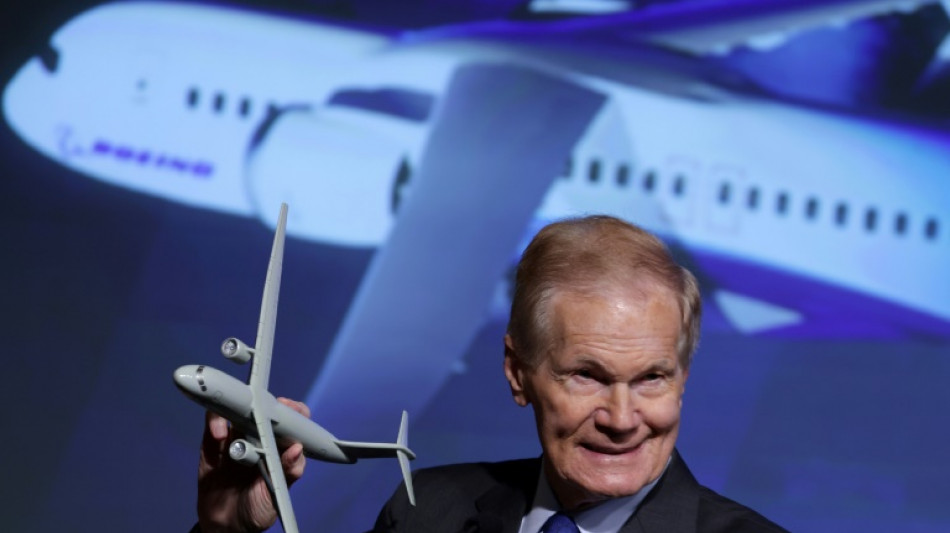
NASA, Boeing team up to develop lower-emissions aircraft / Photo: © GETTY IMAGES/AFP

NASA, Boeing team up to develop lower-emissions aircraft

The US space agency NASA is teaming up with aviation giant Boeing to develop a next-generation commercial aircraft that emits less carbon.

Text size:

NASA, whose purview also includes aeronautical research, will invest $425 million over seven years in the "Sustainable Flight Demonstrator" (SFD) project while Boeing and its partners will spend an estimated $725 million.

The goal is to produce future commercial airliners that are "more fuel efficient, with benefits to the environment, the commercial aviation industry, and to passengers worldwide," NASA chief Bill Nelson said.

"If we are successful, we may see these technologies in planes that the public takes to the skies in the 2030s," Nelson said in a statement on Wednesday.

The agreement calls for NASA and Boeing to build, test, and fly a full-scale single-aisle demonstrator aircraft.

"The technologies demonstrated and tested as part of the SFD program will inform future designs and could lead to breakthrough aerodynamics and fuel efficiency gains," Boeing said.

Boeing chief engineer Greg Hyslop said it "has the potential to make a major contribution toward a sustainable future."

Engineers will be seeking to design an aircraft with fuel consumption and emissions reductions of up to 30 percent relative to today's most efficient single-aisle aircraft, NASA said.

The agency plans to complete SFD testing by the late 2020s so the technologies and design can be applied to the next generation of single-aisle aircraft.

Single-aisle aircraft are the most common in airline fleets and account for nearly half of worldwide aviation emissions, NASA said.

Boeing and NASA plan to flight-test an innovative wing known as the transonic truss-braced wing that creates less drag and results in the burning of less fuel.

The extra-long, thin wings are mounted on top of the fuselage and stabilized by diagonal struts.

NASA and Boeing said development of the next-generation plane could help meet the White House and industry's objective of net-zero carbon emissions from aviation by 2050.

N.Patterson--TFWP