RIO
-0.3300

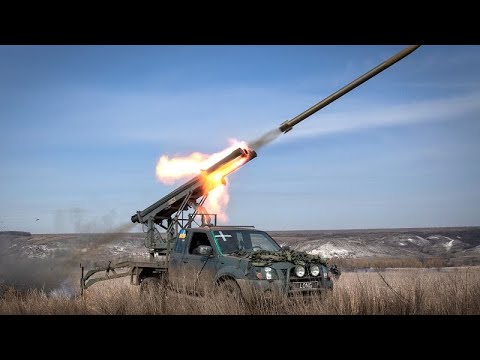
The United States finds itself once again at the crossroads of war and economic stability. In late February 2026 the White House authorised joint strikes with Israel on Iranian targets, assassinating the country’s supreme leader and damaging military and civilian infrastructure. Iran responded by shutting the Strait of Hormuz, the chokepoint through which roughly a fifth of the world’s crude oil travels. In the weeks that followed, global benchmark oil prices surged past $100 per barrel and gasoline in the United States climbed towards $4 per gallon. Economists fear that a prolonged campaign could inflict a painful bout of stagflation – the toxic combination of soaring prices and stagnating growth last seen in the 1970s.
President Donald Trump initially suggested the military campaign would be over within four to five weeks. Those four weeks will expire in late March. Investors and households are watching anxiously to see whether the president will de‑escalate before the economic damage becomes entrenched. The question is not merely whether the conflict is winnable but whether the United States can afford an extended confrontation while its labour market is weakening and inflation remains stubbornly above the Federal Reserve’s target.
A sharp energy price shock
The closure of the Strait of Hormuz has squeezed global oil supplies, sending Brent crude above $100 a barrel and threatening to push it to $150 if the conflict drags on. The International Energy Agency described the disruption as the largest in the history of the global oil market. Tanker operators have hesitated to sail through the chokepoint despite offers of naval escorts, and insurers have demanded higher premiums. The prospect of drones and missile attacks on oil tankers and refineries in Gulf states has added to the sense of peril.
Higher oil prices are feeding directly into consumer inflation. Petrol prices in the United States, which averaged roughly $3 per gallon before the conflict, are poised to reach $4. Aviation fuel and diesel have risen even faster, increasing freight and airline ticket costs. Natural gas prices, which often track oil, are also climbing. Though the United States now produces more oil and gas than it consumes, it remains integrated into global markets: domestic producers are selling at world prices, and any disruption to global supply pushes up domestic costs. Analysts note that every 5 % rise in oil prices adds roughly one‑tenth of a percentage point to inflation.
Weakening labour market
The energy shock has arrived when the jobs market is showing signs of fatigue. Employers unexpectedly cut 92,000 jobs in February, the first negative print since the pandemic, and the unemployment rate has ticked up to 4.4 %. Manufacturers and retailers cite weak demand and higher borrowing costs as reasons for redundancies. Construction activity has slowed as high mortgage rates deter new buyers. Consumer confidence has fallen, and people have begun to trim discretionary spending.
A sluggish jobs market means households are less able to absorb higher living costs. Rising petrol and grocery prices, coupled with stagnant wages, erode real income. Economists warn that if the conflict persists into April the combination of soft employment and high inflation could trigger a classic wage‑price spiral: workers demand higher pay to offset rising prices, firms raise prices to cover wage bills, and inflation expectations become entrenched. In such a scenario the Federal Reserve would be caught between fighting inflation and supporting employment.
Persistent inflation and policy dilemma
Even before the Iran war, core inflation was running around 3 %, above the Federal Reserve’s 2 % target. Shelter costs and services inflation proved sticky despite cooling goods prices. Policymakers were divided over whether to hold rates steady or cut them to support the labour market. The energy shock complicates this calculus. A spike in oil and gas prices boosts headline inflation and risks lifting core inflation through higher transportation and production costs. Yet raising interest rates to curb inflation could further weaken growth and employment.
Analysts at Deutsche Bank argue that the longer oil stays above $100 per barrel, the greater the risk of a sustained stagflationary shock. Simulations by Oxford Economics suggest that if Brent crude averages $140 per barrel for two months, U.S. GDP growth would stall and unemployment would rise as businesses cut back. Even a milder scenario, with oil averaging $100 per barrel, could shave tenths of a percentage point from global growth. Such outcomes would mirror the 1970s, when oil embargoes triggered price spikes and recession.
Financial markets on edge
Equity markets have been whiplashed by war headlines. Shares sank when the conflict began but recovered after the president hinted that the war was “very far ahead” of his four‑week timetable. Investors nonetheless remain nervous: home‑building and banking stocks have underperformed, while defence and energy companies have rallied. Rising energy costs have pushed bond yields higher, reflecting expectations of persistent inflation. Volatility indices have spiked, and safe‑haven assets such as gold have attracted inflows. If the war drags on, corporate earnings could be squeezed by higher costs and softer demand, deepening the market correction.
Why thirty days matters
When President Trump authorised strikes on Iran, he reassured voters that the campaign would be brief. With mid‑term elections looming, his advisers understand that spiralling petrol prices and job losses could erode public support. The political significance of the thirty‑day marker lies in signalling whether the administration can deliver a quick victory or becomes bogged down in an open‑ended conflict. Should hostilities continue into April, markets may conclude that the president is prioritising geopolitical goals over domestic prosperity.
The window is also critical for the Federal Reserve. Central bankers meet in early April to decide whether to adjust interest rates. A ceasefire before then would allow them to look through the temporary oil shock and focus on the labour market. Prolonged fighting, by contrast, could force them to choose between raising rates to contain inflation or cutting them to support growth – a decision reminiscent of the dilemmas faced during the oil crises of the 1970s.
Political and public reactions
Public opinion is deeply polarised. Supporters of the war argue that Iran’s nuclear ambitions and support for militant groups justify decisive action. Critics counter that the attack lacked congressional approval, violated international law, and risks drawing the United States into a protracted quagmire. Many citizens question the competence of the country’s leadership, suggesting that mismanagement at home and abroad has created a climate of perpetual crisis.
Observers warn that war spending exacerbates fiscal strains. The national debt has climbed above $36 trillion, and financing a foreign campaign through borrowing could intensify pressure on bond markets and the dollar. Savers worry that inflation will erode their savings, while borrowers fear higher interest rates. Others see an opportunity to accelerate the transition to renewable energy, arguing that dependence on fossil fuels from the Middle East leaves the economy vulnerable to geopolitical shocks. These voices call for investments in electric vehicles, green infrastructure and domestic energy independence.
Paths forward
Ending the war within the next thirty days could avert the worst economic outcomes. Diplomats and military strategists must work urgently towards a ceasefire that secures the Strait of Hormuz and ends drone and missile attacks. In parallel, the administration could pursue the following measures:
- Release strategic reserves: Drawing from the Strategic Petroleum Reserve can provide temporary relief to fuel markets, signalling that the government will act to stabilise prices.
- Targeted fiscal support: Temporary tax credits or subsidies for low‑income households can cushion the blow of higher energy costs without stoking inflationary pressures. Funding should be offset elsewhere to avoid widening the deficit.
- Investment in resilience: Accelerating investment in renewable energy, domestic oil and gas infrastructure and electricity grids will reduce future vulnerability to external shocks.
- Prudent monetary policy: The Federal Reserve should remain data‑dependent, considering both inflation and employment. A premature rate hike could choke off growth, while a hasty cut could stoke inflation expectations.
- Rebuild alliances: Working with European and Asian partners to secure alternative energy routes and mediate an end to hostilities will distribute the burden of peacekeeping and restore confidence.
And the Conclusion?
The war with Iran has already delivered a stark warning: geopolitical adventures have real economic consequences. A brief campaign may have limited impact, but a drawn‑out conflict threatens to push the United States towards stagflation. Rising oil prices, job losses, and policy dilemmas are not abstract risks but daily realities for families and businesses. With the four‑week timetable closing, the president faces a decision that will define both his legacy and the nation’s economic future. Ending the war quickly, stabilising energy markets and reinvigorating domestic investment are essential steps to avoid repeating the mistakes of the 1970s and to preserve prosperity in the face of uncertainty.