Dateline Returns Widespread REE Mineralisation at Music Valley

Rock chip samples up to 7.1% TREO over wide area
SAN BERNARDINO, CA / ACCESS Newswire / July 15, 2026 / Dateline Resources Limited (ASX:DTR)(OTCQB:DTREF)(FSE:YE1) (Dateline or the Company) is pleased to announce field mapping and sampling updates for the Music Valley Heavy Rare Earth Project (Music Valley), located in Riverside and San Bernardino Counties, California, USA.
The Company's HREE and structural consultants, Tony Mariano Jr and Russell Mason, identified outcropping zones of the targeted Pinto Gneiss unit in all three of the target areas, correlating with the Thorium anomaly identified in the geophysical surveys. Importantly, all 33 samples returned anomalous rare earth results.
In the Southern target area, the Pinto Gneiss outcrops and widespread samples returned assays of 7.13% TREO, 2.32% TREO and 1.07% TREO from samples 650-800 metres apart.
In the NW target area, a cluster of samples over an approximate 200m strike length were highly anomalous in rare earths and associated minerals. Eleven samples were collected that ranged from 1.09% TREO in the northern end to 0.68% TREO.
The Central target area returned a broad range of anomalous rare earth assays up to 0.66% TREO. All of the samples over a wide area were anomalous and require follow up.
Dateline's Managing Director, Stephen Baghdadi, commented:
"These results are a very encouraging first step in Dateline's exploration program at Music Valley. The sampling has confirmed the presence of rare earths at surface across the entire sampled areas, with the NW Target being the biggest and most consistent of the target zones.
"The presence of Y-HREE responses is a lead indicator of heavy rare earths within the broader district. Our next task is to determine whether these signatures reflect zonation within a broader system or separate mineralizing events. Either outcome supports the need for systematic follow-up work across the project."
Field Mapping and Sampling Program
Dateline has completed initial mapping and sampling of the Music Valley HREE target areas, as defined by the recent high resolution magnetic and radiometric surveys. The Company's REE and structural specialists have visited all three of the priority targets, focusing on the areas mapped by the USGS as Pinto Gneiss and containing anomalous radiometric signatures.
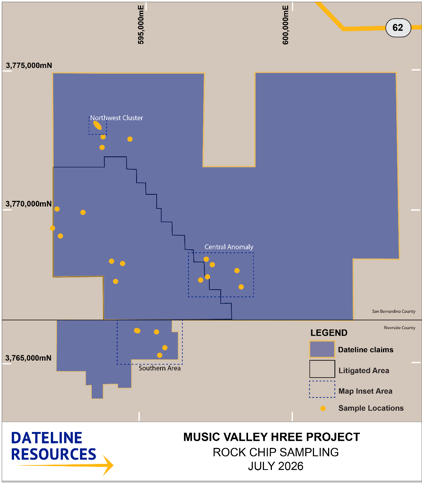
Figure 1: Music Valley Project sampling locations
Rock Chip Assay Results
The highest TREO[1] results from the current sampling program are shown below. TREO values are reported as oxide-equivalent ppm and percentage, calculated from the individual rare earth oxide assays. Magnet REO[2] refers to the percentage of the assay result that comes from rare earths used in permanent magnets.
Table 1: Selected rock chip samples from the Music Valley rock chip sampling program
Sample | TREO ppm | TREO % | Magnet REO % | Pr6O11 | Nd2O3 | Tb4O7 | Dy2O3 | Y2O3 | Th ppm | U ppm |
DC-01 | 10,719 | 1.072 | 31.2% | 559 | 2,030 | 28 | 101 | 307 | 1090 | 16 |
DC-09 | 11,486 | 1.149 | 29.5% | 559 | 2,006 | 34 | 148 | 592 | 1730 | 26 |
DC-9A | 71,274 | 7.127 | 30.5% | 3,685 | 13,297 | 180 | 731 | 2,598 | 10,600 | 141 |
DC-25 | 10,880 | 1.088 | 31.5% | 562 | 2,100 | 26 | 106 | 411 | 1,290 | 34 |
DC-27 | 5,813 | 0.581 | 29.8% | 294 | 1,070 | 12 | 40 | 135 | 685 | 19 |
DC-34 | 6,774 | 0.677 | 30.7% | 346 | 1,283 | 14 | 47 | 152 | 783 | 20 |
DC-35 | 9,546 | 0.955 | 30.3% | 492 | 1,855 | 16 | 52 | 141 | 1,080 | 15 |
DC-36 | 6,265 | 0.626 | 30.1% | 319 | 1,190 | 12 | 42 | 130 | 664 | 8 |
DC-37 | 6,624 | 0.662 | 32.1% | 301 | 1,148 | 28 | 153 | 789 | 701 | 25 |
DC-38 | 6,098 | 0.610 | 32.0% | 308 | 1,138 | 19 | 83 | 300 | 613 | 15 |
DC-47 | 10,677 | 1.068 | 30.8% | 571 | 1,960 | 27 | 111 | 367 | 1,940 | 28 |
DC-47B | 5,833 | 0.583 | 30.0% | 297 | 1,080 | 12 | 48 | 157 | 1,090 | 18 |
DC-49 | 23,201 | 2.320 | 31.9% | 1,269 | 4,456 | 56 | 213 | 601 | 2,240 | 43 |
The sampling program was undertaken as part of the reconnaissance mapping program to field check the various geophysical anomalies. As a first pass exercise in an area that has never been sampled for rare earths before, this is an excellent outcome as all 33 samples returned anomalous rare earth grades.
The mapping program identified the targeted Pinto Gneiss in outcrops that correlated with the USGS regional mapping. These outcrops have a clear correlation with the radiometric anomalies identified in the recent airborne program. The rock chip samples collected all contained anomalous rare earth elements with several samples returning exceptional grades.
Southern Target Area
The southern target area, which is located within the tenements acquired by Dateline in February 2026, was re-visited by Mariano Jr and Mason following an earlier reconnaissance trip in March. The Pinto Gneiss in this area has a number of sub-units with different geological properties and samples were collected from several different gneiss horizons.
[1] TREO (Total Rare Earth Oxide) = La2O3 + CeO2 + Pr6O11 + Nd2O3 + Sm2O3 + Eu2O3 + Gd2O3 + Tb4O7 + Dy2O3 + Ho2O3 + Er2O3 + Tm2O3 + Yb2O3 + Lu2O3 + Y2O3
[2] Magnet REO = Nd2O3 + Pr6O11 + Sm2O3 + Gd2O3 + Tb4O7 + Dy2O3 + Ho2O3
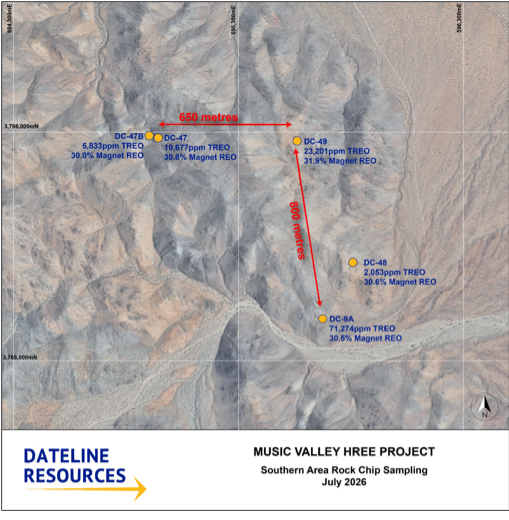
Figure 2: Map of sampled outcrops from the southern target area
The highest grade sample of the program was returned from the southernmost sample, near the southern border of the claims. DC-9A returned a significant assay result of 7.13% TREO that corresponded with a ground radiometric reading of 2,335µR/h, the highest recorded in the program.
The rock chip sample was collected from an outcrop of Pinto Gneiss, as can be seen in Figure 3. In this area, the Pinto Gneiss has large biotite phenocrysts, which differs slightly from some of the other Pinto Gneiss outcrops in the project area.
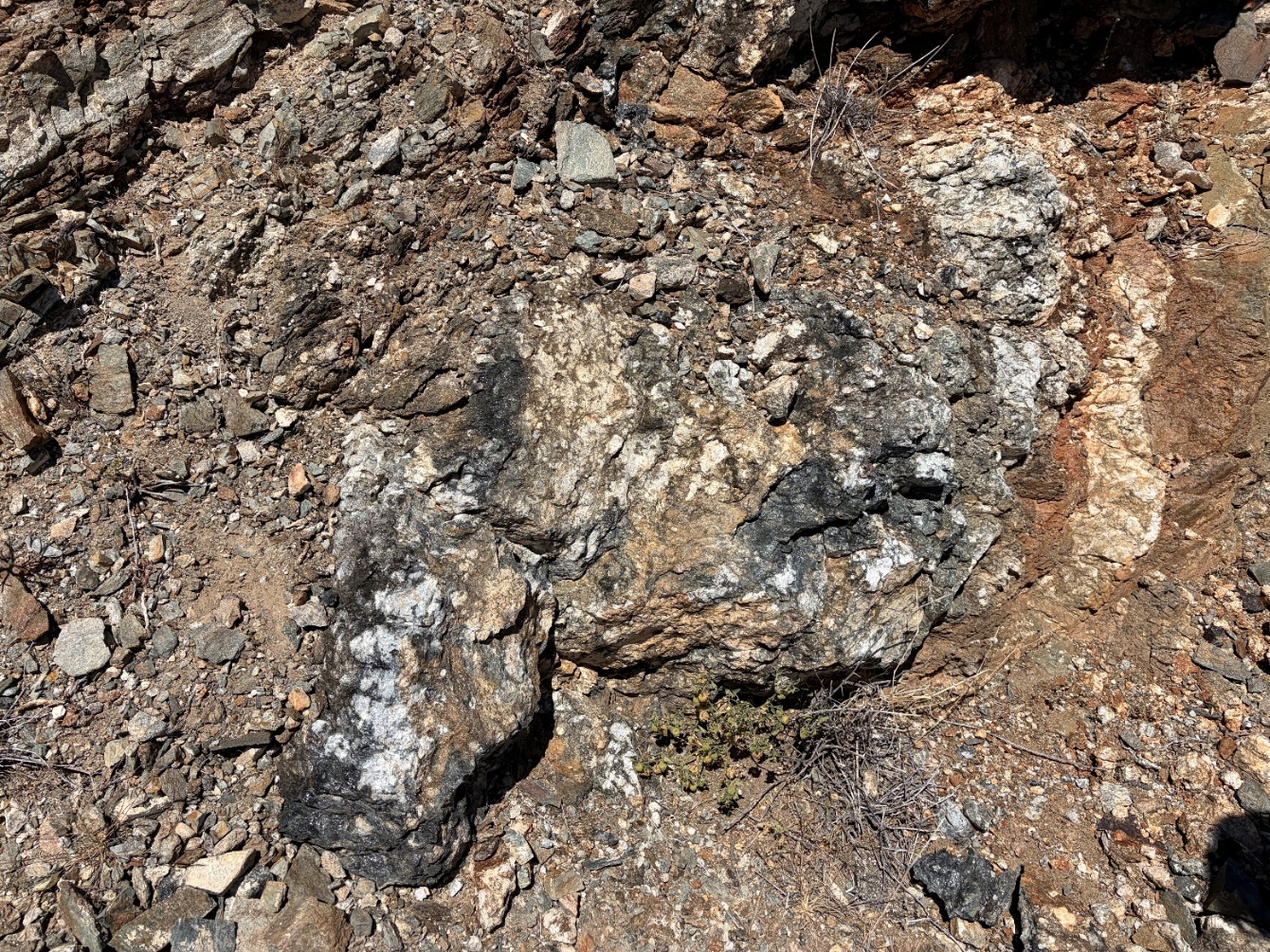
Figure 3: Photo of Pinto Gneiss at outcrop where sample DC-9A was collected
The samples in the Southern Area were collected over a widespread area, with sample DC-49, located 800 metres to the north, returning 2.32% TREO, including 31.9% magnet REOs. A further 650 metres to the west of DC-49, sample DC-47 returned 1.07% TREO from another outcrop. The mapping program is being analyzed to determine the relationship between these three samples to see if they represent one coherent zone or potentially parallel zones.
Technical and Field Interpretation - Southern Target Area
The Southern Target results identify three widely spaced high-grade surface occurrences. DC-9A returned 71,274 ppm TREO (7.13%), DC-49 returned 23,201 ppm TREO (2.32%) and DC-47 returned 10,677 ppm TREO (1.07%). The samples are separated by approximately 650 to 800 metres, indicating a broad area requiring systematic follow-up.
The strongest assays correspond with elevated ground radiometric readings. DC-9A was collected where radiation measured 2,335 µR/h, DC-49 from biotite schist measuring 450 to 560 µR/h and DC-47/47B from an exposed unit measuring 313 to 370 µR/h. This supports the use of radiometrics to refine field targeting.
Field mapping shows REE enrichment in several related lithologies, including biotite-feldspar augen gneiss, coarse-grained biotite schist and pegmatitic material. Further mapping and mineralogical work are required to determine whether these occurrences form one coherent zone, parallel zones or separate mineralised lenses.
DC-9A and DC-49 returned strong rare earth enrichment together with material Y-HREE values. DC-9A returned 2,598 ppm Y2O3, 731 ppm Dy2O3 and 180 ppm Tb4O7, while DC-49 returned 601 ppm Y2O3, 213 ppm Dy2O3 and 56 ppm Tb4O7. These locations are priorities for detailed mapping, infill sampling, petrography and mineralogical studies.
Northwest Target Area
At the Northwest target area, there are extensive exposures of outcropping rock, with little to no cover material in this area. The biotite-rich Pinto Gneiss unit, which was identified by the United States Geological Survey (USGS) as the host unit for HREE mineralisation in the area, was mapped for approximately 200m strike in this area.
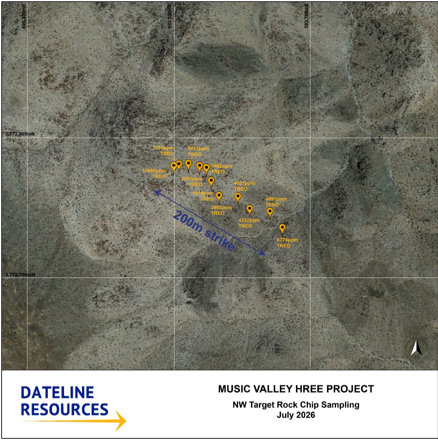
Figure 4: Photos of outcrops from within the anomalous target area in the NW of the project area
Outcrops were analyzed by a scintillometer and pXRF instrument in the field to determine whether they were anomalous. One particular outcropping trend (Figure 4) was traced over 200m of strike and samples were collected from anomalous outcrops about every 30m.
All of the samples collected returned anomalous REE assays, ranging from 1.09% TREO in the north to 0.68% TREO in the south. As with the southern area, the highest ground radiometric reading correlated with the highest-grade assay result.
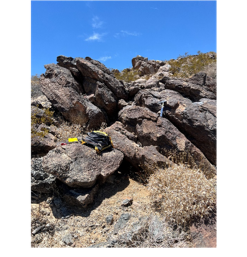
Figure 5: Biotite Gneiss at location where DC-25 was collected, NW Target
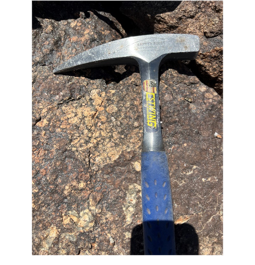
Figure 6: Biotite Gneiss at location where DC-25 was collected, NW Target
Technical and Field Interpretation - NW Target
The NW Target results define a surface trend of anomalous rare earth oxide values over approximately 200 metres of strike. The highest assay returned 10,880 ppm TREO from sample DC-25.
The chondrite-normalized plot shows a pronounced negative europium anomaly across all samples. This suggests the sampled rocks belong to a coherent geochemical population and supports follow-up work to define the controls on REE enrichment.
Sample DC-25 returned the strongest Y-HREE response in the current dataset, including 411 ppm Y2O3, 106 ppm Dy2O3 and 25.8 ppm Tb4O7. This sample will be a priority focus for field checking, petrography and mineralogical work.
Further work is required to determine whether the REE signatures represent zonation within one broader REE-bearing system or separate mineralizing events within the district.
Central Target Area
Six rock chip samples were collected from outcrops over a wide area in the central area. The radiometric survey for this area returned a broader anomaly than the southern and NW target areas and this is reflected in the results for this area. Whilst the tenor of the assay results is not as high as the other areas, all are anomalous over a large area.
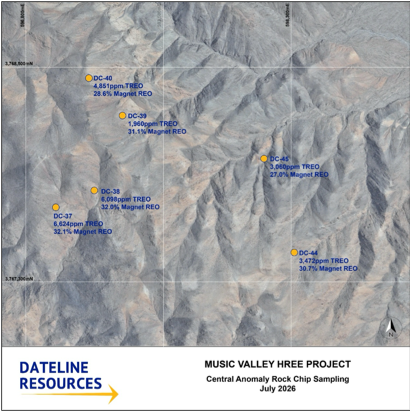
Figure 7: Rock chip sample results from the Central Anomaly at Music Valley
Technical and Field Interpretation - Central Target
The Central Target results define a broad zone of anomalous rare earth mineralisation across a wide area. All six samples returned anomalous TREO values, ranging from 1,960 ppm to 6,624 ppm.
DC-37 returned the strongest Central Target assay at 6,624 ppm TREO (0.66%) and the highest proportion of magnet rare earth oxides at 32.1%. DC-38 returned 6,098 ppm TREO (0.61%), confirming multiple anomalous outcrops within the target area.
DC-37 also returned a strong Y-HREE response, including 789 ppm Y2O3, 153 ppm Dy2O3 and 28 ppm Tb4O7. This location is a priority for field checking, mineralogical work and follow-up sampling.
Field observations indicate the anomalous response is associated mainly with discontinuous biotite-feldspar augen-textured layers near contacts between biotite gneiss and pale gneiss. Mapping and infill sampling are required to test continuity between exposures and define the structural and lithological controls on REE enrichment.
Next Steps
Undertake detailed mapping around the areas that returned highly anomalous results.
Complete infill rock chip and soil sampling across the NW Target and southwestern anomalous areas.
Submit representative samples for mineralogy, including petrography and SEM-based mineral identification.
Integrate assays with airborne radiometric and magnetic data to refine drill targets.
Rank targets for first-pass drill testing, subject to permitting and land access requirements.
For further information relating to this program, please refer to the ASX announcement dated 15 July 2026.
This press release has been authorized for release by the Disclosure Committee of Dateline Resources Limited.
For more information, please contact:
Stephen Baghdadi
Managing Director
+61 2 9375 2353
Andrew Rowell
Corporate & Investor Relations Manager
+61 400 466 226
[email protected]
www.datelineresources.com.au
Follow Dateline on socials:
X - @Dateline_DTR
Truth Social - @dateline_resources
LinkedIn - dateline-resources
YouTube - @dateline.resources
About Dateline Resources Limited
Dateline Resources Limited (ASX: DTR, OTCQB: DTREF, FSE: YE1) is an Australian company focused on mining and exploration in North America. The Company owns 100% of the Colosseum Gold-REE Project in California.
The Colosseum Gold Mine is located in the Walker Lane Trend in East San Bernardino County, California and is located 10km north of Mountain Pass rare earth mine. Drill testing the REE potential at Colosseum has commenced.
On 11 May 2026, Dateline announced that the BFS economics for the Colosseum Gold Project generated a pre-tax NPV5 of US$785 million and a pre-tax IRR of 49.5% using a gold price of US$4,200/oz.
Dateline has also acquired the high-grade Argos Strontium Project, also located in San Bernadino County, California. Argos is reportedly the largest strontium deposit in the U.S. with previous celestite production grading 95%+ SrSO4.
In March 2026, Dateline consolidated the Music Valley Heavy Rare Earth Project in Riverside and San Bernardino Counties, California. The region has known HREE mineralisation from USGS rock chip sampling, however it has not been subjected to modern exploration techniques.
Forward-Looking Statements
This announcement may contain "forward-looking statements" concerning Dateline Resources that are subject to risks and uncertainties. Generally, the words "will", "may", "should", "continue", "believes", "expects", "intends", "anticipates" or similar expressions identify forward-looking statements. These forward-looking statements involve risks and uncertainties that could cause actual results to differ materially from those expressed in the forward-looking statements. Many of these risks and uncertainties relate to factors that are beyond Dateline Resources' ability to control or estimate precisely, such as future market conditions, changes in regulatory environment and the behavior of other market participants. Dateline Resources cannot give any assurance that such forward-looking statements will prove to have been correct. The reader is cautioned not to place undue reliance on these forward-looking statements. Dateline Resources assumes no obligation and does not undertake any obligation to update or revise publicly any of the forward-looking statements set out herein, whether as a result of new information, future events or otherwise, except to the extent legally required.
SOURCE: Dateline Resources Limited
View the original press release on ACCESS Newswire
A.Maldonado--TFWP