Oh, deer: In US capital, 'Bambi' is increasingly unwelcome / Photo: © AFP

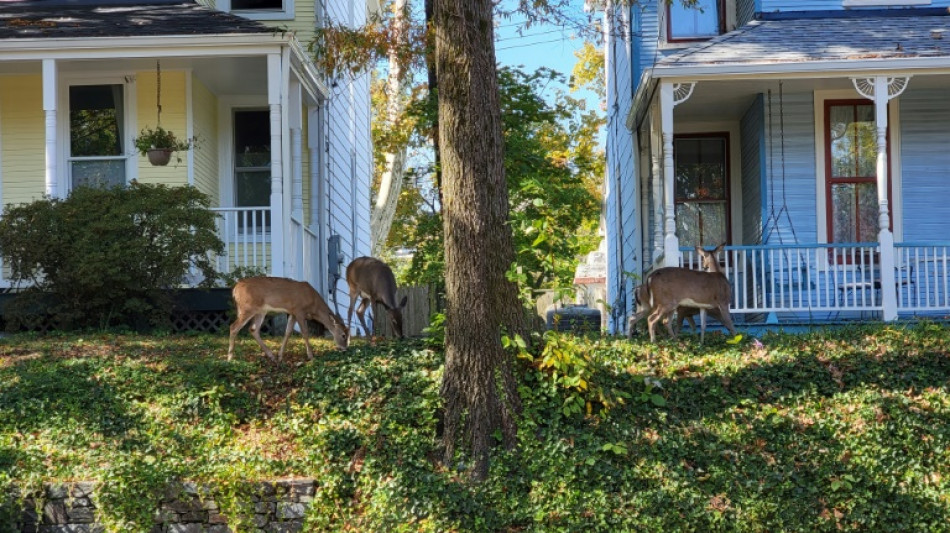
To some, they are a magical sight to behold in the heart of the city -- to others a pest that eats through their gardens, endangers traffic and helps spread tick-borne diseases.
After nearly being wiped out by rampant deforestation and over-hunting in the 19th century, deer have made a stunning comeback across the United States. Estimates place their numbers at greater than 30 million, much of it along the East Coast.
In Washington, deer threaten the future of Rock Creek Park, a "hidden jewel" stretching across 1,754 acres (710 hectares) that offers residents a refuge from daily life in the federal government's seat of power.
The park's towering oaks are nothing short of majestic. But it's not the mature canopy that experts are worried about.
"If this forest were perfectly healthy, we wouldn't be able to see this far," National Park Service (NPS) officer Megan Nortrup told AFP, gesturing to a wide-open clearing just off the trail on a late summer day.
In the absence of their natural predators, white-tailed deer have devoured native plant species essential to local biodiversity, including the saplings needed for forest renewal.
In other words, woods like these could disappear in the next hundred or so years.
Park botanist Ana Chuquin opens the gate of a small plot fenced to keep deer out. It's part of a long-running experiment involving protected plots paired with unprotected controls.
She points out a six-foot-tall (1.8-meter) sapling that has survived only because deer were physically prevented from getting to it.
"All around, you don't see one single sapling this size, so it means that we lost that generation," said Chuquin.
Because deer evolved alongside the region's native plants, they prefer to eat them over non-native invaders like linden viburnum, a garden favorite whose seeds are carried into the park by wind, water and birds.
That's bad news, because local insect species rely on native plants, and the effects of their loss rise up through food webs, imperiling the wider ecosystem.
- Gun-toting biologists -
In response to the hoofed menace, NPS decided in 2013 to begin annual culls.
These take place in winter, at night, with the park sealed off. Biologists trained in firearms use infrared heat scanners and night vision goggles as they thin out the herds.
In 2020, the program was extended to other Washington parks managed by NPS.
At their peak, deer numbered more than 100 per square mile -- far more than the 20 per square mile scientists have determined is a sustainable presence -- but have since been brought down.
During a public comment period, some residents asked the NPS whether, instead of shooting deer, it would be possible to bring back predators like wolves, coyotes and bobcats.
In its official reply, the NPS said that wolves "have home ranges averaging 30 square miles when deer are their primary prey," while the whole of Rock Creek Park is 2.8 square miles (7 square kilometers).
Moreover, it is "impractical for additional predators to be reintroduced... given the possible adverse effects on surrounding rural or suburban residents, especially safety of children and pets," it noted in understated bureaucratic language.
There are tentative signs deer management is making a positive difference for the park, said Chuquin, but she stressed recovery is a long process.
- Urban deer hunting -
A half hour's drive from the city, in Great Falls, Virginia, resident Taylor Chamberlin decided to take matters into his own hands.
He had joined the family real estate business out of college, but soon realized he had another calling.
Armed with either a traditional bow or a crossbow, the self-styled "urban deer hunter" spends his days going door-to-door asking neighbors if they would like help with the deer that devour their gardens.
In a suburban environment, says Chamberlin, "You cannot risk anything other than the perfect shot" -- you don't want deer bleeding out in someone's pool.
Deer are so abundant that the hunting season never ends, and much of the venison from Chamberlin's kills goes to food banks.
Younger people from the city, wary of the impact of mass farming on their health and the environment, have been reaching out to him through social media to learn how they, too, can hunt.
Taking a life is never easy, said the 38-year-old.
But he added that it connects him to the natural world and gives him a greater appreciation for the meat on his plate.
W.Knight--TFWP