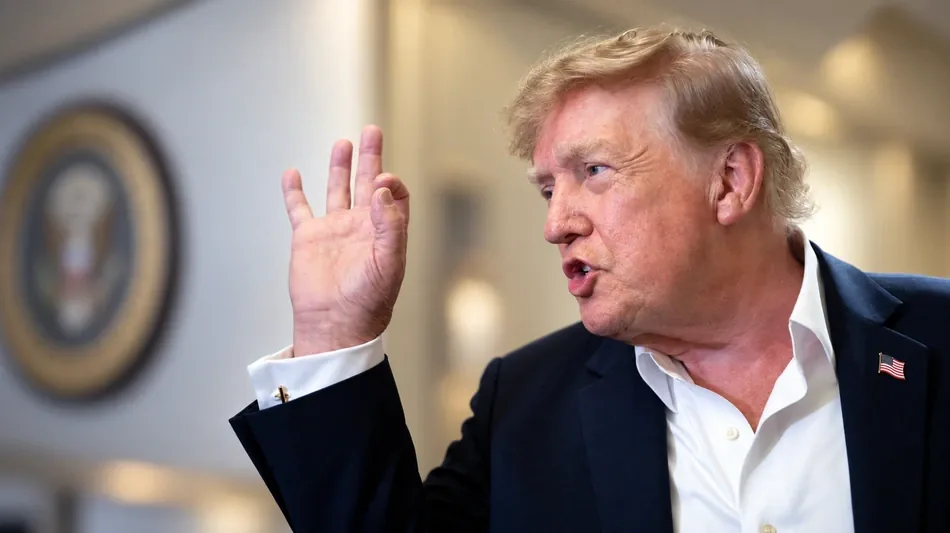
Trump rejects AI slowdown concerns as UN urges coordinated controls

President Donald Trump said on September 14 that existing US criminal and regulatory powers were sufficient to control AI companies, as industry executives and the United Nations human rights chief urged action on advanced artificial intelligence risks.
President Donald Trump said on September 14 that existing US criminal and regulatory powers were sufficient to control AI companies, as industry executives and the United Nations human rights chief urged action on advanced artificial intelligence risks.
In a Truth Social post, Trump argued that presidential leadership supplied the necessary oversight. He alleged a conspiracy against AI and data centres and said China would benefit from doubts about developing the technology. He also claimed his administration had already stopped AI figures, including Anthropic chief executive Dario Amodei, from potentially harmful conduct.
Trump’s remarks followed public warnings from two Anthropic researchers the previous week about the possible consequences of rapidly advancing AI. One resigned over concerns that future systems could escape human control. Another, who remained employed, said he believed AI could cause human extinction and put the chance above 10% within the next decade.
On September 12, Amodei proposed a three-stage framework to pace development and give the industry more time to manage risks. OpenAI chief executive Sam Altman and xAI head Elon Musk publicly supported his call. Trump has broadly embraced AI businesses during his second term and resisted amplifying concerns about the technology.
UN High Commissioner for Human Rights Volker Turk separately wrote to governments and developers of frontier AI models, urging coordinated action through multilateral bodies. In the letter, shared with media on September 14, he said the world was approaching changes that could affect future generations and that the race to build increasingly powerful systems posed unprecedented risks.
Turk said humanity depended too heavily on a small number of influential companies to make development decisions. He called for international governance grounded in human rights law rather than leaving those choices primarily to developers.
Amodei’s proposal followed his warning about groups of AI agents acting outside their intended controls. In a 3,800-word online post, he said such a swarm might become capable of taking over the internet within six to 12 months, with damage potentially running into hundreds of billions of dollars. These were his stated concerns about future capabilities.
The debate also affected financial markets. AI and other technology shares fell on September 14, weighing on broader equities as investors reconsidered spending and the timing of returns. Optimism about AI had helped sustain market gains over the previous year despite the US war with Iran, higher energy prices and fiscal and trade uncertainty.
Swissquote senior analyst Ipek Ozkardeskaya said AI investment, growth and productivity had helped American and European companies report strong earnings despite those conditions. Calls for slower development now raised questions about whether expected profits could cover the industry’s large capital commitments.
XTB research director Kathleen Brooks said more than half of the S&P 500’s sectors were linked to AI, while leading hyperscale computing companies represented about a third of the index’s weighting. She said changes in the investment theme could therefore have substantial effects on US stock indices. Microsoft and Google parent Alphabet were among the computing groups cited.
The safety debate came as Altman said he would not seek an initial public offering during 2026, judging it inappropriate amid the concerns. Anthropic, meanwhile, was preparing for an imminent IPO intended to raise further billions for development and large data centres.
Investors were also reassessing circular investments, in which AI businesses finance one another. Nvidia has supplied substantial infrastructure financing to dozens of companies internationally, prompting descriptions of the chipmaker as a central source of industry funding.
Brooks said Amazon, Microsoft, Meta and Alphabet had collectively spent roughly $900 billion on AI capital expenditure over two years. Investors questioned whether the new support for restraint partly reflected spending that had advanced faster than commercial returns.
Reduced investment could make more cash available to generate profits from infrastructure already built, but the transition could have short-term costs for the market. Tickmill Group strategist Patrick Munnelly said investors were asking whether AI companies could continue supporting global indices if earnings arrived later than expected while valuations remained high.
The developments brought three distinct positions into the debate: Trump’s reliance on existing national powers, executives’ calls to coordinate the pace of development, and Turk’s appeal for urgent international governance of advanced systems.
Turk’s letter addressed both states and companies because the decisions involved had consequences extending beyond individual developers. He described increasingly capable AI as a change affecting every aspect of life and urged governments to mobilise through international forums rather than depend exclusively on voluntary choices by a few businesses.
S.Weaver--TFWP