The Fort Worth Press - Dangerous 'heat stress' has surged worldwide, study shows

USD -
AED 3.672502
AFN 63.494394
ALL 82.257093
AMD 368.069754
ANG 1.790403
AOA 918.000036
ARS 1456.742906
AUD 1.426228
AWG 1.8025
AZN 1.693369
BAM 1.707839
BBD 2.014862
BDT 122.896637
BGN 1.69088
BHD 0.37723
BIF 2983.173098
BMD 1
BND 1.293759
BOB 6.91239
BRL 5.144603
BSD 1.000358
BTN 94.655909
BWP 13.576786
BYN 2.799012
BYR 19600
BZD 2.011981
CAD 1.41539
CDF 2279.999935
CHF 0.80771
CLF 0.022987
CLP 904.750342
CNY 6.769599
CNH 6.77597
COP 3421.08
CRC 453.811158
CUC 1
CUP 26.5
CVE 96.285333
CZK 21.14735
DJF 178.145111
DKK 6.53002
DOP 58.479379
DZD 133.452023
EGP 49.767206
ERN 15
ETB 161.283979
EUR 0.8735
FJD 2.24775
FKP 0.755695
GBP 0.754125
GEL 2.649863
GGP 0.755695
GHS 11.229578
GIP 0.755695
GMD 73.506476
GNF 8765.357714
GTQ 7.628428
GYD 209.275317
HKD 7.839975
HNL 26.762371
HRK 6.583295
HTG 130.677006
HUF 307.926015
IDR 17827.9
ILS 2.971349
IMP 0.755695
INR 94.53735
IQD 1310.524891
IRR 1374999.999747
ISK 125.790421
JEP 0.755695
JMD 158.06984
JOD 0.709036
JPY 161.245496
KES 129.420022
KGS 87.449754
KHR 4016.800706
KMF 429.502737
KPW 900.00035
KRW 1536.645016
KWD 0.30858
KYD 0.833661
KZT 487.587213
LAK 22093.277098
LBP 89584.959701
LKR 334.503445
LRD 182.07459
LSL 16.436923
LTL 2.95274
LVL 0.60489
LYD 6.413783
MAD 9.325876
MDL 17.591841
MGA 4219.387176
MKD 53.850891
MMK 2099.917974
MNT 3579.231668
MOP 8.077961
MRU 40.000349
MUR 47.810513
MVR 15.450034
MWK 1734.646653
MXN 17.316565
MYR 4.149702
MZN 63.909503
NAD 16.436923
NGN 1367.089732
NIO 36.814852
NOK 9.67945
NPR 151.449105
NZD 1.74403
OMR 0.384522
PAB 1.000358
PEN 3.385028
PGK 4.456902
PHP 61.101503
PKR 278.233656
PLN 3.73576
PYG 6098.551332
QAR 3.646906
RON 4.576099
RSD 102.519478
RUB 74.250969
RWF 1465.171718
SAR 3.753791
SBD 8.061424
SCR 13.674406
SDG 600.498235
SEK 9.601765
SGD 1.292715
SHP 0.746601
SLE 24.749609
SLL 20969.503664
SOS 571.695527
SRD 37.430496
STD 20697.981008
STN 21.39383
SVC 8.753133
SYP 110.532098
SZL 16.433081
THB 32.907498
TJS 9.278635
TMT 3.5
TND 2.957937
TOP 2.40776
TRY 46.462199
TTD 6.784027
TWD 31.625501
TZS 2628.231978
UAH 44.991835
UGX 3651.795772
UYU 40.002096
UZS 11989.276889
VES 606.63266
VND 26320
VUV 118.352303
WST 2.751796
XAF 572.793161
XAG 0.015146
XAU 0.000238
XCD 2.70255
XCG 1.802932
XDR 0.71169
XOF 572.793161
XPF 104.139924
YER 238.603027
ZAR 16.38569
ZMK 9001.198816
ZMW 17.731555
ZWL 321.999592
  • CMSC

    -0.1700

    22.2

    -0.77%

  • BTI

    0.3450

    59.255

    +0.58%

  • BCC

    -0.3790

    74.281

    -0.51%

  • GSK

    0.4100

    51.08

    +0.8%

  • BCE

    -0.3700

    22.91

    -1.62%

  • RYCEF

    0.1900

    18.45

    +1.03%

  • NGG

    1.8100

    81.25

    +2.23%

  • RIO

    -0.5700

    99.51

    -0.57%

  • RBGPF

    0.3600

    61.5

    +0.59%

  • JRI

    -0.1000

    12.57

    -0.8%

  • BP

    0.6900

    39.79

    +1.73%

  • RELX

    -0.3620

    30.818

    -1.17%

  • VOD

    -0.1350

    14.165

    -0.95%

  • CMSD

    -0.1850

    22.105

    -0.84%

  • AZN

    2.2000

    177.13

    +1.24%

Dangerous 'heat stress' has surged worldwide, study shows
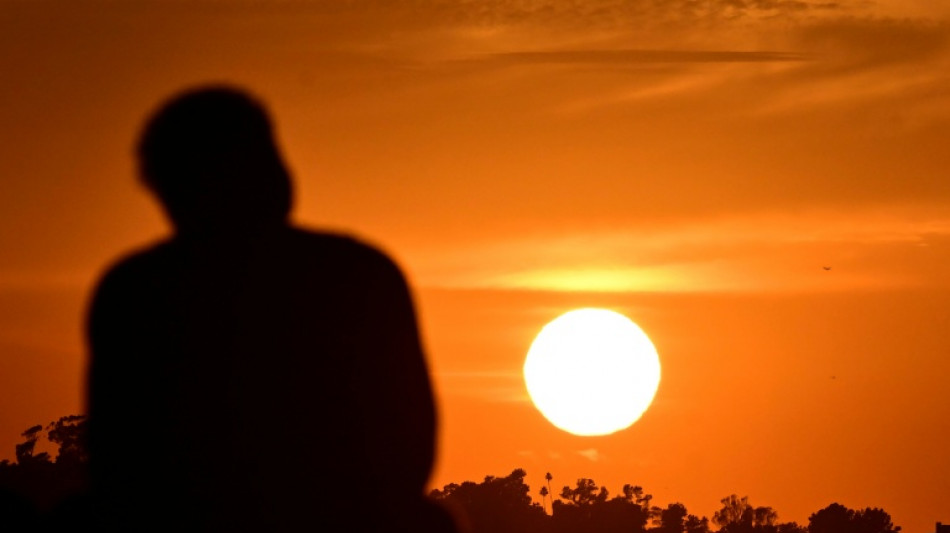
Dangerous 'heat stress' has surged worldwide, study shows / Photo: © AFP/File

Dangerous 'heat stress' has surged worldwide, study shows

The number of people exposed to dangerous heat stress worldwide has risen sharply over the last half century propelled by climate change, according to a study released on Monday as Europe sweltered through a punishing heatwave.

Text size:

Heat stress -- the name given to the hazardous build-up of body heat caused by soaring temperatures, humidity and other factors -- is one of the most common ways that weather kills people.

The new study, published in the journal Nature Climate Change, tracked how heat stress levels surged between the 1970s and 2024.

"On every continent, strong to extreme heat stress is now more frequent," lead study author Rebecca Emerton, of the European Centre for Medium-Range Weather Forecasts, told AFP.

In the 1970s, for example, 16 percent of the world's population experienced at least one day of extreme heat stress -- when the "feels-like" temperature was at least 46C.

Fifty years later, the rate has risen to 22 percent.

"That might not sound like so much," Emerton said.

"But that's an extra approximately one billion people that are seeing at least some extreme heat stress now that wouldn't have done in the 1970s," she added.

The study used the Universal Thermal Climate Index (UTCI), which represents the temperature it "feels like", by including factors such as humidity, wind, radiation and how the human body responds to heat.

The daily average UTCI has been rising as heat stress events become more frequent, severe and longer-lasting due to human-driven global warming, the research found.

Some countries, including Spain, Portugal, Italy and France, are now experiencing "feels-like" temperatures up to five degrees hotter than they did in the 1970s, Emerton said.

In France on Monday, two children died during the country's second exceptionally intense heatwave of the year.

Heat stress is also "expanding into areas of the globe where historically it's not been experienced", Emerton said.

For example, very strong heat stress with a "feels-like" temperature of at least 38C has now reached parts of North America, the UK and Scandinavia, she said.

The researchers also tracked the global rise of unrelentingly hot nights.

During nights when "you can't get any relief, and your body can't cool down, that becomes very dangerous for people's health, particularly for vulnerable people", Emerton said.

Most of the world has seen increases in the number of tropical nights, when the "feels-like" temperature does not get below 20C, the researchers found.

The study only looked at data up to 2024, however Emerton said the heatwaves already pummelling Europe this year suggest the trend has been continuing.

W.Lane--TFWP