The Fort Worth Press - Battered by climate change, Latin America must brace for worse: report

USD -
AED 3.672497
AFN 65.000299
ALL 79.569641
AMD 363.409858
ANG 1.790365
AOA 918.000006
ARS 1507.786404
AUD 1.402003
AWG 1.80125
AZN 1.700088
BAM 1.695609
BBD 2.01466
BDT 123.160418
BGN 1.683441
BHD 0.377118
BIF 2991.820156
BMD 1
BND 1.273738
BOB 10.998357
BRL 5.144898
BSD 1.000308
BTN 95.98391
BWP 13.567066
BYN 3.037656
BYR 19600
BZD 2.011747
CAD 1.39366
CDF 2312.503214
CHF 0.818501
CLF 0.024154
CLP 953.749848
CNY 6.71145
CNH 6.70591
COP 3127.62
CRC 447.438348
CUC 1
CUP 26.5
CVE 95.595821
CZK 21.07295
DJF 178.127262
DKK 6.47764
DOP 59.048684
DZD 133.877982
EGP 52.198901
ERN 15
ETB 163.385076
EUR 0.86655
FJD 2.21295
FKP 0.741937
GBP 0.743145
GEL 2.597171
GGP 0.741937
GHS 11.488194
GIP 0.741937
GMD 73.503157
GNF 8795.314945
GTQ 7.636255
GYD 209.277425
HKD 7.844699
HNL 26.847168
HRK 6.5298
HTG 130.738787
HUF 315.586989
IDR 17687
ILS 3.027498
IMP 0.741937
INR 95.907349
IQD 1310.410896
IRR 1374599.999914
ISK 121.140073
JEP 0.741937
JMD 157.856864
JOD 0.709008
JPY 155.045019
KES 129.501832
KGS 87.449895
KHR 4050.422208
KMF 427.000011
KPW 900.000318
KRW 1367.304993
KWD 0.30854
KYD 0.833583
KZT 444.773881
LAK 22392.336201
LBP 89575.662472
LKR 331.544497
LRD 173.548166
LSL 16.285389
LTL 2.95274
LVL 0.60489
LYD 6.353115
MAD 9.432659
MDL 17.439779
MGA 4325.19127
MKD 53.344315
MMK 2099.62457
MNT 3595.075141
MOP 8.082447
MRU 40.051151
MUR 47.290362
MVR 15.389513
MWK 1734.543043
MXN 17.13729
MYR 4.044802
MZN 63.909789
NAD 16.285247
NGN 1326.92021
NIO 36.811146
NOK 9.352695
NPR 153.579928
NZD 1.735345
OMR 0.384499
PAB 1.000282
PEN 3.355918
PGK 4.522953
PHP 62.718023
PKR 277.25311
PLN 3.775165
PYG 5918.765443
QAR 3.636395
RON 4.561303
RSD 101.694019
RUB 84.330137
RWF 1475.913668
SAR 3.753075
SBD 8.03625
SCR 13.676962
SDG 601.498266
SEK 9.76976
SGD 1.27315
SHP 0.742225
SLE 24.639846
SLL 20969.491881
SOS 571.673797
SRD 37.752501
STD 20697.981008
STN 21.240534
SVC 8.752834
SYP 13002.000254
SZL 16.283395
THB 33.229499
TJS 9.226022
TMT 3.51
TND 2.928519
TOP 2.40776
TRY 48.657935
TTD 6.782056
TWD 31.7655
TZS 2645.002972
UAH 44.609389
UGX 3916.077853
UYU 40.244484
UZS 11793.315705
VES 841.184029
VND 25998.5
VUV 118.157011
WST 2.736734
XAF 568.419469
XAG 0.01544
XAU 0.00023
XCD 2.70255
XCG 1.802758
XDR 0.707052
XOF 568.419469
XPF 103.393717
YER 236.497564
ZAR 16.25115
ZMK 9001.19823
ZMW 19.630588
ZWL 321.999592
SSP 5655.283496
MXV 1.943135
  • RYCEF

    0.2600

    19.3

    +1.35%

  • CMSC

    0.1500

    20.47

    +0.73%

  • BTI

    -0.1350

    56.385

    -0.24%

  • NGG

    1.5000

    76.43

    +1.96%

  • RBGPF

    0.0000

    69.99

    0%

  • GSK

    0.1950

    50.205

    +0.39%

  • VOD

    -0.1050

    17.575

    -0.6%

  • BP

    -1.1200

    45.84

    -2.44%

  • RIO

    -0.0950

    97.165

    -0.1%

  • BCE

    -0.2950

    22.605

    -1.31%

  • CMSD

    0.1800

    20.25

    +0.89%

  • RELX

    0.1750

    34.395

    +0.51%

  • JRI

    0.0300

    11.65

    +0.26%

  • BCC

    0.1950

    76.125

    +0.26%

  • AZN

    1.5500

    163.4

    +0.95%

Battered by climate change, Latin America must brace for worse: report
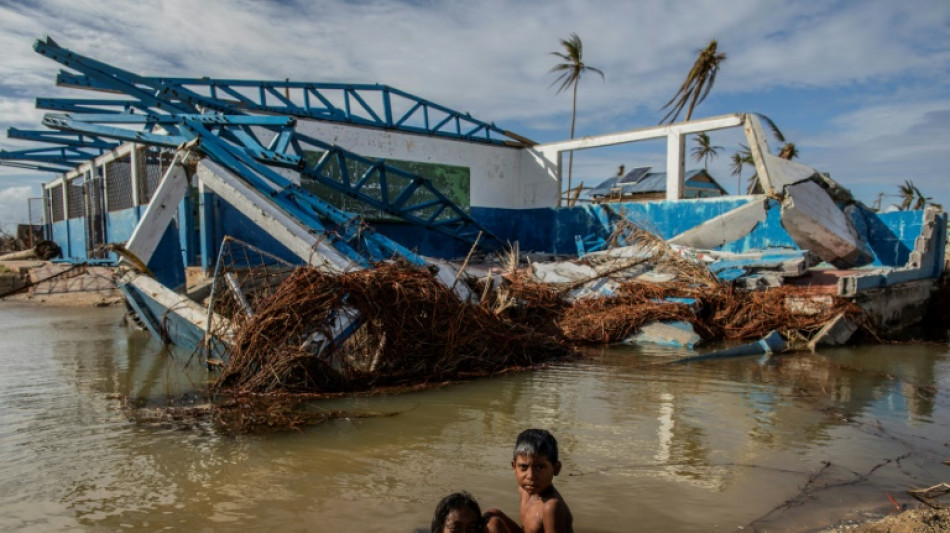
Battered by climate change, Latin America must brace for worse: report / Photo: © AFP/File

Battered by climate change, Latin America must brace for worse: report

Floods, heat waves and the longest drought in 1,000 years: Latin America is grappling with devastating climate change impacts that will only get worse, a World Meteorological Organization report warned Friday.

Text size:

In its State of the Climate report for Latin America and the Caribbean (LAC) for 2021, the WMO said ecosystems, food and water, human health and welfare were all taking a battering.

Glaciers in the tropical Andes have lost more than 30 percent of their area in less than 50 years, increasing the risk of water scarcity in many regions, it said.

Sea levels continued to rise at a faster rate than globally, and the so-called Central Chile Mega Drought -- 13 years and running -- is the longest in at least 1,000 years.

Meanwhile, deforestation rates "were the highest since 2009, a blow for both the environment and climate change mitigation," said the report.

Brazilian Amazon deforestation doubled from the 2009-2018 average, with 22 percent more forest area lost in 2021 than the previous year.

The Amazon provides oxygen-producing and carbon-trapping functions that are crucial not only for the region but for the world.

- 'Decades of progress' stalled -

The report also documented the third-highest number -- 21 -- of named storms on record for the 2021 Atlantic hurricane season, and extreme rainfall that caused hundreds of fatalities and destroyed or damaged tens of thousands of homes.

"Increasing sea-level rise and ocean warming are expected to continue to affect coastal livelihoods, tourism, health, food, energy, and water security, particularly in small islands and Central American countries," said WMO Secretary General Petteri Taalas.

"For many Andean cities, melting glaciers represent the loss of a significant source of freshwater... for domestic use, irrigation and hydroelectric power."

Worsening climate change, compounded by the impacts of the coronavirus pandemic, have "stalled decades of progress against poverty, food insecurity and the reduction of inequality in the region," added Mario Cimoli of the Economic Commission for Latin America and the Caribbean.

In Guatemala, El Salvador and Nicaragua, 7.7 million people experienced high levels of food insecurity in 2021.

The LAC region had registered an average rate of temperature increase of about 0.2 degrees Celsius per decade between 1991 and 2021, said the report -- double the 1961-1990 rate.

"Unfortunately, greater impact is in store for the region as both the atmosphere and ocean continue to rapidly change," said a WMO press release.

"Food and water supplies will be disrupted. Towns and cities and the infrastructure required to sustain them will be increasingly at risk."

The region was in urgent need of early warning systems to help it adapt to climate extremes, said the WMO.

X.Silva--TFWP