Italian paper prints fully-AI edition, but not to 'kill' journalism / Photo: © AFP/File

In a world first, an Italian newspaper is printing a fully AI-generated edition for a month in what its director said Thursday was an experiment to "revitalise journalism, not to kill it".
Il Foglio, a daily broadsheet with an irreverent touch and a circulation of about 29,000, says it is the first newspaper in the world to print entire editions created through artificial intelligence, a nascent technology that is rapidly changing how newsrooms operate.
It began on Tuesday producing a four-page daily AI edition in print and online, alongside its normal edition, featuring about 22 articles and three editorials.
Put simply, the newspaper's 20-odd journalists ask a version of OpenAI's ChatGPT chatbot to write a story on a specific subject in a specific tone, and it produces a text using information scraped off the internet.
Examples this week included an analysis of Prime Minister Giorgia Meloni's speeches, an editorial on the recent phone call between Donald Trump and Vladimir Putin -- and a fashion story.
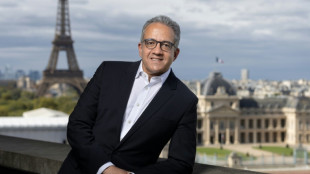
Il Foglio's director, Claudio Cerasa, explained to AFP the idea behind the project and how it is going.
- What do you want to accomplish with this? -
"The purpose is twofold. On the one hand, to move theory into practice. On the other hand, it's to test ourselves and thus understand what the limits of AI are, but also the opportunities, the boundaries that must be overcome and those that cannot be.
"All this can spring from a special newspaper like ours, because ours is a newspaper that has irreverent, ironic, creative writing. We do things that are not easily reproducible with a machine.
"It was a desire to flaunt our being special and experiment with something that no one in the world has experimented with, in a disruptive way, creating debate, but above all, first attempting ourselves to understand how AI can be integrated with natural intelligence."
- How does the process work in practice? -
"In the editorial meeting, many topics come up. Some of these topics are then covered not only by the normal newspaper, but also by the artificial newspaper.
"Every question asked to AI contains a request for a theme... a request for a tone: respectful, irreverent, scandalous, provocative. In the end we ask it to have the style of the paper.
"If there are too many mistakes, we change articles (start a new one). If there are just few errors, though, we leave them, because we also want to understand what the limits are."
- What lessons have you learned from the first few days? -
"Artificial intelligence exceeds all expectations. We have learned it can do things that can compete with what a human does, but we have learned that in the long run competition must create greater efficiency.
"Innovation must be accepted, because you can't stop it, it must be understood, governed, and turned into an opportunity for growth.
"If one day there's a demand for articles made only with AI, it must be accepted. But that demand must increase journalists' creativity, because journalists will have to start getting used to not doing things that a machine could.
"So it's a way to revitalise journalism, not to kill it."
- Are journalists in the newsroom worried? -
"No, everyone is entertained, everyone is curious and among other things, it's interesting that with this experiment we're reaching a much larger audience. There are many people who, thanks to AI, are discovering the traditional paper. The first day we had a 60 percent rise in sales.
"It's no coincidence that no major newspaper has thought of (doing) it, because it is obviously scary. Only a newspaper like ours, which is somewhat unique, can afford to do an experiment like this."
He added: "The articles written by human beings are better, because they always have something more, they always have an element of creativity, of connection, of making unpredictable links that AI does not have."
- What are readers saying? -
"The readers are 90 percent entertained, 10 percent worried because they say 'Make sure you never leave your natural intelligence because you are better.' But there's no one who says the operation is stupid and senseless.
"Everyone has understood the spirit."
A.Williams--TFWP