The Fort Worth Press - Study reveals how Earth's orbit controls ice ages

USD -
AED 3.672498
AFN 66.189861
ALL 82.308739
AMD 381.101852
ANG 1.790403
AOA 916.999547
ARS 1449.268601
AUD 1.506557
AWG 1.8025
AZN 1.695316
BAM 1.668209
BBD 2.011916
BDT 122.169244
BGN 1.6672
BHD 0.377035
BIF 2953.637244
BMD 1
BND 1.291379
BOB 6.902993
BRL 5.551498
BSD 0.998878
BTN 89.50329
BWP 14.050486
BYN 2.935821
BYR 19600
BZD 2.009016
CAD 1.377585
CDF 2558.556157
CHF 0.794305
CLF 0.023214
CLP 910.69048
CNY 7.04095
CNH 7.032575
COP 3830.4
CRC 498.893291
CUC 1
CUP 26.5
CVE 94.051468
CZK 20.725804
DJF 177.880699
DKK 6.365695
DOP 62.572768
DZD 129.783354
EGP 47.456197
ERN 15
ETB 155.183896
EUR 0.85228
FJD 2.28735
FKP 0.750114
GBP 0.745305
GEL 2.684986
GGP 0.750114
GHS 11.473145
GIP 0.750114
GMD 73.000281
GNF 8731.773266
GTQ 7.654449
GYD 208.991888
HKD 7.77914
HNL 26.315879
HRK 6.419894
HTG 130.971776
HUF 329.432504
IDR 16785.55
ILS 3.209245
IMP 0.750114
INR 89.617976
IQD 1308.603329
IRR 42100.000086
ISK 125.459681
JEP 0.750114
JMD 159.835209
JOD 0.70896
JPY 157.4965
KES 129.009876
KGS 87.450192
KHR 4008.904887
KMF 420.000025
KPW 899.999969
KRW 1480.620333
KWD 0.30755
KYD 0.832484
KZT 516.941816
LAK 21634.83067
LBP 89452.454975
LKR 309.276152
LRD 176.805994
LSL 16.757292
LTL 2.95274
LVL 0.60489
LYD 5.414465
MAD 9.156424
MDL 16.911247
MGA 4542.76003
MKD 52.46135
MMK 2100.312258
MNT 3551.223311
MOP 8.006346
MRU 39.977141
MUR 46.170356
MVR 15.449838
MWK 1732.151158
MXN 18.00365
MYR 4.076981
MZN 63.907172
NAD 16.757577
NGN 1458.929593
NIO 36.762668
NOK 10.136605
NPR 143.207097
NZD 1.729675
OMR 0.384501
PAB 0.9989
PEN 3.363983
PGK 4.249457
PHP 58.789501
PKR 279.869756
PLN 3.58449
PYG 6701.551925
QAR 3.641792
RON 4.334981
RSD 100.038982
RUB 79.275995
RWF 1454.433797
SAR 3.750698
SBD 8.146749
SCR 13.9235
SDG 601.499323
SEK 9.261735
SGD 1.29076
SHP 0.750259
SLE 24.049673
SLL 20969.503664
SOS 569.859135
SRD 38.441498
STD 20697.981008
STN 20.897483
SVC 8.740228
SYP 11058.38145
SZL 16.755159
THB 31.179501
TJS 9.205089
TMT 3.5
TND 2.923942
TOP 2.40776
TRY 42.807202
TTD 6.780138
TWD 31.511972
TZS 2483.481013
UAH 42.236154
UGX 3573.0431
UYU 39.219031
UZS 12008.597675
VES 282.15965
VND 26334.5
VUV 120.603378
WST 2.787816
XAF 559.492159
XAG 0.014521
XAU 0.000227
XCD 2.70255
XCG 1.800332
XDR 0.695829
XOF 559.492159
XPF 101.722094
YER 238.401933
ZAR 16.71335
ZMK 9001.199154
ZMW 22.600359
ZWL 321.999592
  • SCS

    0.0200

    16.14

    +0.12%

  • RYCEF

    0.2800

    15.68

    +1.79%

  • CMSD

    -0.0300

    23.25

    -0.13%

  • NGG

    -0.2800

    76.11

    -0.37%

  • VOD

    0.0400

    12.84

    +0.31%

  • RIO

    0.6900

    78.32

    +0.88%

  • CMSC

    -0.1200

    23.17

    -0.52%

  • GSK

    0.3200

    48.61

    +0.66%

  • RBGPF

    0.0000

    80.22

    0%

  • AZN

    0.7500

    91.36

    +0.82%

  • BCC

    -2.9300

    74.77

    -3.92%

  • RELX

    0.0800

    40.73

    +0.2%

  • JRI

    -0.0500

    13.38

    -0.37%

  • BCE

    -0.0100

    22.84

    -0.04%

  • BTI

    -0.5900

    56.45

    -1.05%

  • BP

    0.6300

    33.94

    +1.86%

Study reveals how Earth's orbit controls ice ages
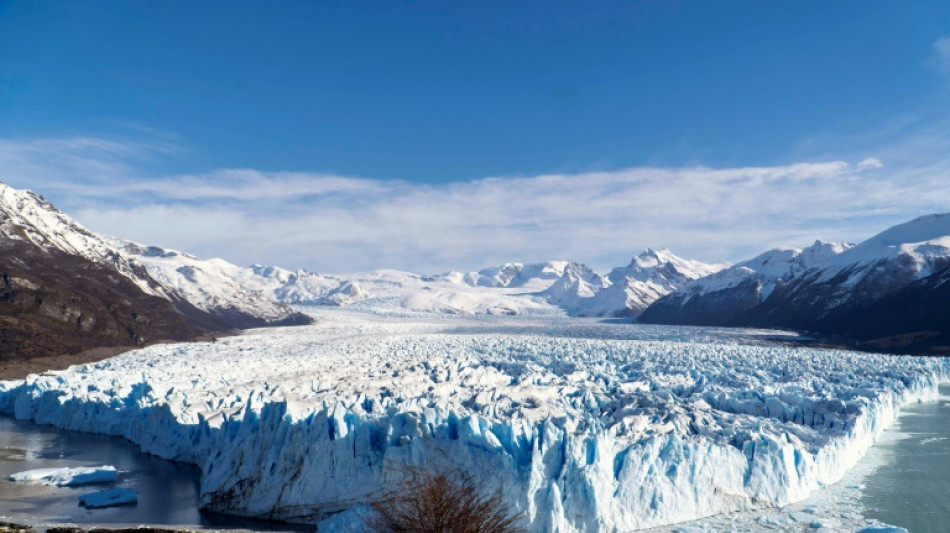
Study reveals how Earth's orbit controls ice ages / Photo: © AFP

Study reveals how Earth's orbit controls ice ages

The Earth's next ice age is expected to begin in about 11,000 years -- unless human-caused global warming disrupts natural cycles.

Text size:

That's according to a new study published Thursday in Science, which analyzed how subtle shifts in Earth's orbit around the Sun have historically triggered massive climate changes.

A research team examined a million-year record of climate change, focusing on land-based ice sheets across the Northern Hemisphere and deep ocean temperatures.

They then paired this data with small but cyclical variations in Earth's orbital patterns.

"For many years, the difficulty in answering how small changes in Earth's orbit around the Sun translate to large shifts between glacial and interglacial states has been a central theme in paleoclimate research," lead author Stephen Barker, a professor at Cardiff University, told AFP.

Earth has long alternated between ice ages and warmer interglacial periods, with the last glaciation ending approximately 11,700 years ago. This transition marked the beginning of the Holocene epoch, an era of relative climate stability that enabled early human societies to shift from nomadic hunting and gathering to settled agriculture.

Scientists have long recognized a connection between Earth's orbit and ice ages. However, due to challenges in accurately dating climate changes that occurred so far in the past, they struggled to pinpoint which orbital parameters were responsible for starting and ending these glacial cycles.

According to Barker, the key breakthrough came from analyzing the "shape" of the ancient climate record -- the curves showing how temperatures rose and fell over time -- rather than just the timing of ice age transitions.

This approach allowed the team to determine how the three orbital factors -- tilt, wobble, and the shape of Earth's orbit around the Sun -- interact to drive ice age cycles over the past 900,000 years.

Barker said that without the Industrial Revolution, assuming fossil fuels had never been burned, "we would expect a glaciation to occur within the next 11,000 years, and it would end in 66,000 years' time."

Co-author Lorraine Lisiecki, a professor at the University of California, Santa Barbara, emphasized the significance of the study, stating that it "confirms the natural climate change cycles we observe on Earth over tens of thousands of years are largely predictable and not random or chaotic."

However, Barker strongly cautioned against interpreting the findings to suggest that human-caused climate change is beneficial.

Carbon dioxide levels have nearly doubled since the Industrial Revolution, and if emissions remain unchecked, "then in around 8,000 years' time, Antarctica would have melted, leading to around 70 meters of sea-level rise," said Barker.

"Instead of there being glaciers, you'll be underwater," he warned.

Looking ahead, the research team aims to expand on their findings by investigating the long-term impact of human-driven climate change and how it may reshape the planet's natural climate cycles.

B.Martinez--TFWP