The Fort Worth Press - How plastic pollution poses challenge for Canada marine conservation

USD -
AED 3.673042
AFN 63.503991
ALL 82.403989
AMD 368.150403
ANG 1.790403
AOA 918.000367
ARS 1465.449815
AUD 1.42575
AWG 1.8025
AZN 1.70397
BAM 1.705709
BBD 2.013483
BDT 122.708482
BGN 1.69088
BHD 0.37702
BIF 2985
BMD 1
BND 1.290663
BOB 6.90816
BRL 5.152304
BSD 0.999721
BTN 94.239742
BWP 13.585663
BYN 2.777729
BYR 19600
BZD 2.010527
CAD 1.415225
CDF 2280.000362
CHF 0.807055
CLF 0.02293
CLP 902.460396
CNY 6.769604
CNH 6.783725
COP 3452.68
CRC 453.506829
CUC 1
CUP 26.5
CVE 96.403894
CZK 21.091104
DJF 177.720393
DKK 6.516504
DOP 58.403884
DZD 133.34504
EGP 49.986489
ERN 15
ETB 158.37504
EUR 0.871881
FJD 2.235504
FKP 0.755711
GBP 0.755512
GEL 2.650391
GGP 0.755711
GHS 11.22504
GIP 0.755711
GMD 73.503851
GNF 8775.000355
GTQ 7.625892
GYD 209.119888
HKD 7.83685
HNL 26.68504
HRK 6.568104
HTG 130.583803
HUF 306.820388
IDR 17826.3
ILS 2.95976
IMP 0.755711
INR 94.330504
IQD 1310
IRR 1375000.000352
ISK 125.530386
JEP 0.755711
JMD 157.959917
JOD 0.70904
JPY 161.30504
KES 129.403801
KGS 87.450384
KHR 4010.00035
KMF 429.503794
KPW 900.00035
KRW 1527.650383
KWD 0.30793
KYD 0.833035
KZT 487.855928
LAK 22055.000349
LBP 89550.000349
LKR 333.641485
LRD 182.150382
LSL 16.405039
LTL 2.95274
LVL 0.60489
LYD 6.375039
MAD 9.225039
MDL 17.654036
MGA 4200.000347
MKD 53.732839
MMK 2099.479867
MNT 3580.422334
MOP 8.070939
MRU 40.060379
MUR 47.850378
MVR 15.450378
MWK 1737.000345
MXN 17.326504
MYR 4.137904
MZN 63.910377
NAD 16.403727
NGN 1360.440377
NIO 36.610377
NOK 9.680204
NPR 150.787532
NZD 1.741735
OMR 0.384983
PAB 0.999725
PEN 3.384039
PGK 4.38775
PHP 60.716504
PKR 278.325038
PLN 3.71375
PYG 6138.96617
QAR 3.640504
RON 4.568104
RSD 102.170373
RUB 73.103247
RWF 1464
SAR 3.74824
SBD 8.061424
SCR 13.683262
SDG 600.503676
SEK 9.57882
SGD 1.292404
SHP 0.746601
SLE 24.750371
SLL 20969.503664
SOS 571.503662
SRD 37.402504
STD 20697.981008
STN 21.4
SVC 8.747449
SYP 110.532098
SZL 16.403649
THB 32.890369
TJS 9.272075
TMT 3.5
TND 2.91175
TOP 2.40776
TRY 46.438204
TTD 6.779085
TWD 31.715038
TZS 2630.985038
UAH 44.909735
UGX 3638.520172
UYU 39.96965
UZS 12005.000334
VES 606.63266
VND 26310
VUV 118.132932
WST 2.751795
XAF 572.078806
XAG 0.015419
XAU 0.00024
XCD 2.70255
XCG 1.801643
XDR 0.703697
XOF 565.000332
XPF 104.250363
YER 238.603589
ZAR 16.458037
ZMK 9001.203584
ZMW 17.919703
ZWL 321.999592
  • CMSC

    0.0500

    22.37

    +0.22%

  • RELX

    -0.8300

    31.18

    -2.66%

  • RYCEF

    -0.0300

    18.4

    -0.16%

  • NGG

    -1.2400

    79.44

    -1.56%

  • RBGPF

    -0.5300

    60.61

    -0.87%

  • AZN

    -2.9600

    174.93

    -1.69%

  • BCE

    0.0000

    23.28

    0%

  • CMSD

    0.0000

    22.29

    0%

  • BCC

    3.8500

    74.66

    +5.16%

  • RIO

    -2.5900

    100.08

    -2.59%

  • BTI

    -0.5800

    58.91

    -0.98%

  • GSK

    -1.4800

    50.67

    -2.92%

  • JRI

    0.0500

    12.67

    +0.39%

  • VOD

    -0.2300

    14.3

    -1.61%

  • BP

    -1.0400

    39.1

    -2.66%

How plastic pollution poses challenge for Canada marine conservation
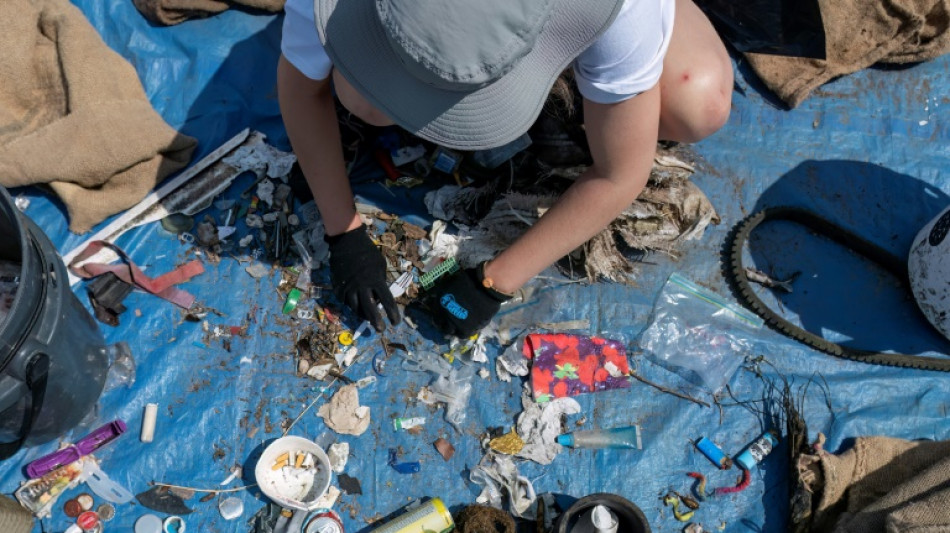
How plastic pollution poses challenge for Canada marine conservation / Photo: © AFP

How plastic pollution poses challenge for Canada marine conservation

One of the largest producers of plastic waste per capita, Canada is struggling to protect its designated marine protected areas from this pollution, experts warn.

Text size:

Here are some key points about the issue facing the North American country.

- Significant plastic pollution -

With more than four million tonnes produced each year, Canada generates "two to four times more" plastic pollution per person than the global average, said Anthony Merante of the NGO Oceana.

In 2020, more than 90 percent of plastic waste ended up in landfills or was incinerated, and only seven percent was recycled, according to the Canadian environment ministry.

The remaining roughly two percent, or 90,000 tonnes, ended up in the environment.

"Plastic pollution is so ubiquitous at this point, we can't protect marine protected areas from plastic pollution unless we stop plastic pollution at the source," said Merante, head of Oceana Canada's plastics campaign.

Globally, annual plastic production has more than doubled in 20 years to reach 460 million tonnes.

Only nine percent is recycled, according to the Organization for Economic Co-operation and Development (OECD).

And more than half of it is single-use packaging -- "things that we use for a few moments and that end up lasting hundreds of years," said Merante.

- New regulations -

In June 2022, Prime Minister Justin Trudeau's federal government banned six types of single-use plastics with the goal of achieving zero plastic waste by 2030.

The regulation is being challenged in court by Canadian and American plastics manufacturers, as well as petrochemical firms.

Several municipalities, including Montreal, Vancouver and Edmonton, have already banned certain single-use plastics.

More biodegradable utensils are being found on the banks near the island city of Montreal, said Anne-Marie Asselin, a marine biologist who has been carrying out collection campaigns along the Saint Lawrence River for five years.

This shows that people's "behaviors have not changed," but the kind of waste now generated has "much less impact on the environment," she noted.

Ottawa is also working on creating a federal plastics registry.

The goal is to hold manufacturers accountable by requiring them to report on the life cycle of the plastics they put into circulation.

In the case of federal marine protected areas, few measures have been put in place against plastic pollution.

The Department of Fisheries and Oceans maintains that it is, however, "taken into account" when creating new marine protected areas and that since 2019, it has been prohibited to dump waste in protected areas.

D.Johnson--TFWP