The Fort Worth Press - NASA aims to make observations from space junk collision with Moon

USD -
AED 3.672504
AFN 64.000368
ALL 81.450403
AMD 370.780403
ANG 1.789884
AOA 918.000367
ARS 1392.916052
AUD 1.388889
AWG 1.8
AZN 1.70397
BAM 1.669697
BBD 2.01454
BDT 122.725158
BGN 1.668102
BHD 0.37765
BIF 2976
BMD 1
BND 1.275896
BOB 6.911331
BRL 4.953904
BSD 1.000226
BTN 94.881811
BWP 13.592996
BYN 2.822528
BYR 19600
BZD 2.011629
CAD 1.35975
CDF 2320.000362
CHF 0.781253
CLF 0.022842
CLP 899.000361
CNY 6.82825
CNH 6.831005
COP 3657.4
CRC 454.73562
CUC 1
CUP 26.5
CVE 94.450394
CZK 20.786704
DJF 177.720393
DKK 6.375104
DOP 59.503884
DZD 132.503944
EGP 53.639736
ERN 15
ETB 157.000358
EUR 0.85285
FJD 2.192104
FKP 0.734252
GBP 0.735159
GEL 2.680391
GGP 0.734252
GHS 11.203856
GIP 0.734252
GMD 73.000355
GNF 8775.000355
GTQ 7.641507
GYD 209.25239
HKD 7.83505
HNL 26.620388
HRK 6.42804
HTG 131.024649
HUF 309.943504
IDR 17334.35
ILS 2.94383
IMP 0.734252
INR 94.910504
IQD 1310
IRR 1314000.000352
ISK 122.680386
JEP 0.734252
JMD 156.725146
JOD 0.70904
JPY 157.07304
KES 129.150385
KGS 87.420504
KHR 4012.503796
KMF 420.00035
KPW 900.049007
KRW 1471.320383
KWD 0.30729
KYD 0.833543
KZT 463.288124
LAK 21980.000349
LBP 89550.000349
LKR 319.671116
LRD 183.875039
LSL 16.660381
LTL 2.95274
LVL 0.60489
LYD 6.350381
MAD 9.25125
MDL 17.233504
MGA 4150.000347
MKD 52.564485
MMK 2099.599729
MNT 3579.164068
MOP 8.070846
MRU 39.970379
MUR 47.030378
MVR 15.455039
MWK 1741.503736
MXN 17.457204
MYR 3.970377
MZN 63.903729
NAD 16.660377
NGN 1375.980377
NIO 36.710377
NOK 9.296404
NPR 151.803598
NZD 1.694485
OMR 0.384745
PAB 1.000201
PEN 3.507504
PGK 4.33875
PHP 61.275038
PKR 278.775038
PLN 3.62095
PYG 6151.626275
QAR 3.643504
RON 4.438104
RSD 100.106587
RUB 74.972586
RWF 1461.5
SAR 3.74998
SBD 8.04211
SCR 13.746323
SDG 600.503676
SEK 9.213704
SGD 1.272604
SHP 0.746601
SLE 24.603667
SLL 20969.496166
SOS 571.000338
SRD 37.458038
STD 20697.981008
STN 21.21
SVC 8.7523
SYP 110.525092
SZL 16.660369
THB 32.513038
TJS 9.381822
TMT 3.505
TND 2.88175
TOP 2.40776
TRY 45.142504
TTD 6.789386
TWD 31.629504
TZS 2605.000335
UAH 43.949336
UGX 3760.987334
UYU 39.889518
UZS 11950.000334
VES 488.942755
VND 26356
VUV 118.890896
WST 2.715189
XAF 560.041494
XAG 0.01327
XAU 0.000217
XCD 2.70255
XCG 1.80265
XDR 0.69563
XOF 560.000332
XPF 102.150363
YER 238.603589
ZAR 16.665525
ZMK 9001.203584
ZMW 18.67895
ZWL 321.999592
  • RBGPF

    0.5000

    63.1

    +0.79%

  • GSK

    -0.7000

    51.61

    -1.36%

  • CMSD

    0.1500

    23.28

    +0.64%

  • RIO

    0.1000

    100.58

    +0.1%

  • BCE

    0.1800

    23.96

    +0.75%

  • RELX

    -0.2400

    36.35

    -0.66%

  • AZN

    -2.6300

    184.74

    -1.42%

  • CMSC

    0.0600

    22.88

    +0.26%

  • RYCEF

    0.5500

    16.35

    +3.36%

  • BCC

    -1.1400

    78.13

    -1.46%

  • BTI

    -0.0900

    58.71

    -0.15%

  • NGG

    -1.0600

    88.48

    -1.2%

  • BP

    -0.9700

    46.41

    -2.09%

  • JRI

    -0.0100

    12.98

    -0.08%

  • VOD

    0.3500

    16.15

    +2.17%

NASA aims to make observations from space junk collision with Moon


NASA aims to make observations from space junk collision with Moon

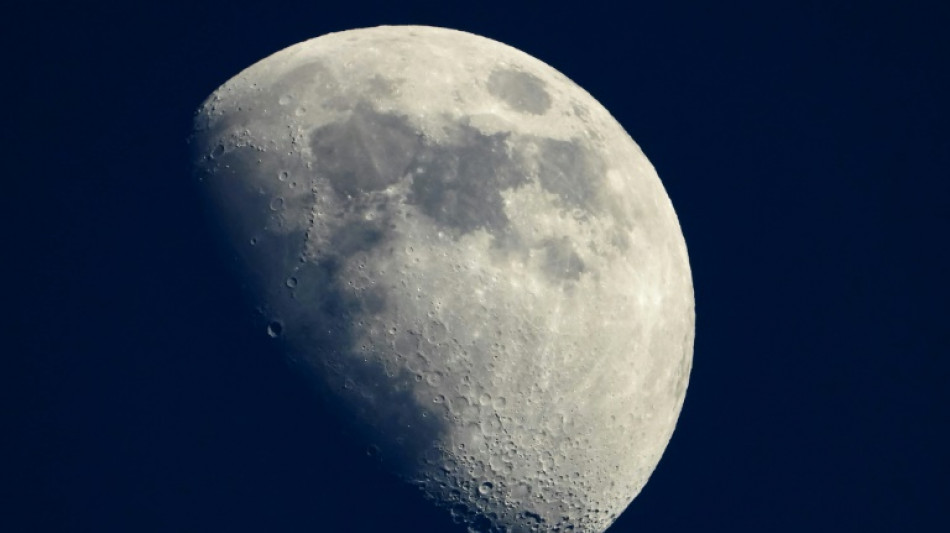
NASA said Thursday it aims to survey the crater formed when the remains of a SpaceX rocket are expected to crash into the Moon in early March, calling the event "an exciting research opportunity."

Text size:

The rocket was deployed in 2015 to put a NASA satellite into orbit and its second stage, or booster, has been floating in the cosmos ever since, a common fate for such pieces of space technology.

"On its current trajectory, the second stage is expected to impact the far side of the Moon on March 4, 2022," a NASA spokeswoman told AFP.

The impact of the rocket chunk weighing four tons will not be visible from Earth in real time, nor will NASA's Lunar Reconnaissance Orbiter (LRO), which is currently orbiting the Moon, be in a "position to observe the impact as it happens," the spokeswoman said.

The LRO could be used later, however, to capture images for before-and-after comparisons.

Finding the crater "will be challenging and might take weeks to months," the spokeswoman said, adding that the "unique event presents an exciting research opportunity."

Studying a crater formed by a hurtling object with a known mass and speed (it will be traveling at 9,000 kilometers per hour), as well as the material that the impact stirs up, could help advance selenology, or the scientific study of the moon.

Spacecraft have been intentionally crashed into the Moon before for scientific purposes, such as during the Apollo missions to test seismometers, but this is the first unintended collision to be detected.

Astronomer Bill Gray, creator of a software used to determine the trajectories of asteroids and other objects, was the first to calculate the booster's new collision course with the Moon.

He believes that space junk should always be directed towards the moon when possible: "If it hits the moon, then we actually learn something from it," Gray said.

L.Coleman--TFWP