The Fort Worth Press - Chemists cook up way to remove microplastics using okra

USD -
AED 3.672503
AFN 64.999691
ALL 80.801578
AMD 379.052619
ANG 1.79008
AOA 916.999736
ARS 1444.500099
AUD 1.416842
AWG 1.80125
AZN 1.698647
BAM 1.635086
BBD 2.015232
BDT 122.267785
BGN 1.67937
BHD 0.376957
BIF 2963.891885
BMD 1
BND 1.262572
BOB 6.913877
BRL 5.198596
BSD 1.000552
BTN 91.90563
BWP 13.092058
BYN 2.844901
BYR 19600
BZD 2.012306
CAD 1.353245
CDF 2240.00018
CHF 0.766155
CLF 0.021855
CLP 862.940201
CNY 6.95465
CNH 6.944499
COP 3670.36
CRC 496.603616
CUC 1
CUP 26.5
CVE 92.184025
CZK 20.290499
DJF 178.171634
DKK 6.23463
DOP 62.953287
DZD 129.170913
EGP 46.828299
ERN 15
ETB 155.581807
EUR 0.83498
FJD 2.19255
FKP 0.725629
GBP 0.723695
GEL 2.695023
GGP 0.725629
GHS 10.935965
GIP 0.725629
GMD 72.999826
GNF 8779.982109
GTQ 7.676359
GYD 209.330809
HKD 7.802375
HNL 26.404826
HRK 6.292604
HTG 131.029265
HUF 317.665007
IDR 16792.9
ILS 3.097875
IMP 0.725629
INR 92.13035
IQD 1310.716137
IRR 42125.000158
ISK 120.909849
JEP 0.725629
JMD 156.845533
JOD 0.709016
JPY 153.06801
KES 129.020107
KGS 87.450068
KHR 4022.138062
KMF 412.000161
KPW 899.941848
KRW 1427.055019
KWD 0.30648
KYD 0.833849
KZT 504.129951
LAK 21556.00515
LBP 89599.377999
LKR 309.821593
LRD 185.10375
LSL 15.909425
LTL 2.95274
LVL 0.60489
LYD 6.283493
MAD 9.046646
MDL 16.778972
MGA 4464.341698
MKD 51.518343
MMK 2099.981308
MNT 3572.641598
MOP 8.041032
MRU 39.942314
MUR 45.089727
MVR 15.459889
MWK 1734.990323
MXN 17.15595
MYR 3.932505
MZN 63.759785
NAD 15.909425
NGN 1396.979544
NIO 36.81874
NOK 9.568015
NPR 147.04884
NZD 1.64732
OMR 0.384496
PAB 1.000548
PEN 3.347838
PGK 4.282979
PHP 58.838027
PKR 279.904359
PLN 3.512395
PYG 6719.056974
QAR 3.637952
RON 4.2543
RSD 98.049121
RUB 76.546809
RWF 1459.772854
SAR 3.750444
SBD 8.077676
SCR 13.754459
SDG 601.499692
SEK 8.814695
SGD 1.262405
SHP 0.750259
SLE 24.301353
SLL 20969.499267
SOS 570.833804
SRD 38.092029
STD 20697.981008
STN 20.482723
SVC 8.754828
SYP 11059.574895
SZL 15.902821
THB 31.124502
TJS 9.35016
TMT 3.5
TND 2.861454
TOP 2.40776
TRY 43.416037
TTD 6.791011
TWD 31.289758
TZS 2559.999583
UAH 42.769647
UGX 3582.341606
UYU 37.863461
UZS 12105.606367
VES 358.476151
VND 26068.5
VUV 119.671185
WST 2.725359
XAF 548.392544
XAG 0.008508
XAU 0.000181
XCD 2.702549
XCG 1.803217
XDR 0.682024
XOF 548.390252
XPF 99.704048
YER 238.404736
ZAR 15.70445
ZMK 9001.186468
ZMW 19.885632
ZWL 321.999592
  • SCS

    0.0200

    16.14

    +0.12%

  • RBGPF

    0.0000

    82.4

    0%

  • CMSD

    -0.0457

    24.0508

    -0.19%

  • RYCEF

    -0.5500

    16.6

    -3.31%

  • AZN

    -2.3800

    93.22

    -2.55%

  • NGG

    0.3700

    84.68

    +0.44%

  • RELX

    -0.9800

    37.38

    -2.62%

  • GSK

    -0.7000

    50.1

    -1.4%

  • VOD

    0.0700

    14.57

    +0.48%

  • CMSC

    -0.1000

    23.7

    -0.42%

  • BCE

    -0.2500

    25.27

    -0.99%

  • RIO

    0.4600

    93.37

    +0.49%

  • BTI

    -0.1800

    60.16

    -0.3%

  • BCC

    -0.8900

    80.85

    -1.1%

  • BP

    0.0800

    37.7

    +0.21%

  • JRI

    -0.6900

    12.99

    -5.31%

Chemists cook up way to remove microplastics using okra


Chemists cook up way to remove microplastics using okra

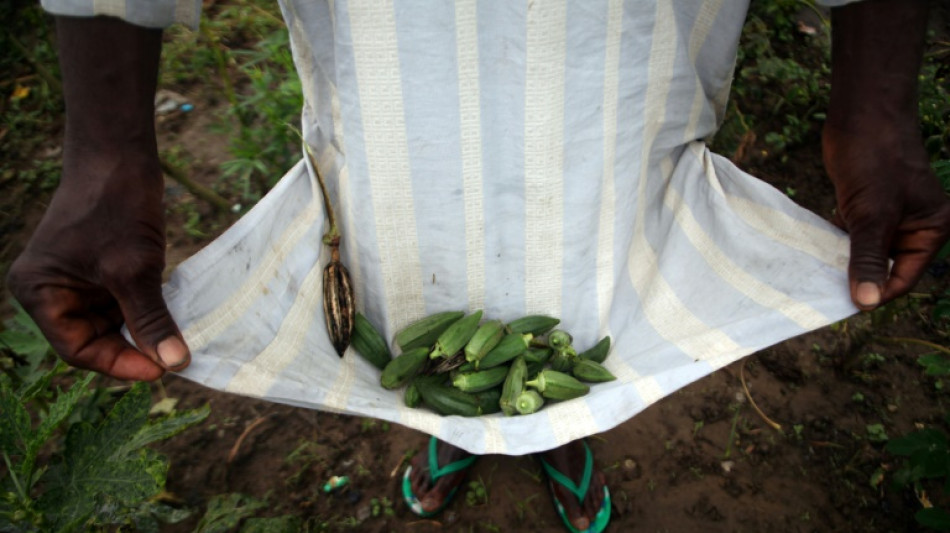
Extracts of okra and other slimy plants commonly used in cooking can help remove dangerous microplastics from wastewater, scientists said Tuesday.

Text size:

The new research was presented at the spring meeting of the American Chemical Society, and offers an alternative to the synthetic chemicals currently used in treatment plants that can themselves pose risks to health.

"In order to go ahead and remove microplastic or any other type of materials, we should be using natural materials which are non-toxic," lead investigator Rajani Srinivasan, of Tarleton State University, said in an explainer video.

Okra is used as a thickening agent in many cuisines, such as Gumbo, a stew from Louisiana. It's also a staple of cuisine in South Asia, where it's called bhindi.

Srinivasan's past research had examined how the goo from okra and other plants could remove textile-based pollutants from water and even microorganisms, and she wanted to see if that would equally apply to microplastics.

Ingested microplastics -- defined as pieces five millimeters or smaller -- have been shown to harm fish in several ways, from disrupting their reproductive systems to stunting growth and causing liver damage.

The source of microplastics is the estimated eight billion tons of plastic produced since the 1950s, less than 10 percent of which has been recycled.

The rest eventually breaks down and is today found in every corner of the globe, from oceans and waterways to the air and soil, as well as our food.

It is feared there could be health impacts on humans, though more research is needed. Microplastics can also be carcinogenic and mutagenic, meaning they can potentially increase risks of cancer and DNA mutations.

Typical wastewater treatment removes microplastics in two steps.

First, those that float are skimmed off the top of the water. These however account for only a small fraction, and the rest are removed using flocculants, or sticky chemicals that attract microplastics into larger clumps.

The clumps sink to the bottom and can then be separated from the water.

The problem is that these synthetic flocculants, such as polyacrylamide, can break down into toxic chemicals.

So, Srinivasan and colleagues set about investigating how extracts of supermarket-bought okra, aloe, cactus, and fenugreek, tamarind and psyllium would perform.

They tested chains of carbohydrates, known as polysaccharides, from the individual plants, as well as in combination, on various microplastic-contaminated water, examining before and after microscopic images to determine how many particles had been removed.

They found that polysaccharides from okra paired with those from fenugreek could best remove microplastics from ocean water, while polysaccharides from okra paired with tamarind worked best in freshwater samples.

Overall, the plant-based polysaccharides worked just as well or better than polyacrylamide. Crucially, the plant-based chemicals are both non-toxic and can be used in existing treatment plants.

Ultimately, said Srinivasan, she hopes to scale up and commercialize the process, enabling greater access to clean and safer drinking water.

W.Knight--TFWP