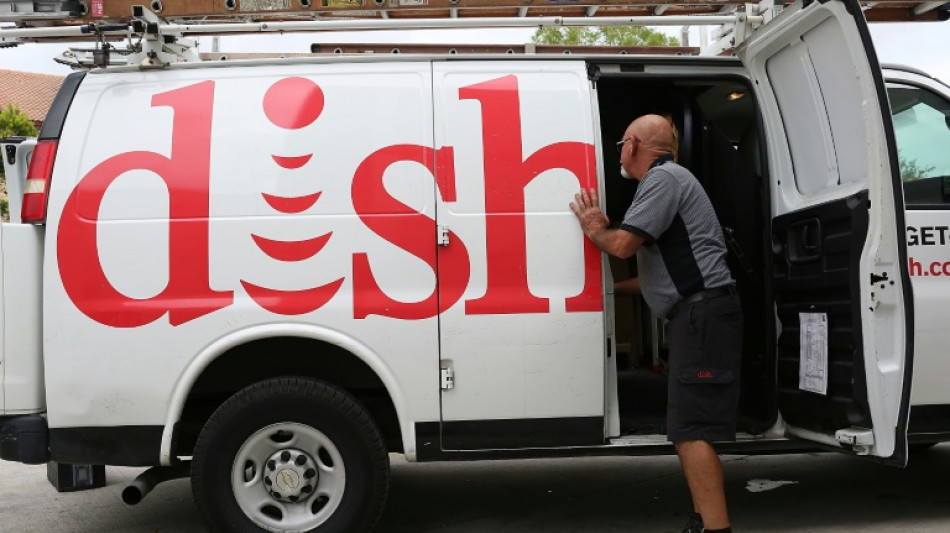
US slaps TV provider with first-ever space debris fine / Photo: © GETTY IMAGES NORTH AMERICA/AFP/File

US authorities said they have issued a "breakthrough" first-ever fine over space debris, slapping a $150,000 penalty on a TV company that failed to properly dispose of a satellite.
On Monday the Federal Communications Commission (FCC) came down on Dish for "failure to properly deorbit" a satellite called EchoStar-7, in orbit since 2002.
"This marks a first in space debris enforcement by the Commission, which has stepped up its satellite policy efforts," the FCC, which authorizes space-based telecom services, said in a statement.
As the geostationary satellite came to the end of its operational life, Dish had moved it to an altitude lower than the two parties had agreed on, where it "could pose orbital debris concerns," the FCC said.
The commission said Dish, a US satellite television provider, pledged in 2012 to elevate the satellite to 300 kilometers (190 miles) above its operational arc.
But with fuel running low, it retired the satellite at an altitude just over 120 kilometers above the original arc.
"As satellite operations become more prevalent and the space economy accelerates, we must be certain that operators comply with their commitments," said FCC enforcement bureau chief Loyaan Egal.
"This is a breakthrough settlement, making very clear the FCC has strong enforcement authority and capability to enforce its vitally important space debris rules."
The FCC said the settlement "includes an admission of liability from the company and an agreement to adhere to a compliance plan and pay a penalty of $150,000."
In a statement Tuesday, Dish appeared to counter the FCC over disposal requirements, and argued that the commission's enforcement arm made "no specific findings that EchoStar-7 poses any orbital debris safety concerns."
"As the Enforcement Bureau recognizes in the settlement, the EchoStar-7 satellite was an older spacecraft that had been explicitly exempted from the FCC's rule requiring a minimum disposal orbit," a Dish spokesperson said in a statement.
"DISH has a long track record of safely flying a large satellite fleet and takes seriously its responsibilities as an FCC licensee."
- Collision risks -
The US aviation regulator, FAA, recently announced its intention to reduce space debris by requiring private companies to dispose of the upper stages of rocket launch vehicles by, for example, returning them to the Earth's atmosphere or moving them to a less congested "graveyard orbit."
The new regulation, which has yet to be definitively adopted, already exists for government space missions.
"If left unchecked, the accumulation of orbital debris will increase the risk of collisions and clutter orbits used for human spaceflight and for satellites," the Federal Aviation Administration said.
The European Space Agency estimates that around one million pieces of debris larger than a centimeter -- big enough to "disable a spacecraft" -- are in Earth's orbit.
They are already causing problems, from a near-miss in January last year involving a Chinese satellite, to a five-millimetre hole knocked into a robotic arm on the International Space Station in 2021.
With satellites now crucial for GPS, broadband and banking data, collisions pose significant risks on Earth.
N.Patterson--TFWP