Qatar Olympic Academy completes record sports management course

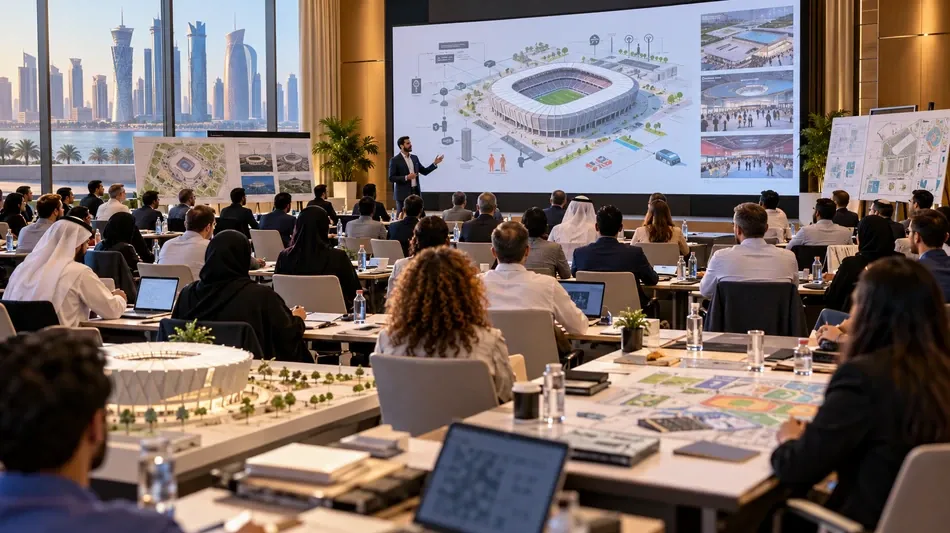
As part of its mission to develop sports and administrative competencies and build national and regional capacities capable of leading the sports sector in line with international best practices, the Qatar Olympic Academy successfully concluded its "Major Sports Events Management" course. The programme was delivered within the Academy’s educational and training agenda for the current year and forms part of a series o
As part of its mission to develop sports and administrative competencies and build national and regional capacities capable of leading the sports sector in line with international best practices, the Qatar Olympic Academy successfully concluded its "Major Sports Events Management" course. The programme was delivered within the Academy’s educational and training agenda for the current year and forms part of a series of specialised courses focusing on the organisation and management of major sports championships, events, and sporting occasions.
The four-day course attracted significant interest and achieved a record participation of over 100 male and female learners from both Qatar and abroad. This remarkable turnout reflects the growing recognition of the academic and training programmes offered by the Qatar Olympic Academy at both the local and regional levels and highlights the increasing demand for specialised education in sports event management against a backdrop of the continued development of the global sports industry.
The course was delivered by Petros Tesalas, Sports Events Management Expert at the Qatar Olympic Committee, who possesses extensive experience in planning, organising, and managing major sports events and championships. Throughout his distinguished career, he has contributed to the organisation of numerous international sporting events both within and outside Qatar, including the Athens 2004 Olympic Games, the Doha 2006 Asian Games, and many other international and continental championships. He shared with participants the knowledge and practical expertise he acquired through his involvement in major sporting events worldwide.
Diverse and High-Caliber Participation
The course welcomed participants from a wide range of professional and academic backgrounds, including presidents of sports federations, executive and administrative leaders from various sports organisations, current and former athletes, specialists in sports management, event organisation, sports marketing, sports media, and facility management. It also attracted students and researchers interested in expanding their knowledge in this vital field.
This diversity enriched discussions and workshops, creating an interactive learning environment that encouraged the exchange of experiences and professional insights among participants. Such engagement enhanced the practical value of the training content and supported the Academy’s objective of building a network of qualified sports professionals capable of organising and managing sporting events in accordance with international standards.
Growing Importance of Major Sports Event Management
The course comes at a time when the global sports industry continues to expand, bringing with it an increasing number of major events and competitions that demand advanced levels of planning, organisation, and management. There is a growing need for professionals equipped with the modern knowledge and tools required to address the operational and organisational challenges associated with such events.
Over recent years, Qatar has successfully established itself as a leading global destination for hosting major international sporting events through the organisation of numerous continental and world championships. This achievement has further emphasised the importance of investing in human capital and developing specialised expertise capable of maintaining this momentum and elevating organisational excellence in the future.
Accordingly, the Qatar Olympic Academy continues to include a variety of specialised programs within its annual agenda, covering key areas of the modern sports industry, including sports management, sports marketing, governance, leadership, and major event management.
Comprehensive Academic Content
The "Major Sports Events Management" course featured a broad range of academic and practical topics carefully designed to address the evolving requirements of the sports events industry.
The program began by exploring the strategic foundations of planning and hosting major sporting events, covering feasibility studies, objective setting, bid preparation, hosting strategies, executive planning, and resource management.
Participants also examined sports event governance and its role in ensuring transparency, operational efficiency, and institutional accountability. The course highlighted contemporary models used internationally to manage organising committees and ensure effective coordination among stakeholders.
Another major component focused on competition planning, venue management, and ceremonial operations, including competition scheduling, venue operations, operational zone management, and the organisation of opening, closing, and medal ceremonies in accordance with international protocols and standards.
Athlete and Spectator Experience at the Core
One of the most engaging areas of discussion centered on the athlete and spectator experience, widely recognised as a key indicator of success for major sporting events.
Participants explored how to design an integrated athlete experience that provides optimal technical, administrative, and support services. Topics included delegation services, accommodation, transportation, accreditation systems, and logistical support.
The course also emphasised the importance of spectator experience and its influence on the success of sports events. Various international models were presented, illustrating how major sporting events can be transformed into immersive experiences that combine sport, entertainment, culture, and technology, thereby increasing audience engagement, satisfaction, and community participation.
Operational Integration and Risk Management
A significant portion of the course was dedicated to operational integration, one of the fundamental pillars of successful event delivery.
Participants examined methods for coordinating the work of multiple departments and committees, establishing effective command and control centers, and utilising modern communication systems to ensure seamless information flow and rapid response to changing circumstances.
The course also addressed risk management, contingency planning, and readiness testing, providing participants with methodologies for identifying, analysing, and assessing potential risks, developing alternative scenarios, and preparing crisis-management strategies. The importance of conducting operational exercises and readiness assessments before event commencement was also highlighted.
The instructor stressed risk management is no longer merely an organisational option but has become an essential component of governance and modern sports event management, particularly in light of today's rapidly evolving challenges.
Event Delivery and Decision-Making
The program further explored event-time management and decision-making processes, emphasising leadership responsibilities during major competitions, daily operational oversight, multidisciplinary team management, and the handling of unexpected developments and operational pressures.
Participants analysed several case studies drawn from major international sporting events and discussed decision-making mechanisms in different situations, examining the factors that contribute to successful leadership in the management of complex sporting events.
These practical exercises enabled participants to bridge the gap between theory and practice and better understand how strategic plans can be translated into tangible results.
Sustainability, Legacy, and Knowledge Transfer
The course also addressed the increasingly important concepts of sustainability, legacy, and knowledge transfer within the sports events industry.
Participants reviewed international examples demonstrating how major sporting events can generate long-term economic, social, and developmental benefits beyond their duration. The discussions also emphasised the importance of documenting organisational experiences and leveraging lessons learned to improve future events.
In addition, the program examined mechanisms for establishing institutional systems that facilitate the transfer of knowledge and expertise within sports organisations, ensuring the continuous preservation and development of organisational learning.
Interactive Learning Environment
The course witnessed strong engagement from participants, who actively contributed to discussions, workshops, and group exercises designed to apply theoretical concepts to real-world scenarios.
The program also gave participants the opportunity to explore the latest global trends in sports event management and gain insight into international best practices that can be implemented within their respective organisations.
Many participants highlighted the value of such specialised programs in enhancing their professional skills and expanding their knowledge, noting that the course delivered practical and applicable content relevant to sports and administrative environments.
Continuing the Academy's Leading Role
The organisation of this course reflects the Qatar Olympic Academy’s ongoing commitment to education, training, and professional development. The Academy continues to offer specialised programs targeting professionals and stakeholders within the sports sector, contributing to the preparation of a new generation of qualified sports leaders capable of keeping pace with global developments in the sports industry.
Over the years, the Academy has successfully established an integrated educational and training system based on the latest international standards and best practices, making it a leading academic and training institution in the region that attracts an increasing number of learners and professionals from across the world.
Closing the Year with "Modern Management of Sports and Olympic Institutions"
In a related development, the Qatar Olympic Academy announced that its final training program of the year will be the "Modern Management of Sports and Olympic Institutions" course, scheduled for late November.
The course is considered one of the Academy's key strategic programs, covering subjects such as modern sports administration, leadership, governance, strategic planning, change management, and institutional performance development.
The program is also particularly significant because it serves as a qualifying course for admission to the Diploma in Sports and Olympic Institutions Management, one of the Academy’s flagship academic programmes.
The Academy is set to launch the 17th edition of the diploma program at the beginning of next year, building on the considerable success of previous editions, which have contributed to the development of numerous sports leaders and professionals working across sports institutions both within Qatar and internationally.
These ongoing initiatives reaffirm the Academy’s commitment to investing in human capital, promoting a culture of lifelong learning and professional development, supporting the regional and national sports movement, and contributing to a more sustainable and distinguished future for sport.
Khaleel Al Jabir: The Course Represents an Important Milestone in Developing Human Capital in the Sports Sector
Khaleel Al Jabir, Executive Director of the Qatar Olympic Academy, stated that the "Major Sports Events Management" course represents a significant milestone within the Academy’s strategy to develop human resources in the sports sector and strengthen competencies in planning, organising, and managing sporting events the latest global standards.
He added:“We are proud of the remarkable turnout this year, with participation exceeding 100 learners from Qatar and abroad. This reflects the growing confidence in the Academy’s educational and training programs and underscores the increasing need for specialised professionals equipped with the knowledge and expertise required to keep pace with the rapid developments in the global sports industry.”
Al Jabir continued:“We were keen to ensure that the course addressed all aspects of major sports event management, beginning with planning, hosting, and governance, and extending to competition and venue management, athlete and spectator experience, risk management, sustainability, legacy, and knowledge transfer. This provided participants with a comprehensive understanding of the requirements for organising and managing modern sporting events.”
He further emphasised that the Qatar Olympic Academy will continue to deliver high-quality programs that meet the needs of sports organisations and professionals working within the sector, noting that the Academy’s final course of the year, ‘Modern Management of Sports and Olympic Institutions,’ presents an important opportunity for individuals seeking to advance their professional and academic careers.
Concluding his remarks, Al Jabir said:
“We look forward to launching the 17th edition of the Diploma in Sports and Olympic Institutions Management at the beginning of next year and continuing our role in preparing qualified sports leaders who contribute to institutional excellence and further strengthen Qatar’s position as a leading regional and international hub for knowledge, innovation, and excellence in sport.”
H.Carroll--TFWP