US Latinos: less predictable at the polls, more focused on pocketbook
/ Photo: © AFP

While Latino voters lean Democratic in the run-up to US midterm elections, soaring inflation makes their support less predictable and may compel a shift toward Republican candidates, analysts say.
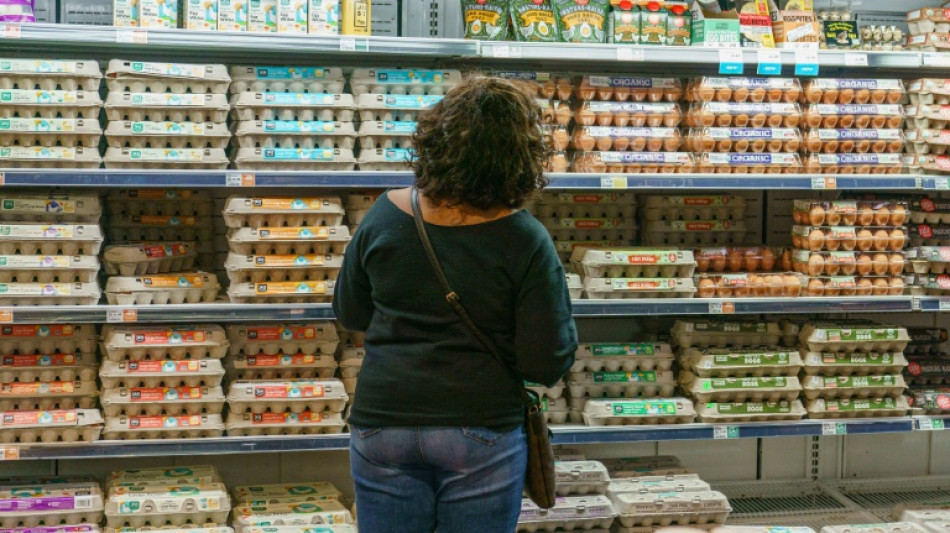
Inflation now at eight percent troubles Latinos, as it does all Americans, according to polls released before the November 8 vote, in which President Joe Biden's Democratic Party faces heavy possible losses.
Other issues -- the right to abortion, gun control and a crisis over undocumented migrants -- are secondary, polls show.
More than half of Latinos intend to vote Democratic in the vote for legislative seats, while 30 percent support Republicans, higher than four years ago, the surveys indicate.
"What matters most to Latino voters is inflation, and many... are ready to give Republicans a chance," Rodrigo Dominguez-Villegas, director of research at the Latino Policy & Politics Institute at the University of California at Los Angeles, told AFP.
- Sounding an alarm -
But "a stampede of Latino voters toward Republicans hasn't been perceived" in the election, in which the 435-seat House of Representatives, a third of the 100-seat Senate and some 30 state governorships are up for grabs, he said.
"The alarm for the Democratic Party is that if it doesn't retain its margin of support among Latino voters, it runs the risk of losing key, tightly-contested elections," Dominguez-Villegas added.
While Latinos have historically supported Democrats, "there is a large group who are swing voters" who change preferences with each election, and the Republican Party is targeting them, he said.
"Latinos are not a monolithic group. We have different origins, with different aspirations and different problems," said Jaime Florez, Hispanic communications director for the Republican National Committee.
Florez cited three key areas: the economy, education and public safety, but above all else at the moment is inflation.
"Economic issues affect us all independently of our country of origin, the language that we speak, many times even our economic condition because even rich people have lost enormous sums with the fall of the stock market," he said.
- 'A wrong assumption' -
The Republican Party enjoys a perception that it handles economic issues better -- while some Democratic leaders are accused of believing Latinos will simply fall into line behind them.
"They only run these get-out-the-vote operations in the weeks before the election, and expect that Latinos will show up and support them and I think that's a wrong assumption," Geraldo Cadava, a history professor at Northwestern University, told AFP.
While Republics still trail Democrats among Latinos, "Latinos have both voted for Republicans in increasing numbers over the past few years, and they have left the Democratic Party over the last few years," Cadava said.
The dynamic is complex, he said, but in part Latinos "are drawn to particular Republican policies at the same time that they're abandoning Democratic policies."
On a number of issues Latinos are in sync with the Democratic Party, said Stephen Nuno-Perez, analyst and pollster with BSP Research.
"In terms of data points, we continue to see strong support for policies that the Democrats are pushing, whether it's immigration reform, abortion rights -- upwards of 70 percent -- taking action against climate change, student debt relief, gun safety, all of these," he said.
"None of these are issues that we would call Republican issues."
Latinos are increasingly favor restrictive immigration reforms, including building border walls, Cadava added.
"Historically, say over the past 20 or 25 years, about 15 percent of Latinos would say that they support restrictive immigration reform," Cadava said, but now support has climbed to 36 percent.
"That's a pretty big jump."
T.Mason--TFWP