Winston County trash-debt prosecutions face challenge from civil-rights lawyers

An Inside Climate News review identified at least 60 criminal prosecutions over unpaid trash bills in Alabama's Winston County across more than two decades. The Southern Poverty Law Center is calling for an end to the practice and dismissal of pending charges.
Residents of Winston County, Alabama, have faced arrest and misdemeanor prosecution after falling behind on payments for county garbage collection, according to court records reviewed by Inside Climate News. The review found at least 60 cases across more than two decades, with debts ranging from about $100 to more than $2,000 when court costs and fees were included.
The charges are described as failure to participate in the county-run service. Records show sanitation staff warning residents that overdue accounts could lead to prosecution and subsequently filing complaints when payments were not made.
Some residents were physically arrested and jailed, including people prosecuted this year. Those able to clear their balances often had their cases dismissed. Others entered payment plans and, in many instances, plea agreements. Some were prosecuted more than once over a period of years.
The Southern Poverty Law Center argues that using criminal enforcement to collect these debts is unlawful. Its lawyers sent Winston County sanitation officials an August 28 letter demanding that the prosecutions stop and that pending charges be dismissed.
Ellen Degnan, an SPLC lawyer, said inability to pay a bill should not be treated as criminal conduct. At the time of publication, she said the organization had received no response from the county. Sanitation officials also did not respond to Inside Climate News' requests for comment.
The legal dispute involves several provisions of Alabama law. The state constitution prohibits imprisonment for debt. State solid-waste law allows local governments to require participation in garbage collection and describes failure to pay certain fees as a misdemeanor carrying a fine of $50 to $200.
The same statutory framework provides for suspension of service or recovery through civil court when bills remain unpaid. Some local governments instead rely on a separate provision authorizing enforcement of local ordinances to pursue arrests.
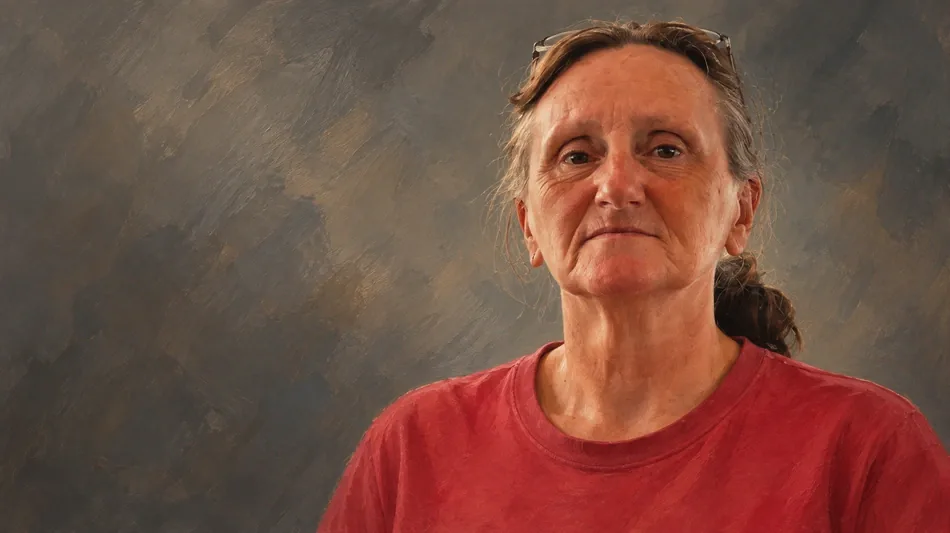
One of the residents affected is Pam Benton, a 59-year-old painter and cleaner who lives in the rural county northwest of Birmingham. She said she knew she owed money but lacked the funds to settle the bill and did not initially understand that an unpaid trash account could result in arrest.
The source account identifies her traffic-stop arrest as occurring in January 2025, while elsewhere describing her detention and collection notices as events earlier this year. It does not reconcile that chronology. Benton said an officer stopped the work vehicle she was driving over a tag issue, checked her name and informed her that she would be arrested for the trash debt.
She was taken to the courthouse and adjoining jail in Double Springs, the county seat. Benton said she spent hours handcuffed to a bench awaiting booking and saw another woman, older than herself, who had also been arrested over garbage fees.
Benton has supported herself for decades painting houses, churches and businesses. Her husband introduced her to the work; they were married for 17 years before he died of cancer in 2011. She recalled painting the foyer and sanctuary of a local church as a particularly valued job.
As she has grown older, she has been less able to accept large projects. Work can slow during winter, leaving her unable to cover all her expenses. She said she receives no government assistance and that irregular earnings caused the trash balance to accumulate.
Benton said the difficulty was not a refusal to recognize the debt. She described wanting to pay but being unable to catch up once the balance began increasing. Her attempts to negotiate included asking whether the county could accept labor from someone with established painting skills instead of demanding money she did not have.
She said her detention was her first experience inside a jail. In recounting the hours at the courthouse, she focused on the gap between how she saw herself as a working grandmother and how she feared the arrest would appear to her family. The other detained woman's presence reinforced her belief that people trying to meet their obligations were being treated as criminals.
Collection notices added pressure. A delinquent-account letter signed by collection agent Misty Collins stated that the county commission was requesting arrest warrants and gave Benton 10 days to contact the department with a payment.
Benton said she tried unsuccessfully to reach an arrangement with sanitation staff. She offered to undertake painting work, including work on public buildings, because she could not provide the requested cash. She also asked officials to take away her trash container and suspend service while she paid down the existing balance.
According to Benton, the department refused that request. A subsequent notice said a warrant had been issued and advised that anyone already arrested would have to make payments through the circuit clerk's office.
After her release, Benton learned that the sheriff's office had posted her booking photograph online. She said she was embarrassed and worried that her grandchildren would associate being jailed with being a bad person. The photograph showed paint on the hoodie she had worn to work.
Comments beneath the post supported Benton and criticized the county for arresting a widowed resident over garbage charges. Some referred to the difficulties she had faced since her husband's death.
Winston County has about 24,000 residents and lies roughly 50 miles northwest of Birmingham. Census figures cited in the report show that about one in six residents experiences poverty.
The courthouse also contains a reminder of the county's history: the Dual Destiny monument depicts a soldier with Union and Confederate flags. The county became known as the Free State of Winston because of its divided Civil War loyalties, including small farmers who remained committed to the Union.
Leah Nelson, a senior research associate with the nonpartisan Public Affairs Research Council of Alabama, said the debt prosecutions reflect policies operating without sufficient consideration of their effects. Charging for garbage service is reasonable, she said, but arresting people who cannot afford it is not.
Nelson's work includes examination of equitable fines and fees in Jefferson County. Her questions about the county's garbage policy included whether officials had compared collection revenue with the practical expense of sending officers to make arrests and processing the resulting cases. She said policies should be assessed against benefits for both the local government and the residents who fund and use its services.
Nelson's research on criminal fines and fees in Alabama indicates that such collection practices can cost taxpayers more than they recover. Arrests require staff time and public resources, and she questioned whether that expenditure is justified by the revenue obtained.
She also warned that prosecution over bills can reduce confidence in local government. Residents who view enforcement as unfair may lose trust in the institutions responsible for serving them.
Some low-income households qualify for exemptions, although those benefits are not automatic. Alabama law exempts residents whose sole income is Social Security from local trash fees. A 1995 attorney general opinion said local governments need not actively identify every eligible resident, but should provide sufficient public notice for people to claim the exemption.
A 2026 law extended an exemption to households whose only income comes from veterans' benefits. None of the residents interviewed by Inside Climate News said they knew that garbage-fee exemptions existed.
Tracy Lauderdale, 65, spent a night in jail over unpaid trash charges in November 2023. She said she had received a warning letter, entered a payment arrangement and gone to court expecting to explain why she was struggling to keep up.
Her son had developed pneumonia, creating additional pressure on her limited Social Security income. When her case was called, she said, she was arrested, photographed and jailed. The detention also made her worry about the consequences for her work caring for older people in their homes.
Lauderdale said arrest compounded the problems that had prevented her from paying. Benton expressed the same concern: time in custody meant time she could not work to earn money for the balance.
Court documents show both women remain on payment plans involving the sanitation department and judicial system. New garbage charges continue to accrue at $19.50 per month while they try to clear the old debt.
Nelson said local governments could consider funding garbage collection through taxation if widespread difficulty paying individual fees threatens the service. Even without changing its funding model, a county could pursue unpaid balances through ordinary civil procedures.
The 2019 account also described the county attorney distinguishing between debtors who paid in full and those who did not. For the former, warrants could be withdrawn; for the latter, the attorney said authorities would have to locate them. The distinction illustrates why residents who lacked enough cash could remain exposed to arrest even when they wanted to resolve their accounts.
The practice in Winston County dates to at least 2001 in the records examined. In 2019, local reporting put uncollected garbage debt at about $800,000. Commissioner Roger Hayes said residents needed to pay their bills, while the county attorney said warrants would be recalled for those who paid in full.
By 2023, local officials were again discussing collection efforts, citing roughly $500,000 in unpaid fees. That year, the Alabama League of Municipalities advised its members to favor alternatives such as service termination, civil proceedings or property liens over criminal prosecution for nonpayment.
Other Alabama communities have faced similar criticism. Residents of Valley, near the Georgia border, and Chickasaw, north of Mobile, were also arrested or prosecuted over garbage bills. Officials in both communities subsequently agreed to end the practice.
Republican state Representative Tim Wadsworth introduced legislation earlier this year intended to clarify that nonpayment of trash charges is not a misdemeanor and cannot be punished with jail. The proposal did not advance out of committee.
Benton has recently begun cleaning bathrooms and kitchens at a mobile-home manufacturing plant, keeping painting as additional work. The new job offers more regular earnings, although the un-air-conditioned warehouse makes the work physically demanding.
Her financial difficulties extend beyond sanitation charges. After her electricity was disconnected, she ran an extension cord from her son's home next door to power a small air conditioner. She said she was concentrating on the trash debt because of the threat of further criminal proceedings.
Even after taking the steadier cleaning job, Benton said she continued to have difficulty meeting monthly obligations while also paying the overdue balance.
In the week before publication, Benton said another letter arrived threatening prosecution. She said she wanted the opportunity to work and repay what she owed, but remained uncertain how to prevent another warrant while meeting her other bills.
J.Barnes--TFWP