Asian stocks unable to track Wall St higher, yen holds at 40-year low / Photo: © AFP

Asian equities fluctuated Tuesday as investors struggled to build on a record day on Wall Street, where tech firms bounced after the hefty selling of the past two weeks, while the yen held around a four-decade low against the dollar.
With optimism that the US-Iran crisis will eventually come to an end and the Strait of Hormuz reopen, attention has returned to central bank monetary policy and the future of the AI boom.
The tech sector -- which has led a global rally across markets and pushed several companies to record highs -- has taken a pummelling of late on fears over stretched valuations, interest rates and when traders will see returns on their investments.
But a rush to pick up bargains following that selloff fuelled a spike in New York, where the Dow hit a fresh peak and the Nasdaq climbed more than two percent.
That came thanks to strong finishes for Magnificent Seven plays including Amazon, Meta and Nvidia.
"After last week's record selling in big tech, buyers returned to the same names they were throwing overboard only days earlier," said SPI Asset Management's Stephen Innes.
"That does not mean the AI trade has suddenly been cured. It means the patient stopped bleeding long enough for the surgeons to begin bidding the stock back up.
"For Asia, and especially Korea and Japan, that is the handoff."
However, investors were unable to match their US colleagues, with Seoul's Kospi -- the best performing benchmark this year -- falling again, while Hong Kong, Shanghai, Singapore and Manila were also down.
There were gains in Tokyo, Sydney, Taipei and Wellington.
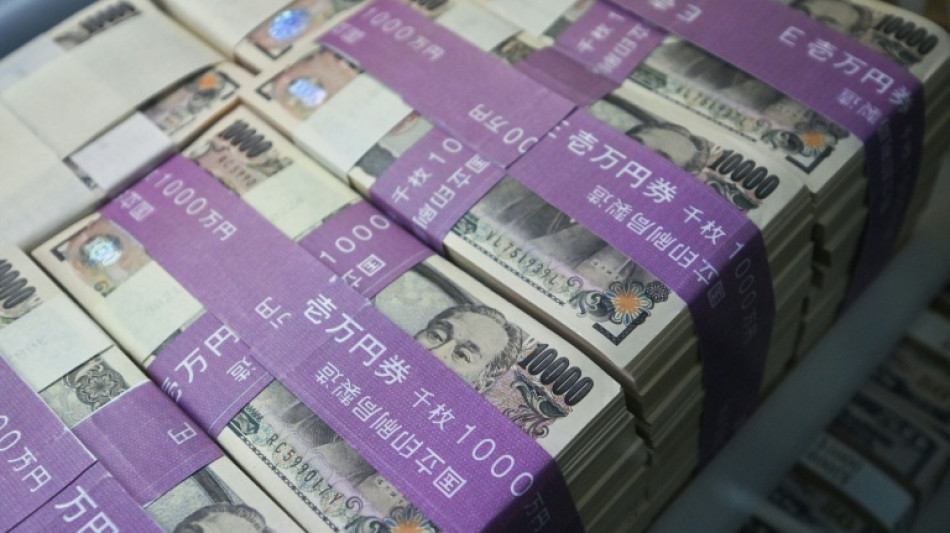
Traders were keeping an eye on Tokyo amid speculation the government could intervene in currency markets after the yen hit its weakest level against the dollar since 1986.
The unit hit as much as 162.40 per dollar amid expectations the Federal Reserve will lift interest rates this year.
The moves come ahead of US jobs data Thursday, with analysts warning a stronger-than-expected reading could fan bets on a US hike sooner than later.
An increase in borrowing costs to a 31-year high by the Bank of Japan this month did little to support the yen, with government officials' warnings of an intervention also falling short.
Finance Minister Satsuki Katayama was reported by local media as saying Tuesday that Tokyo "will take appropriate action at any time as necessary".
The government spent a record $72.4 billion to support the unit between April 28 and May 27 after it first slid past 160 per dollar.
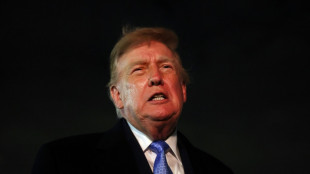
"A major catalyst behind the dollar's move has been the arrival of new Federal Reserve Chair Kevin Warsh, whose public comments have been interpreted as notably more hawkish" than US President Donald Trump might have wished,said IG's Axel Rudolph.
"Warsh has repeatedly stressed the importance of maintaining the Fed's inflation-fighting credibility and has signalled a willingness to keep policy restrictive if price pressures prove persistent. Markets have taken those signals seriously, with Treasury yields rising sharply in response.
"The prospect of higher US interest rates has widened the expected policy gap between the United States and many of its major trading partners, increasing demand for dollar-denominated assets."
Oil prices edged down on easing concerns over Middle East peace talks after the United States and Iran exchanged fire at the weekend.
- Key figures around 0230 GMT -
Tokyo - Nikkei 225: UP 0.9 percent at 70,116.82 (break)
Hong Kong - Hang Seng Index: DOWN 1.1 percent at 22,766.73
Shanghai - Composite: DOWN 0.4 percent at 4,058.89
Dollar/yen: UP at 162.15 yen from 161.92 yen on Monday
Euro/dollar: DOWN at $1.1403 from $1.1430
Pound/dollar: DOWN at $1.3235 from $1.3261
Euro/pound: DOWN at 86.14 pence from 86.17 pence
West Texas Intermediate: DOWN 0.4 percent at $70.46 a barrel
Brent North Sea Crude: DOWN 0.6 percent at $72.70 a barrel
New York - Dow: UP 0.6 percent at 52,182.74 (close)
London - FTSE 100: DOWN 0.2 percent at 10,484.22 (close)
T.Dixon--TFWP