RIO
-0.3300

Deadly exchanges between Israel and Hezbollah in Lebanon put a newly signed deal to end the Middle East war under further strain on Friday, after the postponement of planned US-Iran talks in Switzerland.
The delay came as Tehran's top negotiator warned it would not bend on its red lines and that its finger was still "on the trigger", even as shipping appeared to pick up in the Strait of Hormuz, which had essentially been closed during the war.
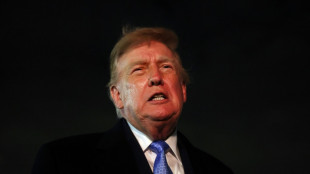
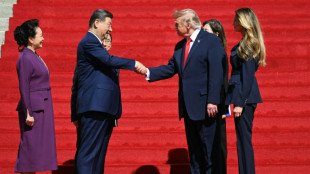
The deal signed this week by President Donald Trump and his Iranian counterpart Masoud Pezeshkian aims to end a war that began on February 28 with US-Israeli strikes that killed supreme leader Ayatollah Ali Khamenei.
The agreement was also meant to halt the fighting in Lebanon, which Iran has always insisted should be covered under any accord, turning Israel's ongoing campaign there into a source of frustration for Washington.
Israel's military said Friday that it had struck more than 80 Hezbollah targets in Lebanon and killed dozens of members of the Iran-backed group in response to what it described as ceasefire violations.
Lebanon said 18 people were killed Friday in Israeli airstrikes in the south, while Israel's military reported four troops were killed, drawing furious reactions at home.
Prime Minister Benjamin Netanyahu said the Israeli army would stay in Lebanon "as long as necessary" and would make Hezbollah pay a "heavy price" for its attacks.
Far-right Israeli National Security Minister Itamar Ben Gvir went even further, saying after the soldiers' deaths that "all of Lebanon must burn".
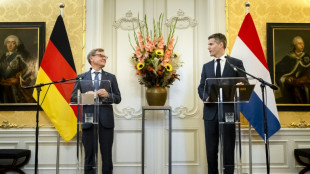
France, whose President Emmanuel Macron presided over Trump's signing of the deal in Versailles, urged Israel to "respect" the accord, Foreign Minister Jean-Noel Barrot said.
- 'Two spoilers' -
Preparations had been made to host Iranian and US delegations led by Tehran's top negotiator Mohammad Bagher Ghalibaf and US Vice President JD Vance at the Swiss resort of Burgenstock, overlooking Lake Lucerne.
The talks were due to kick off a two-month period of negotiations to discuss outstanding issues not covered by the initial deal, notably Iran's nuclear programme.
Switzerland's foreign ministry confirmed the discussions had been postponed but said it "remains ready to facilitate these talks".
Quoting diplomats, the Financial Times said Israel's strikes on Lebanon had led to the postponement but there was no immediate confirmation.
A diplomatic source from key regional player the UAE said there were "two spoilers" to the deal -- namely that Israel "didn't like it" and that there was also hardline opposition within Iran.
- 'Crushing response' -
Ghalibaf said on Friday that talks with the United States would remain bound by Tehran's "red lines".
"If the enemy seeks to be excessive, we have proven that our fingers are on the trigger and we have no hesitation in giving a crushing response to the enemy," he said in remarks published by the official IRNA news agency.
Vance, meanwhile, has expressed a degree of exasperation with the Israeli government rare for a top US official, telling the New York Times "you can't just kill your way out of solving every single national security problem that you have".
Iran's new supreme leader Ayatollah Mojtaba Khamenei, who succeeded his father, said Thursday that he had approved the accord with the US, despite holding a "different view".
A key aspect of the deal was the immediate re-opening of the Strait of Hormuz, the key shipping bottleneck whose closure caused global energy prices to rise.
A total of 25 commercial vessels crossed the newly-reopened Strait of Hormuz on Thursday, the highest number since mid-April, according to data from maritime tracking firm AXSMarine published on Friday.
A fifth of the world's oil and liquefied natural gas exports passed through the strait in peacetime, according to economists.
American forces on Thursday lifted their naval blockade of Iranian ports that had prevented ships from sailing to or from the Islamic republic, the US military said, noting that American warships "will remain in the general area".
Under the text of the deal, Washington commits to immediately waive oil sanctions crippling Iran's economy.
And once a final agreement is reached on Iran's nuclear programme, the United States will facilitate the release of a $300 billion reconstruction fund supported by regional nations, the deal says.
T.Mason--TFWP