The Fort Worth Press - Huge state subsidies give China unfair edge over foreign rivals: OECD

USD -
AED 3.672502
AFN 66.503533
ALL 80.653395
AMD 365.190533
AOA 917.000035
ARS 1498.997502
AUD 1.414807
AWG 1.80125
AZN 1.703011
BAM 1.692154
BBD 2.008721
BDT 123.455081
BHD 0.3761
BIF 2985.970817
BMD 1
BND 1.277984
BOB 11.853211
BRL 5.0847
BSD 0.997309
BTN 94.901089
BWP 13.461555
BYN 2.969692
BYR 19600
BZD 2.005779
CAD 1.395555
CDF 2262.48083
CHF 0.808945
CLF 0.023198
CLP 913.000117
CNY 6.747602
CNH 6.74499
COP 3157.69
CRC 453.361712
CUC 1
CUP 26.5
CVE 95.398565
CZK 20.99955
DJF 177.598394
DKK 6.46983
DOP 58.218911
DZD 132.930608
EGP 49.862606
ERN 15
ETB 160.971007
EUR 0.865461
FJD 2.209039
FKP 0.741752
GBP 0.740945
GEL 2.610132
GGP 0.741752
GHS 11.701051
GIP 0.741752
GMD 73.49797
GNF 8759.111457
GTQ 7.609218
GYD 208.606894
HKD 7.84545
HNL 26.731037
HRK 6.520949
HTG 130.40262
HUF 314.141017
IDR 17787
ILS 3.002101
IMP 0.741752
INR 95.255497
IQD 1306.448752
IRR 1375549.999767
ISK 123.419864
JEP 0.741752
JMD 158.382433
JOD 0.708998
JPY 158.363496
KES 129.350453
KGS 87.450284
KHR 4050.85633
KMF 425.999989
KRW 1417.039596
KWD 0.30876
KYD 0.831109
KZT 467.406398
LAK 22517.541811
LBP 89309.055987
LKR 334.518649
LRD 180.013843
LSL 16.202317
LTL 2.95274
LVL 0.60489
LYD 6.343603
MAD 9.294994
MDL 17.342816
MGA 4255.889809
MKD 53.263787
MMK 2099.549591
MNT 3594.253507
MOP 8.059058
MRU 40.09223
MUR 46.999966
MVR 15.450279
MWK 1729.34998
MXN 17.146945
MYR 4.088205
MZN 63.905023
NAD 16.202107
NGN 1361.990169
NIO 36.701693
NOK 9.509905
NPR 151.845026
NZD 1.697605
OMR 0.384502
PAB 0.997314
PEN 3.377444
PGK 4.407375
PHP 60.727982
PKR 276.877947
PLN 3.72035
PYG 5930.040405
QAR 3.64559
RON 4.542397
RSD 101.532942
RUB 82.275776
RWF 1466.50401
SAR 3.744756
SBD 8.065696
SCR 14.71782
SDG 600.543302
SEK 9.48485
SGD 1.279203
SLE 24.616069
SOS 569.989877
SRD 37.8665
STD 20697.981008
STN 21.197622
SVC 8.726386
SZL 16.199029
THB 32.977027
TJS 9.200175
TMT 3.51
TND 2.92983
TRY 47.717896
TTD 6.759762
TWD 32.219101
TZS 2642.563019
UAH 44.66703
UGX 3714.372216
UYU 40.144833
UZS 11927.514351
VES 755.762401
VND 26142
VUV 119.366412
WST 2.733717
XAF 567.53013
XAG 0.015601
XAU 0.00023
XCD 2.70255
XCG 1.797449
XDR 0.705825
XOF 567.53013
XPF 103.182603
YER 238.400752
ZAR 16.15735
ZMK 9001.206991
ZMW 18.824028
ZWL 321.999592
  • RBGPF

    0.7600

    70.5

    +1.08%

  • RYCEF

    0.2300

    20.85

    +1.1%

  • CMSC

    0.0240

    21.744

    +0.11%

  • CMSD

    -0.1600

    21.82

    -0.73%

  • RELX

    0.0485

    35.52

    +0.14%

  • BCE

    -0.0200

    22.75

    -0.09%

  • BCC

    2.3400

    86.6

    +2.7%

  • VOD

    0.1900

    16.19

    +1.17%

  • RIO

    1.4500

    101.1

    +1.43%

  • NGG

    0.4700

    80.88

    +0.58%

  • JRI

    0.1500

    12.81

    +1.17%

  • GSK

    0.7900

    52.96

    +1.49%

  • BTI

    0.6000

    59.33

    +1.01%

  • AZN

    1.4100

    161.42

    +0.87%

  • BP

    -0.6000

    41.63

    -1.44%

Huge state subsidies give China unfair edge over foreign rivals: OECD
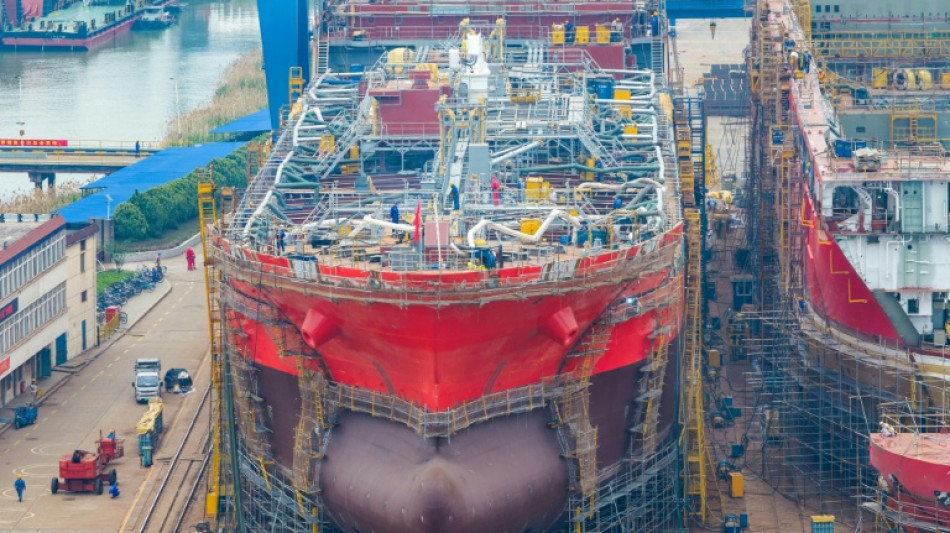
Huge state subsidies give China unfair edge over foreign rivals: OECD / Photo: © CN-STR/AFP

Huge state subsidies give China unfair edge over foreign rivals: OECD

Chinese companies in 15 key industrial sectors received vastly more state support than their international competitors between 2005 and 2024, according to an OECD report released on Monday.

Text size:

The 15 sectors received $108 billion in 2024 alone, according to data compiled by the Organisation for Economic Cooperation and Development in its Manufacturing Groups and Industrial Corporations (MAGIC) database.

Between 2005 and 2024, it added, "Chinese firms received on average three to eight times more government support than firms based in the OECD, a conservative estimate."

"These subsidies were also considerably higher than the support received by firms based in non-OECD economies such as Brazil, India and Indonesia."

The Paris-based organisation of 38 member countries said its "conservative" estimate was based on disclosures by the biggest companies in the 15 sectors, which underpin entire segments of the global economy.

It considers direct subsidies, tax breaks and favourable loans from banks and public financial institutions -- at times below their base lending rates -- to be public support.

"For Chinese firms, almost 60 percent of their global market share gains can be explained by the subsidies they received," the OECD said.

Chinese firms have carved out huge market shares over 20 years in sectors such as solar panels, shipbuilding and steel, not because they are better than their US or European competitors but because of their unparallelled state support, it added.

- Effect of subsidies -

With subsidies, they have more financial leeway to invest in new production sites, more time to reach profitability and greater support against economic headwinds, according to the report.

This has led to overcapacity in some sectors, pushing down global prices to the detriment of other international players.

"Just like doping in sports, the risk is that subsidies help less productive players win unfairly at the expense of better, more innovative and more efficient ones," the OECD's Secretary-General Mathias Cormann told a press conference.

"Subsidies increased market share but that did not lead to significant gains in productivity or profitability," Cormann added.

"Firms won market share not by being more efficient or more innovative but by being more heavily subsidised."

The OECD looked at aerospace and defence; aluminium; car manufacturing; cement; chemicals; fertilisers; glass and ceramics; heavy machinery; semiconductors; shipbuilding; photovoltaic panels; steel; telecommunications equipment; rolling stock; and wind turbines.

Worldwide state support in these sectors reached its highest level since the 2008 financial crisis in 2023-24, amounting on average to 1.3 percent of companies' revenues in 2024.

The OECD noted that the peak observed in 2009 coincided with a severe global recession, which was not the case in 2023-24.

That "indicates the recent increase in industrial subsidies to be more structural", it added.

T.Gilbert--TFWP