Rich nations topped $100 bn climate finance goal again in 2023, 2024: OECD / Photo: © Ritzau Scanpix/AFP

Wealthy countries topped their $100 billion annual climate finance goal for poorer nations for the third straight year in 2024, the OECD said Thursday, but questions are growing over their ability to meet a new larger pledge.
Developed nations had long fallen short of their commitment to mobilise $100 billion a year by 2020, finally hitting the target for the first time in 2022 after the deadline was extended to 2025.
The money is aimed at helping developing countries, which are least responsible for global warming, invest in renewable energy and cope with the worsening impacts of climate change.
After providing $115.9 billion in 2022, wealthy countries sharply raised their contribution to $132.8 billion in 2023, according to the Organisation for Economic Cooperation and Development, which tracks the figures.
It increased slightly in 2024 to $136.7 billion.
Climate finance can come from governments in the form of bilateral aid, multinational development lenders like the World Bank, or the private sector.
Public climate finance slipped 2.6 percent to $101.6 billion in 2024 but private sector contributions surged 33 percent to $30.5 billion.
The OECD said the data needed to produce figures for 2025, the last year of the $100 billion pledge, would not be available before 2027 "at the earliest".
Raphael Jachnik, who led the report at the OECD, told AFP the dip in bilateral public finance partly reflected a return to more normal trends after a sharp rise in 2023.
- Trump guts aid programmes -
Climate finance has been a thorny issue at annual UN climate talks, as developing nations grew frustrated with the developed world for dragging its heels to fulfil its pledges.
Richer nations committed to a new goal at the UN COP29 summit in Azerbaijan in 2024, pledging to provide $300 billion a year by 2035 -- an amount still considered insufficient by developing nations.
They also set a less specific target of helping raise $1.3 trillion annually from public and private sources.
Jachnik said the international context "raises more fundamental questions" about the new $300 billion target.
US President Donald Trump, a climate sceptic who returned to office last year, pulled the world's richest country out of climate diplomacy and gutted its foreign aid programmes.
The European Union, the biggest contributor to climate finance, is under budget strains and seeking to ramp up military spending amid the wars in Ukraine and the Middle East.
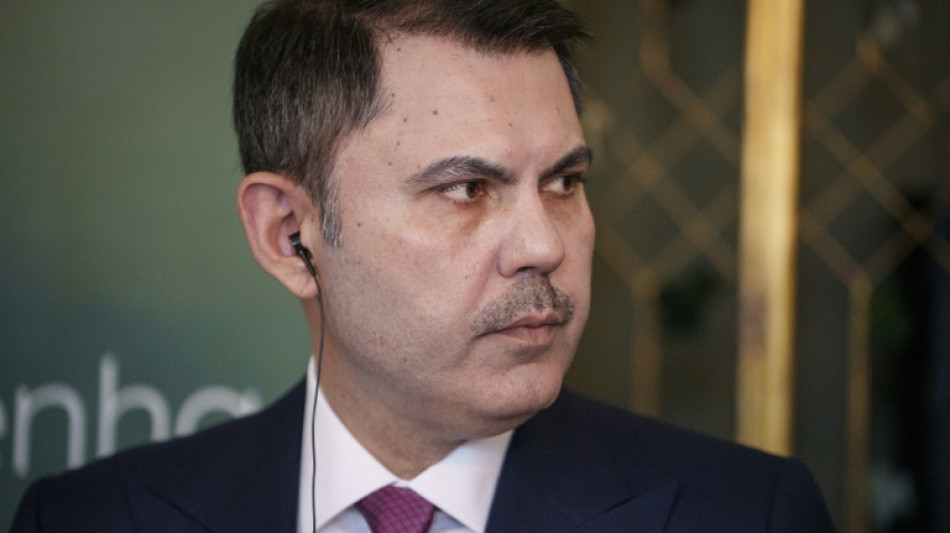
Turkish Climate Minister Murat Kurum, who will chair the COP31 climate summit hosted by his country in November, said Wednesday that he would "hold donors accountable for the commitments they made under the $300 billion Baku finance goal".
"It is easy to say we support global climate action. But promises must be kept," Kurum said in a speech at a climate ministerial meeting in Copenhagen.
Western nations have pushed to broaden the contributor base to include countries that are still listed as developing but have now become wealthy, such as China and Saudi Arabia.
Developed countries, which are facing their own budget constraints and debt problems, have also insisted that the private sector play a bigger role.
- 'Total scandal' -
Asia was the main target of climate finance contributions in 2024, with 36 percent, followed by Africa at 31 percent.
As in previous years, most public climate finance took the form of loans in 2023 and 2024, accounting for 73 percent and 67 percent of the total respectively, according to the OECD.
Developing countries have argued that climate finance should come in the form of grants, as loans compound their debt problems.
"The rich world profits from the loans they provide to poor countries who are desperately trying to deal with climate change caused by the rich world. It's a total scandal," said Mohamed Adow, director of the Nairobi-based climate think tank Power Shift Africa.
"The countries least responsible for the climate crisis are being asked to take on debt to survive it," he said.
A.Williams--TFWP