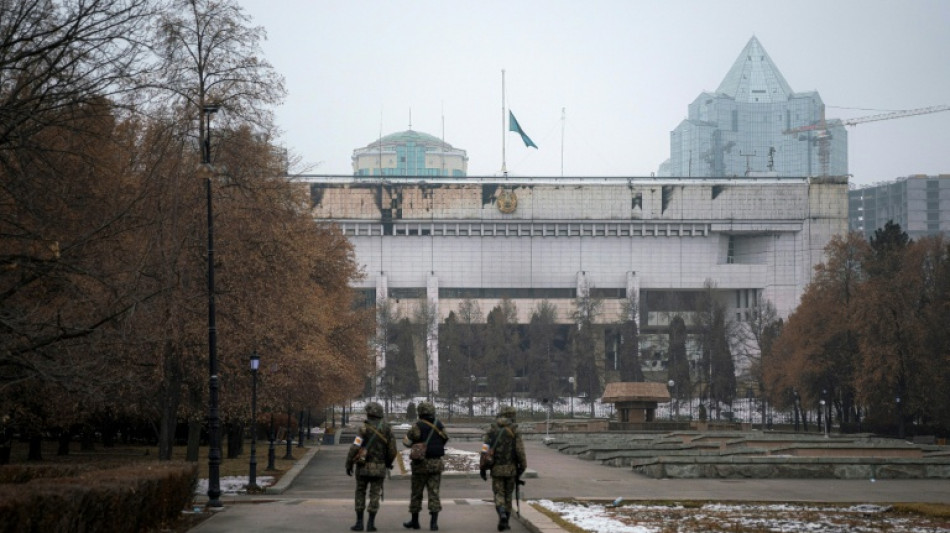
Kazakhstan to vote on constitution overhaul / Photo: © AFP/File

Kazakhs will cast ballots on Sunday in a constitutional referendum that authorities brand as democratising -- though several proposed amendments appear to strengthen presidential powers in Central Asia's richest country.
The vote on changing around 80 percent of the country's basic law is pushed by President Kassym-Jomart Tokayev, who seeks to balance the resource-rich former Soviet republic's ties between the European Union, Russia and China.
After the 2022 protests over the cost of living that escalated into riots and left 238 people dead, the president pledged to liberalise the political system to build a "just Kazakhstan".
Announcing the amendments in February, he said that "Kazakhstan is once and for all moving away from a super-presidential form of rule and transitioning to a presidential republic with a strong parliament."
Tokayev, a Soviet-educated former diplomat who speaks fluent Chinese, said his proposals are essentially "creating a new system of state governance" that would "allow for the redistribution of power" and "strengthen the checks and balances system".
However, several proposals indicate the opposite: the president would be able to appoint top officials such as the heads of the central bank, the intelligence services, and the constitutional court.
The positions currently require approval from the Senate, the parliament's upper chamber, which would be abolished under the amendments.
Instead, a new single-chamber assembly, the Kurultai, would be created. But the head of state would be able to dissolve it and rule by executive orders if the parliament refuses to approve the presidential nominees to key posts twice.
The amendments provide for a further tightening of freedom of speech, stating that it must not "undermine the morality of society or violate public order", according to the draft text.
Demonstrations -- already rare in Kazakhstan -- could also face further limitations.
The sweeping constitutional overhaul was proposed just a month ago and then rushed through a hasty two-week campaign that saw little criticism.
International observers say that elections in Kazakhstan are often predictable and tend to ratify decisions taken by the leadership, as across much of post-Soviet Central Asia.
Tokayev brands himself as a reformer seeking to break with the country's authoritarian past, but rights groups say democratic institutions remain tightly controlled.
To boost turnout and support for the referendum, authorities have involved famous athletes and mobilised workers in mining and oil industries -- two important sectors in the Kazakh economy.
Several critics of the reforms have been summoned by police or briefly detained, while journalists who published independent opinion polls have been fined.
L.Davila--TFWP