Winter Paralympics to start with icy blast as Ukraine lead ceremony boycott / Photo: © AFP

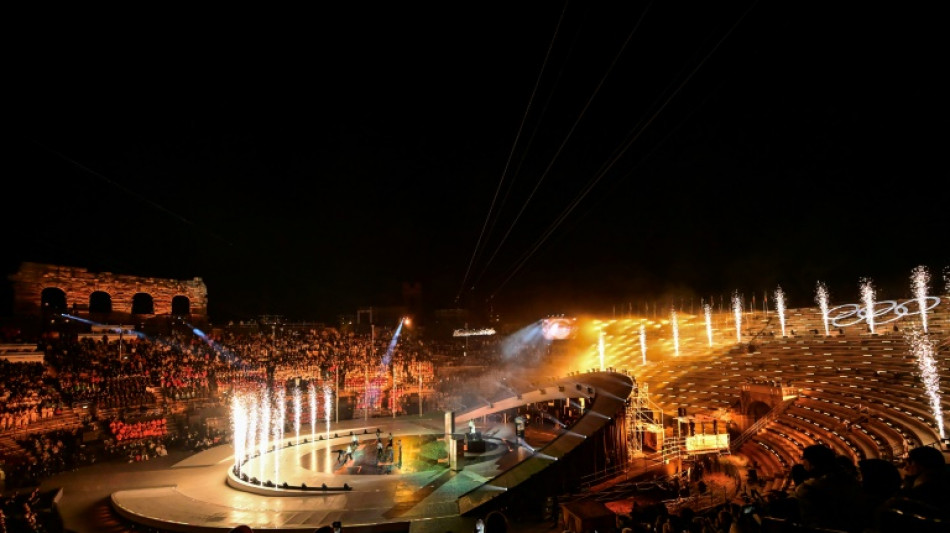
The Milan-Cortina Winter Paralympics start on Friday but the atmosphere at the opening ceremony has been dampened by Ukraine leading a boycott against the presence of a handful of Russian competitors in the competition.
Ukraine's team will skip the ceremony in Verona in protest at the International Paralympic Committee's decision to allow six Russian and four Belarusian athletes to compete under their respective national flags rather than as neutrals.
Russia and Belarus had been banned from the 2022 Winter Paralympics in Beijing following the invasion of Ukraine, although they were permitted to compete as neutral athletes in the Paris Summer Paralympics two years later.
Valeriy Sushkevych, President of the Ukrainian Paralympic Committee, said although he was furious at the decision, boycotting the entire competition would be counter-productive.
"If we do not go, it would mean allowing (Russian president Vladimir) Putin to claim a victory over Ukrainian Paralympians and over Ukraine by excluding us from the Games. That will not happen!," the 71-year-old told AFP last month.
The Ukrainians will be joined in their boycott of the ceremony by the Czech Republic, Estonia, Finland, Latvia and Poland.
The IPC's decision also drew criticism from politicians across Europe, with the EU saying its representative will also boycott the ceremony.
IPC president Andrew Parsons said last week he and the organisation were "deeply disappointed" at the boycott.
The 49-year-old Brazilian said the ceremony should not be "politicised", adding there are "different ways and spaces to send messages and express views freely".
He justified the decision by citing the vote taken at last September's General Assembly which voted for both countries to return under their flags.
He added a judgement issued by the Court of Arbitration for Sport (CAS) last December cleared the way for Russian and Belarusian athletes to qualify by right for the Games.
These arguments are unlikely to quell the disquiet or prevent protests during the quadrennial sporting extravaganza.
The president of Germany's National Paralympic Committee, Hans-Joerg Michels, told AFP's German subsidiary SID last week his organisation would not issue a "gag order" on athletes protesting.
"Every athlete should decide for themselves whether and how they wish to express their views," said Michels.
What form any further protests at a ceremony usually aimed at promoting togetherness and harmony takes remains to be seen, as does the reception of the Russian and Belarusian athletes by the spectators at the historic Verona Arena.
- Let the Games begin -
Parsons and many others -- even those sympathetic to Ukraine's plight -- will hope the extraordinary feats and stories of over 600 athletes are not lost amid the political furore on the 50th anniversary of the Paralympics.
The athletes will compete in six different sports spread out across three sites, in the north of Italy, from March 6-15, in an event that comes hot on the heels of the Milan-Cortina Winter Olympics.
The Dolomite ski resort of Cortina d'Ampezzo will play host to most of the action as it welcomes the wheelchair curling, para alpine skiing and para snowboarding.
Milan's Santagiulia Arena will be the setting for the para ice hockey, while para biathlon and para cross-country skiing events will take place in Val di Fiemme.
Once the action gets going, one star to watch will be British para snowboarder Davy Zwy, who will become the first man with motor neurone disease to compete in a Winter Paralympics.
Double Summer Paralympic gold medallist Lauren Parker will make her Winter Games debut when she represents Australia in the biathlon and cross-country events.
El Salvador's cross-country skier David Chavez will make history in Val di Fiemme when he becomes the first person from the Central American country to take part in a Winter Games -- either Olympics or Paralympics.
C.M.Harper--TFWP