Death of IS chief: what we know

A day after the death of Islamic State leader Abu Ibrahim al-Qurashi during a US raid in Syria, many questions remain on the operation and the jihadist group's future.
How was he located?
Qurashi was killed in the town of Atme during a nighttime airborne operation on his house.
US officials said his location had been narrowed down last year. The building's owner told AFP Qurashi had been living there for 11 months.
The raid came days after IS launched its biggest operation in years to spring fighters from a huge Kurdish-run prison in the northeastern city of Hasakeh.
"The timing of the operation suggests that there was intelligence linking Qurashi to the Ghwayran prison attack," said Nick Heras, an analyst at the Newlines Institute.
"It would not be surprising that the US put pressure on Turkey to relinquish information."
Turkey holds considerable sway over northwestern Syria and maintains a form of working relationship with Hayat Tahrir al-Sham (HTS), the jihadist that controls most of the Idlib area.
Large numbers of IS prisoners are thought to have broken out during the Hasakeh attack. Their subsequent trajectories and communications may have created intelligence opportunities.
"If Qurashi was planning to record a statement about the recent attacks, perhaps that created an opening," said Aron Lund, a fellow with Century International.
Iraq's prime minister on Thursday claimed credit for gathering the intelligence that led to one of the world's most wanted men.
How did he die?
According to the White House and US defence officials, Qurashi died when he detonated a bomb to avoid capture.
"He killed himself and his immediate family without fighting, even as we attempted to call for his surrender and offered him a path to survive," the head of US Central Command, General Kenneth McKenzie, said.
The visible damage to the three-level house -- including burn marks and a collapsed part of the roof -- tend to confirm at least one explosion occurred inside the house.
Neighbours told AFP they heard explosions but US official statements are at this time the only version of what happened inside the house.
US Pentagon spokesman John Kirby said Qurashi's fingerprint identification was done on site but did not explicitly say whether US forces had taken the body away or left it behind.
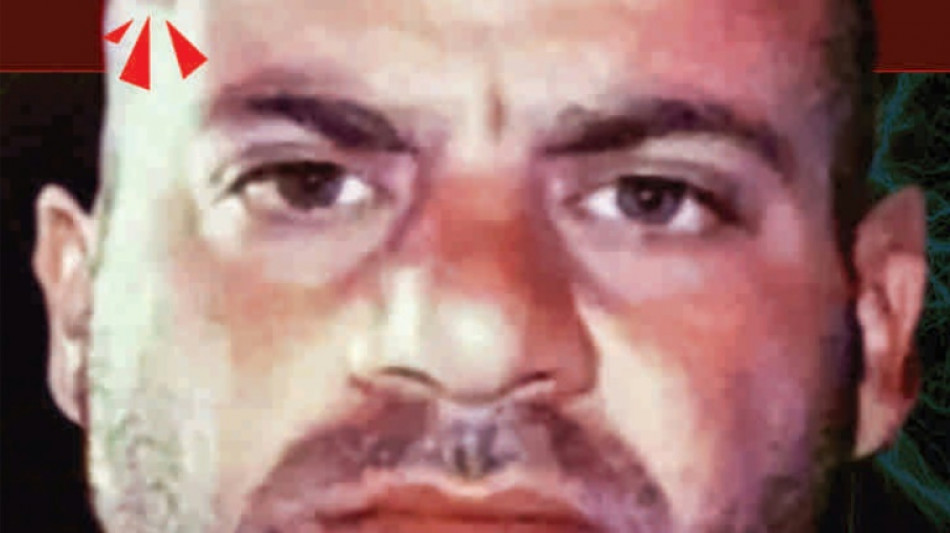
A photo purporting to show the slain IS leader's face that circulated on social media could not be authenticated by AFP and does not provide clear information as to how he died.
Who else was there?
US officials have said at least three civilians died during the raid, in addition to Qurashi and two others outside the house on whom the special forces returned fire.
The Syrian Observatory for Human Rights war monitor said it had reports of 13 dead, 12 of them killed inside the house.
Observatory head Rami Abdel Rahman said Qurashi had two wives, both of whom were killed in the raid, together with the IS leader's sister and her adult daughter.
He also said the bodies of four children were recovered, as well as two other incomplete bodies that may have been children's.
Save the Children said at least six children, including two infants, were killed during the raid.
Abdel Rahman said one of Qurashi's senior associates was also killed.
One of Qurashi's wounded children was treated by civil defence but then transferred to an unknown location by forces connected to HTS.
Why in Idlib?
Qurashi had been hiding in a town far from IS's area of operations and under the control of HTS, a rival jihadist group.
Yet analysts argue it is hardly surprising he was tracked down to an area far from IS's heartland, which covers the arid expanses straddling the Iraqi-Syria border between the Tigris and Euphrates rivers.
His predecessor Abu Bakr al-Baghdadi was also killed in Idlib province, about 15 kilometres (nine miles) away, in October 2019.
"Idlib is a messy war zone full of displaced people, with little proper policing and no real state structures or record-keeping," said Lund.
Hassan Hassan, who authored a book on IS, said Idlib is safer for an IS leader than the regions in western Iraq or eastern Syria where anti-IS forces have acquired years of experience tracking down jihadists.
"It is a hostile area for IS because its rivals dominate that region of northern Syria, but it is precisely the right place to hide where nobody expects you to be there," he said.
Hassan, who is also a Newlines analyst, said close Qurashi aides had been running the group's operations and building businesses in the area for two years.
What next for IS?
The week-long attack on the Ghwayran prison IS launched two weeks earlier had raised fears of a resurgence, nearly three years after IS lost the last scraps of its "caliphate".
For Hassan, however, the prison attack was "not part of a strategic comeback, nor an indication of recovery".
"The group remains weak and exposed," he said, adding that Thursday's raid was further evidence of growing efficiency by the US and allied forces tasked with tracking down IS leaders.
Qurashi was largely invisible during his time at the helm but the group, which has not yet acknowledged his death, will nonetheless have to find a new "caliph".
Experts say there are few obvious names for a successor but that the next IS leader will most likely hail from the same area.
Qurashi was an ethnic Turkmen from the Iraqi city of Tal Afar who played a key role in the campaign of ethnic cleansing against the Yazidi minority in 2014.
N.Patterson--TFWP