US threats cast doubt on shipping emissions deal / Photo: © AFP

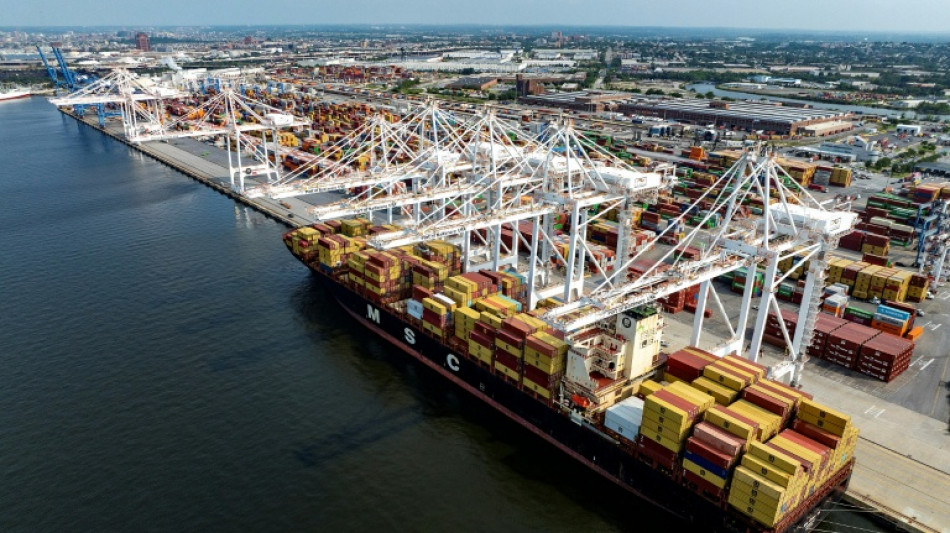
An ambitious plan by the UN's shipping agency to cut maritime emissions could be scuttled at the last minute after the United States threatened to impose sanctions on those supporting it.
Already approved in April, members of the London-based International Maritime Organization (IMO) are set to formally adopt the Net Zero Framework (NZF) on Friday as part of talks opening Tuesday.
The framework requires ships to progressively reduce their carbon emissions starting in 2028, and achieve complete decarbonisation by 2050.
But the United States on Friday threatened sanctions and other punitive actions against those who support it, potentially derailing the plans.
Top US diplomat Marco Rubio, Energy Secretary Chris Wright and Transportation Secretary Sean Duffy said in a statement the administration of President Donald Trump "unequivocally rejects" the NZF proposal.
They threatened a range of punishing actions against countries that vote in favour of the framework, from visa restrictions to blocking vessels registered in those countries from US ports and imposing commercial penalties.
- US influence -
The NZF would require all ships to use a less carbon-intensive fuel mix or face financial penalties.
In April a majority of members -- 63 states -- voted in favour, including the European Union, Brazil, China, India and Japan.
Sixteen states voted against the measure, including major oil producers Saudi Arabia, Russia and the United Arab Emirates.
Pacific Island states abstained from the vote, deeming the proposals insufficient to meet decarbonisation goals.
The United States had withdrawn from negotiations, not commenting on the proposal until last week.
Brussels reaffirmed on Monday the full support of European Union states for the proposal, as did Britain, when contacted by AFP.
But US threats may affect "other countries more sensitive to US influence and vulnerable to these retaliations", a European source told AFP.
"We remain optimistic about the outcome, but it will probably be tighter than before, with a higher risk of abstention," the source added.
Consensus, usually the norm in this assembly, has already been ruled out.
The Philippines, which has the world's largest contingent of maritime workers and supported the NZF in April, would be particularly impacted by visa restrictions.
Caribbean islands, economically dependent on US cruises, could also be affected by sanctions.
- Trump alleges climate 'scam' -
Contacted by AFP, IMO Secretary-General Arsenio Dominguez declined to respond directly to the US statement, maintaining he was "very confident" about the NZF vote.
The NZF would charge ships a tax on emissions exceeding a certain threshold, creating a fund to reward low-emission vessels and support countries vulnerable to climate change.
If the global emissions pricing system were adopted, it would become difficult to evade, even for the United States.
IMO conventions allow signatories to inspect foreign ships during stopovers and even detain non-compliant vessels.
Since returning to power in January, Trump has reversed Washington's course on climate change, denouncing it as a "scam" and encouraging fossil fuel use by deregulation.
H.Carroll--TFWP