The factors behind violent unrest in Nepal / Photo: © AFP

Nepali youth, digitally savvy but bowed down by unemployment and limited opportunities, hit a breaking point this week, furious at an elderly ruling class they see as out of touch.
Dissatisfaction has grown at political instability, corruption, and slow economic development in the Himalayan nation of 30 million people.
That escalated into street anger on Monday, triggered by a government ban on social media -- later overturned -- with at least 19 people killed as police sought to crush protests.
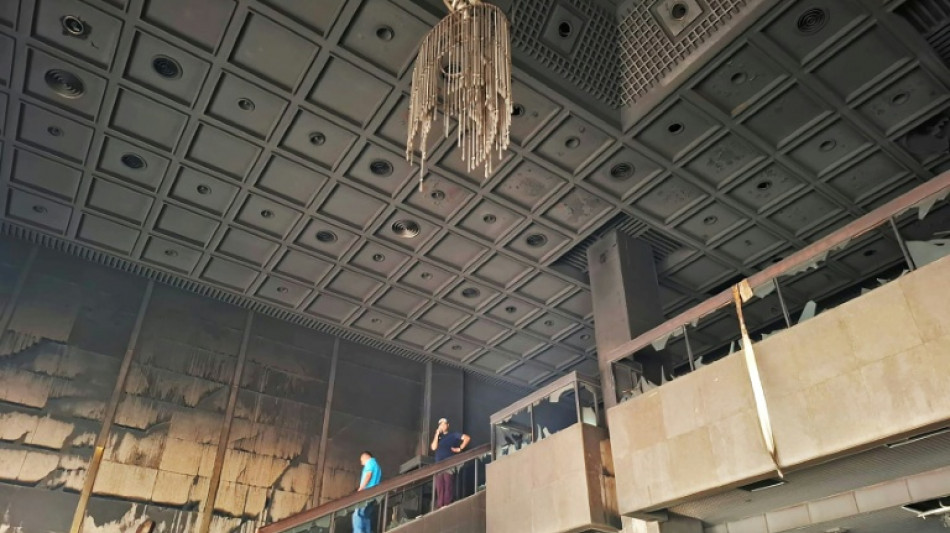
The resignation of 73-year-old Prime Minister KP Sharma Oli failed to quell the anger of protesters, who set fire to parliament and a string of other government and political party buildings.
Many said that the social media ban was only the spark for protests.
Here are some of the factors that toppled the government.
- Economic woes -
The World Bank says a "staggering" 82 percent of Nepal's workforce is in informal employment, "far higher than global and regional averages".
Remittances are crucial for Nepal's economy, equalling a third of the country's GDP last year and the fourth-highest rate globally, according to the World Bank.
Social media is a key tool in keeping in touch with relatives abroad.
"Nepal's reliance on remittances... has been central to the country's growth but has not translated into quality jobs at home, reinforcing a cycle of lost opportunities and the continued departure of many Nepalis abroad in search of employment," the World Bank said in its latest country report.
The economy has picked up; real GDP grew by 4.9 percent in the first half of the 2025 financial year -- from 4.3 percent in the same period in 2024, mainly due to the agricultural and industrial sectors.
Nepal categorises young people as aged between 16-40, totalling more than 12 million people or nearly 43 percent overall, according to government statistics.
"With around 500,000 young people joining the workforce every year in Nepal, the urgency to create jobs that lift families out of poverty and drive sustainable development has never been more critical," said World Bank Vice President for South Asia, Johannes Zutt, after a visit last week.
- Corruption -
The rights group Transparency International ranks Nepal 107 out of 180 countries.
Videos contrasting the struggles of ordinary Nepalis with the children of politicians flaunting luxury goods and expensive vacations have gone viral on TikTok.
Puja Manni, a 23-year-old woman who has worked abroad, said the excesses of the ruling elite had been "exposed through social media".
Among the young, there was widespread dissatisfaction with leaders who have held power for decades.
The country became a federal republic in 2008 after a decade-long civil war and a peace deal that saw the Maoists brought into government and the abolishment of the monarchy.
Since then, a revolving door of ageing prime ministers and a culture of horse-trading have fuelled public perception that the government is out of touch.
- Fear at loss of rights -
Nepal's National Human Rights Commission warned the social media ban undermined "the spirit of democratic governance".
Santosh Sigdel, of Digital Rights Nepal, said the ban was a "slippery slope", while the Kathmandu Post said it "touched a raw nerve" with an angry youth.
"They use these platforms to vent pent-up frustrations, connect with friends, and keep abreast with the rest of the world," wrote the newspaper, whose offices were torched by a mob Tuesday.
"They were already antsy, fed up with the country's woeful health and education systems, and rampant corruption and nepotism -- so much so that many of them saw no future in the country."
H.M.Hernandez--TFWP