Ex-members of secret US abortion group fear return to dark era / Photo: © AFP

They were once part of an underground network that helped an estimated 11,000 women get abortions before the US Supreme Court established a constitutional right to the procedure in 1973.
More than 50 years on, former members of the "Jane Collective" are watching in disbelief as America slides back toward the era they risked everything to end.
"I was crushed," recalls Abby Pariser, speaking to AFP ahead of the third anniversary on June 24 of the landmark Dobbs decision that overturned Roe v Wade and erased the federal right to terminate a pregnancy.
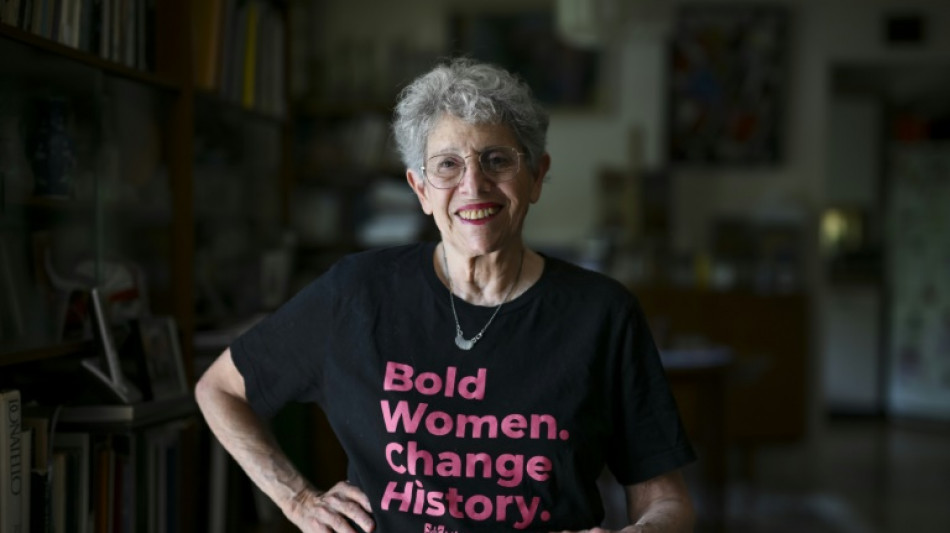
"I was infuriated that they could do this to women," adds the 80-year-old Pariser at her home in Huntington, a suburb of New York City, wearing a T-shirt declaring "Bold Women. Change History."
Like many of the now-retired women, Pariser devoted her life to defending reproductive rights at a time when abortion was widely illegal in the United States.
The story began in Chicago in the late 1960s.
Students, mothers, and young professionals -- "ordinary women," as they describe themselves -- came together, helping others access clandestine abortions.
They risked prison as they negotiated prices with doctors willing to perform the procedures -- and some even learned to do them themselves.
"It was just unbelievable that this would occur in this time and era, that we would go back to something this devastating," says a fellow ex-Jane, Sakinah Ahad Shannon, her voice breaking with emotion.
The seismic reversal -- and the release of the HBO documentary "The Janes" -- brought renewed attention to their story. Several former members have since spoken out, recounting the hardships women faced before the Roe ruling.
- Mobsters and back-alley surgeries -
At the time, access to contraception was severely limited, and the very notion of abortion was steeped in taboo, recalls Laura Kaplan, a former Jane and author of a book on the subject, who now lives in the iconic New York village of Woodstock.
Out of public view, women resorted to desperate measures to end unwanted pregnancies -- from ingesting poison to seeking help from underground abortionists.
The illicit trade was dominated by corrupt doctors and Mafia intermediaries, who charged exorbitant fees. Abortions typically cost around $500, Kaplan remembers.
"You could rent a decent one-bedroom apartment in Chicago for $150 a month at the time," she says. "Just to give you a sense of how expensive abortions were."
Beyond the financial burden, women were often subjected to sexual assault, humiliation, or medical malpractice. Some did not survive.
"There were wards in every major city's public hospitals for women suffering the effects of illegal abortions -- whether self-induced or performed by someone else -- and they were dying," Kaplan adds.
The Jane network emerged in response to this grim reality, aligned with the broader women's liberation movement of the time.
They adopted pseudonyms, opened a phone hotline, and raised funds to help women who could not afford the procedure.
Some later trained to perform dilation and curettage procedures themselves.
- Hope -
"Women paid $10, $50 -- whatever they had in their pockets," says Kaplan.
But in the spring of 1972, seven members of the collective, including Pariser, were arrested during a police raid.
"It was scary," she recalls, describing a night in jail and the disbelief of officers who had stumbled upon an all-female clandestine network.
Still, the others pressed on.
"We knew what we were doing was committing multiple felonies every day we worked," Kaplan adds with a smile. "We were well aware of that."
Had Roe not been decided, they could all have spent their lives behind bars -- a prospect that, today, no longer feels remote.
Since the federal right to abortion was overturned, more than 20 states have banned or sharply curtailed access to the procedure, forcing women to travel across state lines or resort -- once again -- to illegal means.
Such restrictions have already led to multiple preventable deaths from delayed miscarriage care, according to reporting by ProPublica.
Access could shrink further with the return to power of President Donald Trump, who takes credit for reshaping the Supreme Court during his first term and paving the way for its reversal on abortion.
Observers are closely watching for moves to restrict access to abortion pills, which now account for the majority of terminations.
"I think we were very naive," reflects Pariser, believing the battles of their youth had secured lasting progress.
"The people who were shooting doctors and killing them in clinics or churches on Sunday -- these are maniacs. These are terrible people."
Just this month, a gunman suspected of killing a Minnesota lawmaker was reportedly found with a hit list targeting abortion providers, activists and politicians who support access to abortion.
Even so, the Janes believe today's generation of women are better informed, with higher reproductive health literacy and broad access to online resources.
"Just like we said no 50 years ago, they're saying no today -- and that's what gives me hope," says Ahad Shannon.
T.Gilbert--TFWP