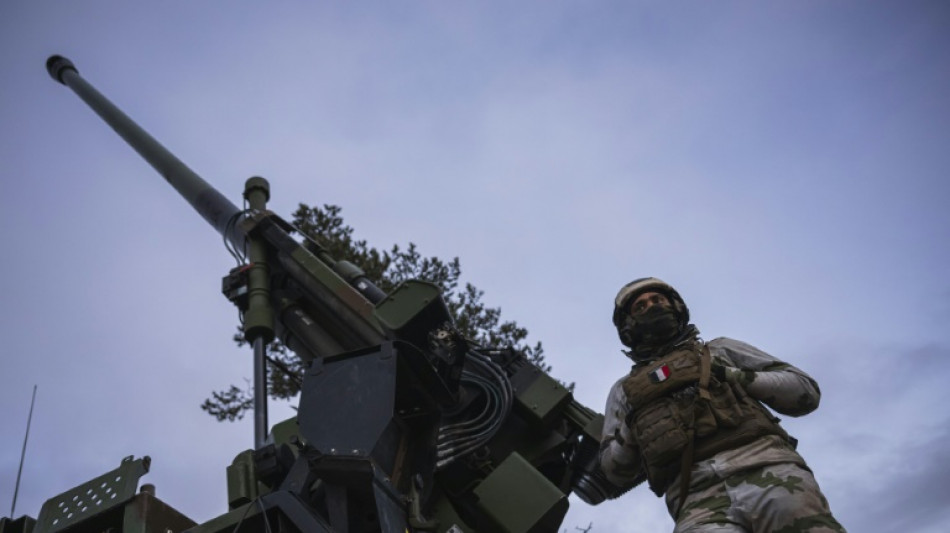
As NATO ups defence spending, can Europe produce the weapons? / Photo: © AFP

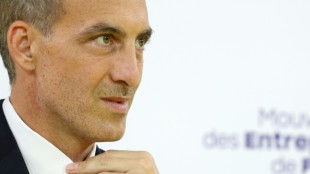
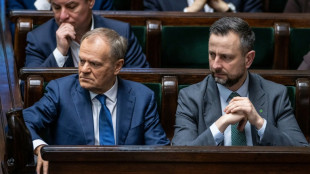
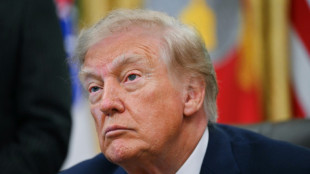
NATO leaders meeting in The Hague this month look set to agree to a major increase in military budgets under pressure from US President Donald Trump.
But as Europe promises to ramp up defence spending and wean itself from reliance on the United States, a key question looms: can it produce enough weapons?
"This is really keeping me up at night, making sure that we not only ramp up spending, but also ramp up defence industrial production," NATO chief Mark Rutte said Thursday.
More than three years into Moscow's war on Ukraine, NATO says Russia's weapons production far outstrips the West's and has warned that the Kremlin could be ready to attack the alliance within five years.
The demands on NATO's European members are huge: new hardware targets agreed this month will require the biggest armament spree in decades.
Rutte has pushed for a commitment to bolster defence spending to 3.5 percent of GDP within seven years, plus 1.5 percent on security-related areas such as infrastructure.
That would likely work out as hundreds of billions of extra euros a year.
While countries seem largely on board, German defence minister Boris Pistorius last week pointed to one challenge "nobody really discusses".
"It is about how much money is really able to be spent... if industry is not able to deliver what we ordered," he told his NATO colleagues.
The push to bolster output will be prominent in The Hague with NATO hosting an industry forum alongside the summit.
- 'Need the orders' -
After years of underinvestment following the Cold War, the European Union has unveiled a raft of initiatives since Moscow's 2022 invasion.
National budgets have increased and Brussels has sought to plug the funding gap with plans that could mobilise a further 800 billion euros ($924 billion).
A major focus is making sure most of that money is spent buying weapons in Europe so the continent can stand more on its own two feet.
But persistent gripes remain: businesses lack long-term orders, capacity is too low, costs are too high, production times too long and the industry too fragmented.
"To some extent, the budgetary debates and the spending debates are behind us. The question is, how do you translate all of that funding into actual capabilities?" Hugues Lavandier, head of aerospace and defence for Europe at McKinsey, told a Brussels conference.
Waiting times for new weaponry can stretch for years, and for some key equipment such as longer-range missiles, Europe still relies on the United States.
But proponents say the continent has the potential to meet demand -- provided governments and defence firms get a move on.
"Our assessment is that we can produce 95 plus percent of whatever we need to credibly deter and be ready," said Francois Arbault, a top official overseeing the defence industry at the European Commission.
"But we need the orders and we need that manufacturing power to be actually materialised in additional investment, because you need to ramp up."
- 'Bang for our buck' -
Industry leaders say orders are picking up, if not as fast or for as long a period as hoped, and insist businesses are already putting money into expanding.
The CEO of Swedish defence giant Saab, Micael Johansson, told AFP his firm increased its workforce by 6,000 people and quadrupled ammunition in recent years.
"Absolutely, we can do more -- and fortunately, many of us have invested at risk to increase capacity," he said.
"We're getting the signals that demand will be high, but I can't say that I know exactly what target levels we're aiming for."
One fear officials have is that a sudden splurge in spending could lead to price hikes.
"There's a real risk that we get, you know, less bang for our buck because of inflation," said Matthew Whitaker, the US ambassador to NATO.
"We need to make sure that it's incremental, that it's measured, but that it's sustained."
To help smooth out barriers blocking investment, the EU is set next week to unveil a push to strip away red tape.
"It cannot be that the defence industry needs to wait five years to have a permit to build a new factory," EU defence commissioner Andrius Kubilius said.
"(Russian leader Vladimir) Putin will not wait for us to get our paperwork in order."
One way to bolster Europe's capacity long-term could be turning to battle-hardened Ukraine.
As Russia's war has raged on, Ukrainian firms have become experts at cost-cutting and the country is now a leader in drone technology.
"The Ukrainian industry is very important," said Guntram Wolff at the Bruegel think tank in Brussels.
"The products that they produce are actually low cost and very effective."
M.McCoy--TFWP